Adjustable Dumbbells or Fixed Pairs: Which Is Better for a Small Home Workout Space?
Compare adjustable dumbbells and fixed pairs for storage, weight changes, comfort, noise, beginner usability and value before choosing a compact home strength-training setup.

If your home workout area is short on space, adjustable dumbbells are usually the more practical starting point. One set can cover several training loads without filling a corner with pairs of metal, rubber or urethane weights. Fixed dumbbells are easier to grab and change between exercises, however, and many beginners find their simple, solid feel reassuring.
The better choice depends on what matters most in your room: minimum storage, fast transitions, quiet handling, grip comfort or the ability to progress gradually. Here is how the two formats compare.
Adjustable dumbbells: maximum range in a smaller footprint
Adjustable dumbbells use plates, blocks or another mechanism to change the load. Plate-based models generally need you to add or remove weight and secure it before each exercise. Other designs use a selector or locking system. Either way, the attraction is the same: one stored unit can take the place of multiple fixed pairs.
That makes adjustable dumbbells for small spaces particularly appealing in a bedroom, spare room or living-room corner. They can also make a basic strength programme more affordable over time because you are not buying a new pair for every small increase in weight.
The compromise is convenience. If your workout moves from lateral raises to goblet squats to rows, you may need to alter the load several times. A plate-based system can also be wider or less balanced than a fixed dumbbell at lighter settings. Before buying, check that the adjustment parts are easy to operate, that the handles remain comfortable at different loads and that the set has somewhere stable to live between sessions.
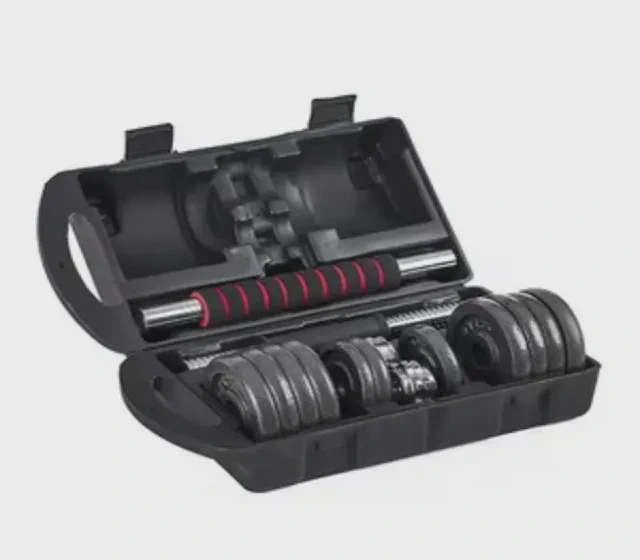
Factory Direct Home Gym Equipment Portable Adjustable Dumbbell Barbell Set with Storage Case Painted Cast Iron Plates 2 in 1 Home Gym Training Weights Wholesale
- MIC category
- Dumbbell
The supplier listing describes this as a portable adjustable set with painted cast-iron plates, a storage case and a 2-in-1 dumbbell-to-barbell design. That combination is aimed at people who want several training options from one stored kit rather than a rack of fixed pairs. The main practical question is whether you are happy spending extra time changing plates between exercises.
Best for Beginners with very limited storage who want one compact kit for dumbbell and barbell-style movements.
- Adjustable plate-based design
- Supplier listing describes a storage case
- Can be configured as dumbbells or a barbell
- Painted cast-iron plates
Confirm before inquiry: Check the adjustment method, included plate sizes, total weight and case dimensions with the supplier before ordering. The listing does not provide those details here.
The supplier listing describes this option as a portable adjustable dumbbell and barbell set with painted cast-iron plates and a storage case. Its 2-in-1 configuration may suit a beginner who wants one compact kit for several movement patterns. Treat the listed format as a starting point, though: ask about the full weight range, plate increments, locking system and case dimensions before committing to it.
Fixed pairs: faster, simpler and often more comfortable
Fixed dumbbells remove the adjustment step. You choose a pair, complete the set and move to the next exercise. That is useful for circuits, supersets and workouts where you do not want to pause to change plates. Fixed pairs also have fewer moving parts, which can make them feel more predictable in the hand.
Their clear disadvantage is storage. One pair takes little room, but a useful spread of weights can quickly require a rack or several shelves. In a small home, that can be more intrusive than the exercise itself. Fixed dumbbells also make progressive loading an all-or-nothing purchase decision: you need to buy another pair when your current weight becomes too easy.
Grip comfort varies by handle diameter and finish, so do not judge a dumbbell only by its head material. A smooth handle may feel comfortable initially but become slippery with sweaty hands; a heavily textured handle may feel secure but irritate the palm during higher-repetition work. If possible, confirm handle specifications before ordering.
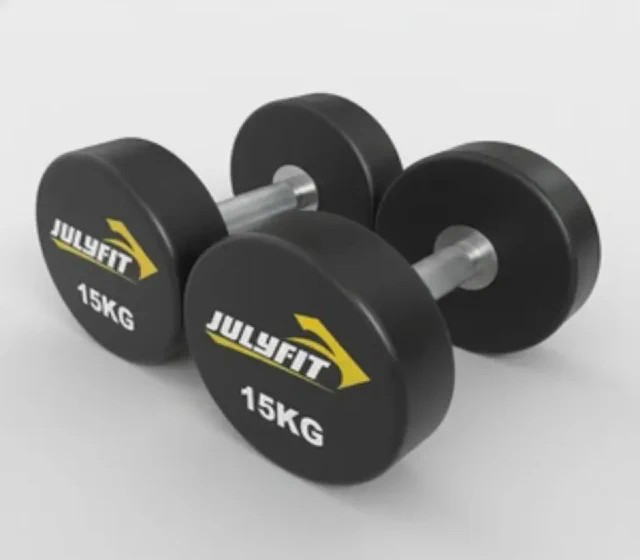
Round CPU Dumbbell Set Urethane Dumbbells Light Heavy Duty Weights Dumbbells
- MIC category
- Dumbbell
This supplier listing presents a round CPU dumbbell set described as urethane and suitable for light to heavy-duty use. Fixed dumbbells are straightforward: select the pair you need, lift and return them without adjusting plates. A round shape may roll when stored, so a tray, rack or deliberate storage position is useful in a small room.
Best for People who value quick weight changes and a familiar fixed-dumbbell feel more than the smallest possible storage footprint.
- Fixed-weight format
- Round profile
- Supplier listing describes urethane construction
- Presented as a light-to-heavy-duty dumbbell set
Confirm before inquiry: Confirm the available weight range, handle dimensions and whether the set includes a stand or storage solution. Those details are not established by the category-page information.
This listing describes a round CPU dumbbell set made with urethane and covering light to heavy-duty use. Its fixed format should be quick to select during training, with no plates to tighten between exercises. The round heads may roll unless you use a tray, rack or designated storage area, which is worth considering when floor space is limited.
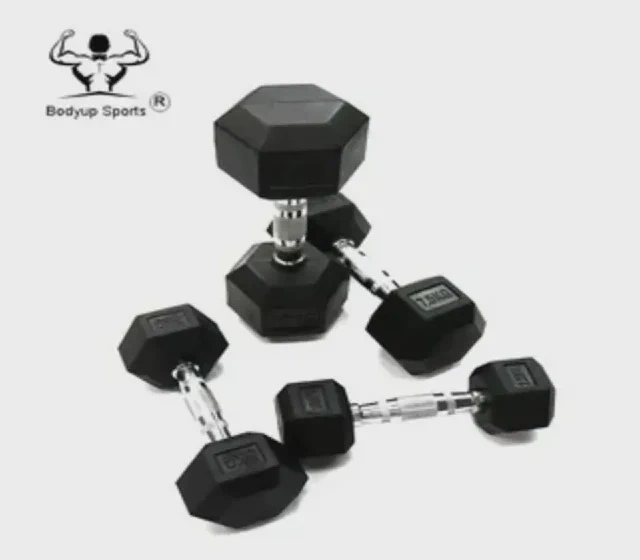
Rubber Hex Dumbbell for Training Gym Commercial Fitness Equipment
- MIC category
- Dumbbell
The rubber hex format is a useful middle ground for home training. The flat sides are less likely to roll away during storage or floor-based exercises, while the rubber exterior can be more forgiving on a suitable protective surface than bare metal. As with other fixed pairs, the space requirement grows as you add more weights.
Best for Home users who want fixed dumbbells for quick transitions and appreciate a non-rolling shape.
- Fixed-weight format
- Hexagonal heads help resist rolling
- Supplier listing describes rubber construction
- Suitable for training and gym use according to the listing
Confirm before inquiry: Rubber can still mark some floors and may produce odour when new. Confirm the handle finish, available weights and dimensions before purchase.
The rubber hex design is another fixed-pair option. Flat sides can make storage and floor-based movements less awkward because the dumbbell is less likely to roll away. Rubber may also be more forgiving around a properly protected floor than exposed metal, although it can still mark surfaces or create noise when dropped. Controlled placement remains essential in a home environment.
Storage: measure the space, not just the dumbbells
Before choosing either format, measure the area where the weights will be stored, not only the place where you plan to exercise. Include the height of shelves, clearance for picking up each dumbbell and space to put weights down safely.
An adjustable set is compact only if the case or individual units fit neatly into that location. A set that must remain spread across the floor may defeat its main advantage. Fixed pairs work best with a small rack, sturdy low shelf or dedicated tray. Avoid storing heavy equipment where it can fall onto a walkway or where children and pets can reach it.
Shape also matters. Hex heads are less likely to roll, while round dumbbells need more deliberate placement. Rubber and urethane can protect the dumbbell from some knocks, but they are not a reason to throw weights onto delicate flooring.
Weight changes and beginner usability
For beginners, the simplest setup is usually the one that encourages consistent training. Fixed pairs win on immediacy: pick up the right weight and start. Adjustable dumbbells win on progression: make a small increase without buying another pair.
If you follow full-body workouts with many exercises, fixed pairs can keep the session flowing. If you perform fewer movements and want to build gradually, the adjustment time may be a reasonable trade. A plate-based adjustable set may also be useful when two people share one home gym, provided each user is willing to reset the weight.
Do not assume a broad advertised range automatically makes a set suitable for every exercise. The lightest setting must be manageable for movements such as raises, while the heavier settings should be appropriate for exercises such as squats or rows. A very heavy dumbbell is not useful if its handle or adjustment hardware makes lighter movements awkward.
Noise, grip and floor protection
Fixed rubber or urethane dumbbells are often quieter to place down than metal plates, but no dumbbell is silent on a hard floor. Adjustable models may produce additional rattling if plates or selectors are loose. Train on a stable, suitable surface, lower weights under control and follow the product instructions for securing adjustments.
For grip, look for a handle that feels secure without forcing your fingers into an uncomfortable position. Wipe equipment after sweaty sessions and inspect adjustable parts regularly. Stop using any dumbbell that has a damaged handle, cracked coating, loose plate or unreliable locking mechanism.
Which setup should you choose?
Choose adjustable dumbbells if your priority is the smallest practical storage footprint, gradual progression or one kit that can cover many loads. The portable adjustable set featured above is the relevant format to investigate, especially if the storage case and 2-in-1 configuration suit your routine.
Choose fixed pairs if you want rapid weight changes, a solid familiar feel and minimal adjustment before each set. The round urethane option may appeal if a conventional fixed dumbbell is your priority, while the rubber hex option offers a less-rolling shape for a compact home area.
For most beginners in a genuinely small room, start with adjustable dumbbells unless you strongly dislike changing weights. Store them in a stable location, leave a clear lifting area and buy based on secure handling rather than the biggest claimed range. If you have more floor space and value uninterrupted circuits, a small selection of fixed pairs may be the more enjoyable choice.
This article is for general information, not individual medical advice. If you have an injury, ongoing pain, a medical condition or uncertainty about starting strength training, speak with a qualified health professional. Begin with a manageable load, use controlled technique and stop if an exercise causes sharp or unusual pain.
This article offers general information, not medical advice. Adjust activity to your experience and seek qualified guidance when needed.
FAQ
Are adjustable dumbbells better for a small apartment?
Usually, yes. One adjustable set can replace several fixed-weight pairs, reducing the amount of floor and shelf space required. The trade-off is that weight changes take longer and the mechanism needs to be checked before lifting.
Are fixed dumbbells safer than adjustable dumbbells?
Neither format is automatically safer. Fixed dumbbells have fewer moving parts, while adjustable models must be locked and handled according to their instructions. Good technique, controlled movement and a clear training area matter more than the format alone.
How many dumbbell weights does a beginner need at home?
Many beginners can start with one light pair for upper-body movements and one heavier option for lower-body exercises, although the right loads depend on the person and the exercises. An adjustable set can provide more gradual progression without buying multiple pairs.
Do adjustable dumbbells make more noise?
They can. Plates or adjustment parts may rattle or touch during movement, particularly if the set is not secured correctly. Fixed rubber or urethane dumbbells are often quieter when placed down, but any dumbbell can make noise on a hard floor.