Adjustable Dumbbells for Small Spaces: Which Style Is Easiest to Live With?
Compare selectorized dumbbells, spin-lock sets and loadable handles for storage, adjustment speed, beginner-friendly use and exercise range in a small home.
If you have very little room, choose a selectorized adjustable dumbbell first. It is usually the easiest style to live with because one pair can cover several exercises and weight changes can be quick. Choose spin-lock dumbbells if purchase simplicity and flexible plate loading matter more than speed. Choose loadable handles if you already have compatible plates or want to build weight gradually.\n\nThat is the short answer. The better choice depends on what happens between exercises: where the dumbbells sit, how long changing them takes and whether the handles become awkward when loaded. In a small home, those practical details matter as much as the maximum weight.\n\n## The three formats\n\n### 1. Selectorized adjustable dumbbells\n\nSelectorized dumbbells use a dial, pin, lever or similar mechanism to select a load from a docked set of plates. The main attraction is speed. You can move from a light lateral raise to a heavier row without finding separate plates or tightening collars. That makes this style particularly convenient for full-body sessions, supersets and workouts that alternate between upper- and lower-body exercises.\n\nTheir storage advantage is also clear: one pair and its base can replace multiple fixed pairs. However, the mechanism can make the dumbbell wider or longer than a simple fixed weight. The base needs a permanent home, and the dumbbell should be returned to it carefully so the selector can engage correctly. Before buying, check the total length at lighter and heavier settings, the footprint of the dock and whether the handle remains comfortable at every load.\n\nThe supplier listing for the following product identifies 24 kg (52.5 lb) and 40 kg (90 lb) versions, but the supplied listing information does not confirm its exact adjustment system or measurements.\n\n The supplier listing from Hefei Bodyup Sports Co., Ltd. presents this as an adjustable dumbbell available in 24 kg (52.5 lb) and 40 kg (90 lb) versions. The listing does not provide enough detail here to confirm the exact selector mechanism, dimensions or adjustment time, so treat those points as questions to verify before ordering. Its adjustable format is the closest fit for a small-space user who wants one pair to cover several exercises without keeping a rack of fixed weights. Best for Beginners who value fast exercise changes and want to investigate a higher-capacity adjustable option. Confirm before inquiry: The capacity figures and product description are supplier-listing claims; the listing supplied for this article does not establish the mechanism, measurements or included accessories. Nantong Duojiu Sporting Goods Co., Ltd. lists this as a non-slip, customizable iron rubber hex dumbbell. It is not an adjustable set, but it is a useful comparison point: a fixed hex shape is simple to pick up, put down and store, with no plates or collars to manage. One or two commonly used weights can complement an adjustable pair, though a broad range of fixed weights quickly takes more room. Best for A frequently used movement or a small add-on weight when simplicity matters more than maximum versatility. Confirm before inquiry: The non-slip, iron, rubber and hex descriptions come from the supplier listing; weight, dimensions and grip feel should be confirmed separately. The Nantong Ok Sporting Co., Ltd. listing describes this product as an Okpro rubber hex dumbbell for strength training. Like the Duojiu listing, it represents the fixed-dumbbell alternative rather than an adjustable mechanism. Fixed pairs make sense when a workout uses the same loads repeatedly, but a complete progression of pairs will need more storage than a single adjustable set. Best for Users who prefer immediate, no-setup handling for repeated exercises or who are building a small selection gradually. Confirm before inquiry: The product type and construction references are supplier-listing claims; the supplied information does not confirm exact weights, dimensions or included quantities.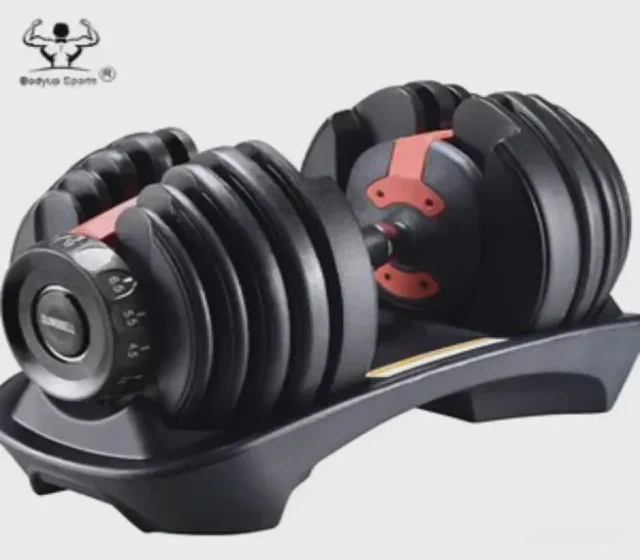
Adjustable Dumbbell 24kg 52.5lb 40kg 90lb Gym Dumbbell Fitness Equipment
View product listing 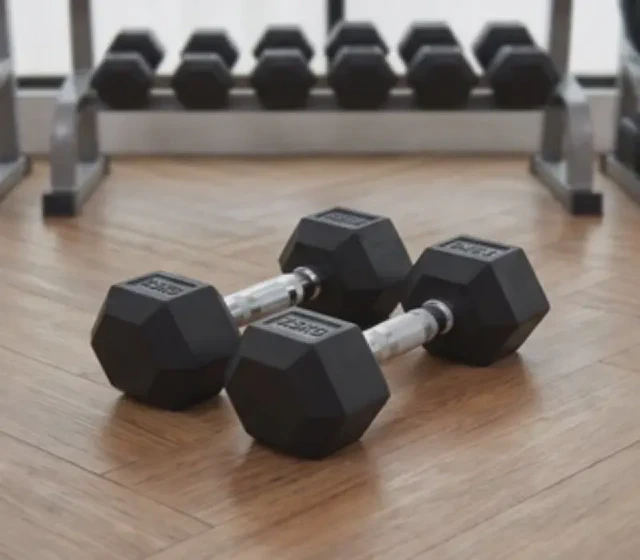
Non-Slip Customizable Iron for Home Gym Workout Rubber Hex Dumbbell
View product listing 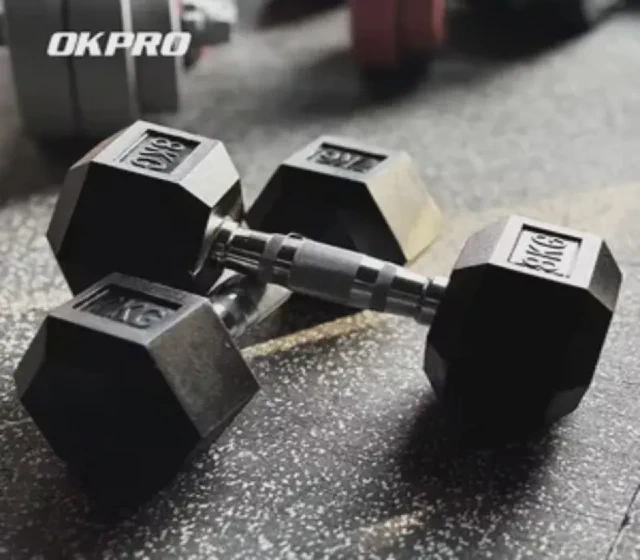
Okpro Factory Wholesale Strength Training Free Weights Rubber Lbs Gym Hex Dumbbell
View product listing
This article offers general information, not medical advice. Adjust activity to your experience and seek qualified guidance when needed.
FAQ
Are adjustable dumbbells good for a very small apartment?
They can be, particularly if one pair replaces several fixed pairs and has a compact storage tray or stand. The important measurements are the dumbbell's overall length, the space needed to change its weight and where the removed plates or parts will go.
Which adjustable dumbbell style is easiest for a beginner?
Selectorized dumbbells are generally the simplest to operate because a dial, pin or similar selector can change the load quickly. Spin-lock and loadable-handle sets are still straightforward, but they involve removing or tightening plates and may interrupt a workout.
Are spin-lock dumbbells safer than selectorized dumbbells?
Neither style is automatically safer. Spin-lock sets require the collars to be tightened correctly, while selectorized designs require the selected mechanism to be fully engaged. Follow the maker's instructions, keep the weight balanced and inspect the equipment before each session.
Can adjustable dumbbells replace a full set of dumbbells?
For many home routines, one adjustable pair can cover presses, rows, curls, raises, lunges and squats across several loading levels. A full fixed set may still feel more convenient for fast circuits, heavy two-dumbbell work or exercises where a shorter, simpler shape is helpful.
How much room do adjustable dumbbells need?
Allow space for the dumbbells themselves, a stable place to put them down and enough clearance to pick them up without striking furniture. Spin-lock and loadable sets also need room for spare plates, collars and the changing process.