Adjustable Dumbbells or Fixed Pairs: Which Is Better for a Small Home Gym?
Adjustable dumbbells for small spaces save room and cover more exercises, while fixed pairs offer faster changes and simpler handling. Here is how to choose.
If your home gym has room for only one compact piece of equipment, adjustable dumbbells are usually the better starting point. They can cover several training loads while taking up roughly the footprint of one pair. Fixed dumbbells are the better choice when you value instant weight changes, simple construction and a familiar feel—and you only need a few weights.
That is the central trade-off for anyone shopping for adjustable dumbbells for small spaces: you are choosing between storage efficiency and simplicity. Neither format wins every category, so the right answer depends on how often you change resistance, how much space you have and what your full-body routine looks like.
Adjustable dumbbells: the space-saving choice
An adjustable dumbbell uses one handle or body with removable plates, a locking mechanism, a pin system or a selector dial. The exact design varies, but the purpose is the same: provide several resistance levels without requiring a separate pair for each one.
This is especially useful for a routine that includes movements with very different loading needs. You might use a lighter setting for lateral raises, curls or overhead work, then move to a heavier setting for goblet squats, Romanian deadlifts or one-arm rows. One adjustable set can handle that progression without a rack filled with pairs.
The drawback is the changeover. A plate-loaded design may require you to remove collars and reposition plates. A selectorized model can be faster, but you still need to confirm that the dial, pin or locking mechanism is fully engaged before lifting. Some adjustable dumbbells also feel longer or less balanced than a conventional fixed dumbbell, particularly at lighter settings.
For a small room, store adjustable dumbbells on a stable, level surface where the adjustment mechanism will not be knocked or obstructed. Avoid leaving loose plates across a walkway. The equipment may be compact overall, but a cluttered setup can still create a trip hazard.
Fixed dumbbells: faster and simpler
Fixed dumbbells are ready to use. There are no plates to change and no selector to set, so they work well for circuits, supersets and workouts that move quickly from one exercise to the next. Their shape and balance are also consistent, which many people find reassuring when learning basic lifts.
The main limitation is the number of pairs you need. A single pair may be enough for a short routine, but progression often calls for more than one load. Even a modest collection can occupy a shelf, corner or vertical storage stand. The cost can also rise as you add pairs.
A small fixed set makes sense when your programme uses only a few weights. For example, you may choose a light pair for shoulders and arms, a medium pair for presses and rows, and a heavier pair for lower-body exercises. This is less flexible than a full adjustable system, but it can be easier to use consistently.
The approved fixed options illustrate how varied this category can be. The supplier listing for the Color PVC Coated Dumbbell describes a light-weight home gym and fitness design, making that format relevant to lighter training rather than a complete strength progression. The Light Non-Slip Fitness Hand Bells are listed for yoga and Pilates, so they are better considered a light-resistance option than a substitute for heavy dumbbells.
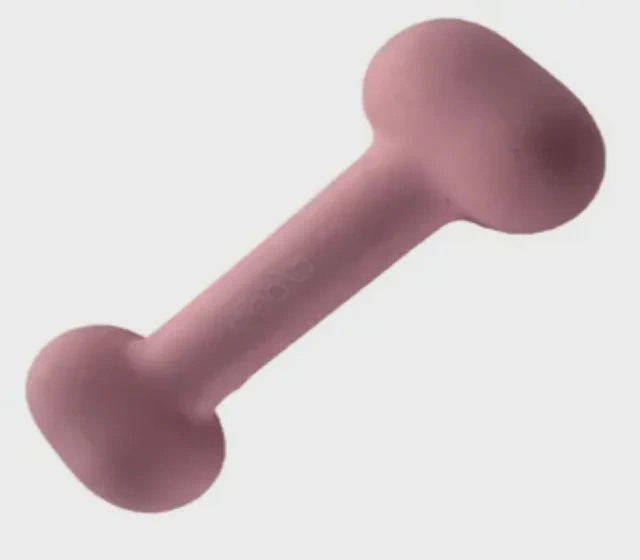
Color PVC Coated Dumbbell Home Gym Fitness Light Weight PVC Dipped Dumbbells Gym Fitness Sports Equipment Lightweight PVC Dipped Dumbbells
- MIC category
- Dumbbell
The supplier listing presents this as a Color PVC Coated Dumbbell designed for light-weight home gym and fitness use. As a fixed format, it may suit beginners who want a straightforward pair for lighter exercises, warm-ups or mobility-focused strength work. It does not replace a broader adjustable system if you need substantial load changes.
Best for Light upper-body training, warm-ups and compact beginner routines
- Fixed-weight format
- PVC-coated design stated in the listing
- Positioned for light-weight home gym and fitness use
Confirm before inquiry: The supplier listing does not provide enough verified detail here to assess exact weight, dimensions, price or long-term durability.
For more conventional strength work, the Rubber Hex Dumbbell is listed as a training and commercial fitness equipment product. A hex shape may be useful for exercises where the dumbbell rests on the floor, although the exact handling and floor-protection qualities depend on the specific model and weight.
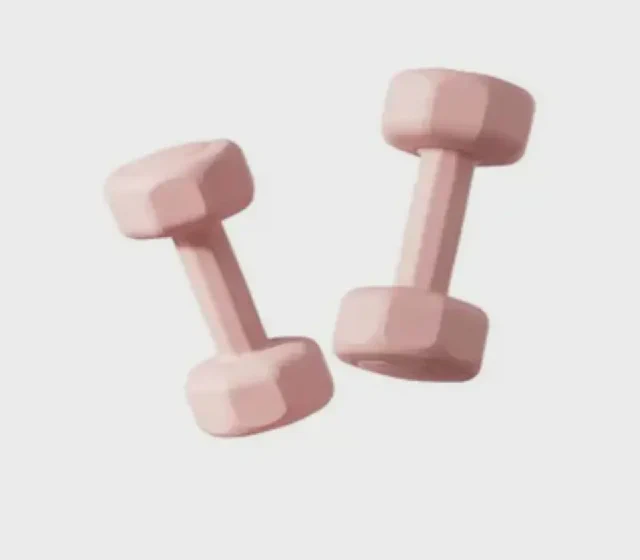
The supplier listing describes these as Light Non-Slip Fitness Hand Bells for Yoga and Pilates. Their stated positioning makes them more relevant to light resistance, controlled movement and low-load sessions than to heavy progressive strength training. They could be useful where a small, easy-to-store pair is more important than maximum loading range.
Best for Light resistance work, Pilates-style sessions and movement practice
- Light hand-bell format
- Non-slip design stated in the listing
- Listed for yoga and Pilates
Confirm before inquiry: Exact resistance, handle dimensions, coating performance and suitability for heavier lifting are not verified by the available listing facts.
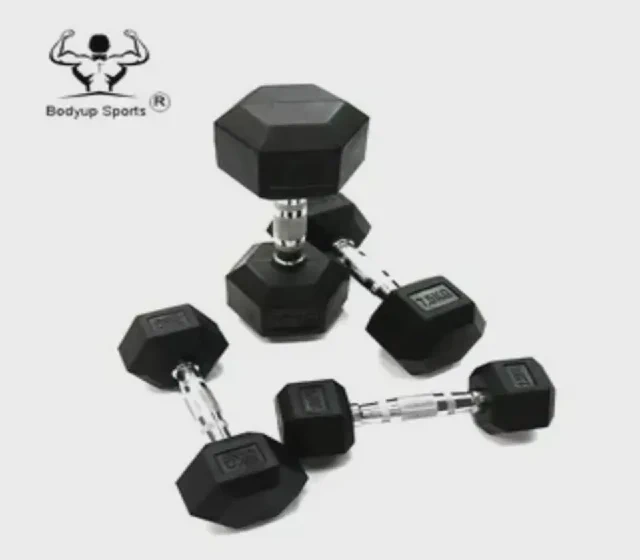
Rubber Hex Dumbbell for Training Gym Commercial Fitness Equipment
- MIC category
- Dumbbell
The supplier listing identifies this as a Rubber Hex Dumbbell for training, gym and commercial fitness equipment. A conventional fixed dumbbell can be appealing when you prefer immediate use and a familiar shape for rows, presses, lunges and carries. Buying several weights, however, increases both storage needs and total cost.
Best for Simple strength routines and users who prefer fixed, ready-to-use weights
- Rubber dumbbell format
- Hex shape stated in the listing
- Listed for training and gym use
Confirm before inquiry: The available facts do not establish the exact weight range, handle feel, floor protection or commercial durability of a specific unit.
Selectorized dumbbells: convenient, but inspect the mechanism
Selectorized dumbbells are a type of adjustable dumbbell that uses a dial, pin or similar control to select the load. They can be attractive for small home gyms because the adjustment process is often quicker than changing individual plates.
However, convenience does not remove the need for careful use. Before every set, check that the selected weight is properly locked and that the dumbbell lifts cleanly from its tray or base. Do not force a dial or continue using a mechanism that feels damaged, loose or obstructed.
Selectorized designs can also have a different balance from fixed dumbbells. The body may be longer, and the unused plates remain in the base while you lift. That may not matter for goblet squats or rows, but it can affect comfort during curls, presses and movements where the dumbbell passes close to your body.
Which format stores best?
For the smallest footprint, adjustable dumbbells usually win because one pair can replace several fixed pairs. They still need a dedicated storage position, and their base or tray may take more room than the dumbbell itself. Measure the space where you will use and store them, not just the product’s advertised width.
Fixed dumbbells are compact individually but expand quickly as a collection. A few pairs can fit neatly on a low shelf, while a wider range may need a rack. Do not store heavy dumbbells on fragile furniture or in a location where they can roll or fall.
If you live in a small flat, also consider the floor. Rubber or coated dumbbells may be more practical around hard flooring than bare metal, but no coating makes dropping weights harmless. Set them down under control and use suitable flooring where possible.
Which is better for a full-body beginner routine?
Choose adjustable dumbbells if your routine includes many exercises and you expect your strength to change over time. They make it easier to move from a light load for technical practice to a heavier load for lower-body work without buying another complete set.
Choose fixed pairs if you want the least complicated setup, dislike mid-workout adjustments or have enough room for only two or three carefully selected weights. They are particularly practical for workouts built around timed circuits, where stopping to change a setting would interrupt the session.
A sensible buying process is to list your first six to eight exercises before choosing equipment. Include an upper-body push, upper-body pull, squat or lunge, hip hinge, carry and optional isolation exercises. If those movements need widely different loads, adjustable dumbbells offer more range. If most use the same load, fixed pairs may be the better value.
The bottom line
For most beginners with limited room, adjustable dumbbells offer the strongest combination of storage efficiency and progression. Fixed pairs remain a good choice when speed, simplicity and consistent handling matter more than having many weight options. Light hand bells and light fixed dumbbells can support gentle or low-load sessions, while a traditional rubber hex pair is better suited to a straightforward fixed-weight strength setup.
Whichever format you choose, start with a manageable load, keep the adjustment system secure and leave enough clear space around your body to move safely. If you have an injury, a medical condition, or uncertainty about appropriate resistance, seek advice from a qualified health or fitness professional before beginning a new programme.
This article offers general information, not medical advice. Adjust activity to your experience and seek qualified guidance when needed.
FAQ
Are adjustable dumbbells worth it for a small home gym?
They can be worthwhile when storage is limited and you want one pair to cover pressing, rowing, squatting, hinging and carrying movements at different loads. Their value is lower if you mainly use one weight or dislike changing settings between exercises.
Are fixed dumbbells safer than adjustable dumbbells?
Neither format is automatically safer. Fixed dumbbells remove adjustment steps, while adjustable models require you to check that plates, pins, dials or locks are correctly engaged. Good technique, controlled movements and appropriate loading matter more than the format alone.
How many dumbbell weights does a beginner need at home?
There is no universal number. A beginner may start with one light pair for upper-body movements and one heavier pair for lower-body exercises, then add resistance as needed. An adjustable pair can provide more progression without storing multiple pairs.
What is the best dumbbell type for full-body workouts?
Adjustable dumbbells are often the most flexible for full-body training in a small room. Fixed pairs may be better if you want rapid transitions, simple equipment and a routine built around a limited number of movements.