Adjustable Dumbbells or Fixed Pairs: Which Is Better for a Small Home Gym?
Comparing adjustable dumbbells with fixed-weight pairs for storage, weight changes, comfort, durability and simple full-body workouts in a small home.
If your home gym has limited space and you want to train your whole body, adjustable dumbbells are usually the better first purchase. They can cover several loading levels without requiring a row of separate pairs. Fixed dumbbells remain the better choice when you value instant weight changes, a very simple setup or the solid feel of a single-piece implement.
That is the practical answer to the adjustable dumbbells vs fixed dumbbells question. The right option depends less on which format is universally superior and more on how much space you have, how often you change weights and whether you prefer convenience or simplicity.
The real difference: one system or several pairs?
A compact adjustable set is designed to give you multiple resistance options from one handle and weight system. That is useful for a basic full-body plan: you might use a lighter load for curls and lateral raises, a medium load for presses and rows, and a heavier load for goblet squats or Romanian deadlifts.
Fixed dumbbells do the same job through separate pairs. A 5kg pair, 10kg pair and 15kg pair are immediately available, but each pair needs somewhere to live. One pair can be easy to store; a useful collection can quickly take over a corner of a bedroom, living room or garage.
The adjustable option listed here is presented by its supplier in 24kg/52.5lb and 40kg/90lb versions. Those figures describe the listed product options, not a recommendation that a beginner should start at the heaviest setting.
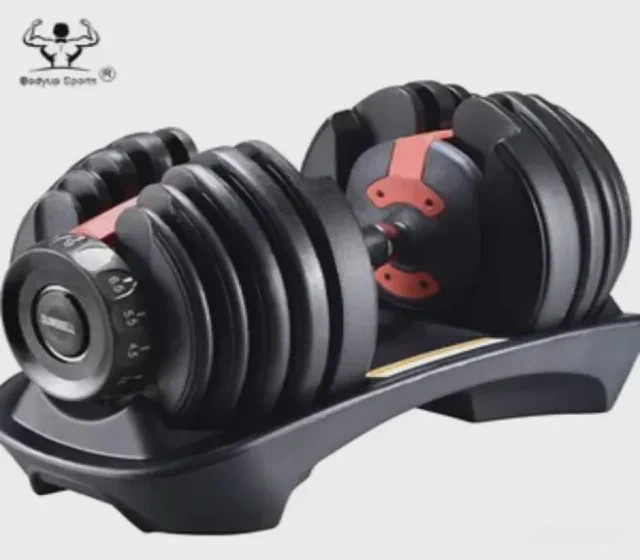
Adjustable Dumbbell 24kg 52.5lb 40kg 90lb Gym Dumbbell Fitness Equipment
- MIC category
- Dumbbell
The supplier listing presents this as an adjustable dumbbell available in 24kg/52.5lb and 40kg/90lb versions. Its main advantage for a small home gym is format: one handle-and-weight system can cover more loading options than a single fixed pair. That makes it a logical starting point for full-body training when a rack of separate pairs is not practical.
Best for Beginners who want one compact setup for presses, rows, squats, lunges and curls.
- Adjustable format helps reduce storage demands
- Two listed weight options offer different progression ceilings
- More suitable for varied full-body routines than a single fixed pair
Confirm before inquiry: The listing does not provide adjustment speed, dimensions, handle details or mechanism information, so confirm those points before purchase.
Storage footprint: the strongest case for adjustable dumbbells
For a small home, storage is often the deciding factor. Fixed dumbbells are easy to understand, but every additional weight adds another object. You may also need a rack or tray to keep pairs together and prevent them becoming a trip hazard.
An adjustable dumbbell can reduce that clutter. It still needs a safe resting place, and the adjustment base or plates may require more care than a basic fixed dumbbell, but the overall footprint is generally easier to manage when you need several weights.
This advantage is most noticeable if you train with movements that have very different loading needs. A full-body session can involve a light shoulder exercise, a moderate press and a heavier leg movement. With fixed pairs, that means several dumbbell pairs. With an adjustable set, it means changing the load between exercises.
Weight changes: speed versus range
Fixed dumbbells win on speed. You pick up the next pair and continue. That matters in supersets, timed circuits and workouts where short rests are part of the plan. There is also less to think about: no selector, collars or plates need checking before the set.
Adjustable dumbbells win on range per item, but changing weight takes some attention. Depending on the design, you may need to turn a selector, add or remove plates, or place the dumbbell into a base before selecting a new load. A slow or awkward mechanism can interrupt the rhythm of a workout.
For a beginner doing three sets of rows, presses and squats, that interruption is usually manageable. For a fast circuit that changes from heavy rows to light raises every few minutes, fixed pairs may feel much smoother.
When considering an adjustable model, ask how clearly the selected weight is shown, whether both dumbbells can be changed consistently and whether the system remains stable when placed down. The approved adjustable listing does not specify its mechanism or adjustment speed, so those details should be confirmed before buying.
Comfort and handling
Comfort is not only about the handle. The shape and balance of the dumbbell affect how natural it feels during presses, curls, lunges and rows. Fixed dumbbells tend to have a predictable feel because the head and handle are permanently assembled. Their handles may also be less bulky than those of some adjustable designs.
Adjustable dumbbells can feel different as more plates or components are added. A longer or wider load may touch the forearm or body during certain exercises, especially presses and curls. That does not make the format unsuitable, but it means the dimensions matter.
Fixed hex models can offer useful practicality in a small room. The two fixed products below are described in their supplier listings as hex dumbbells, and one is specifically described as anti-roll. A hex head can make storage and floor placement easier than a round head, although it is still sensible to put weights down carefully and protect delicate flooring.
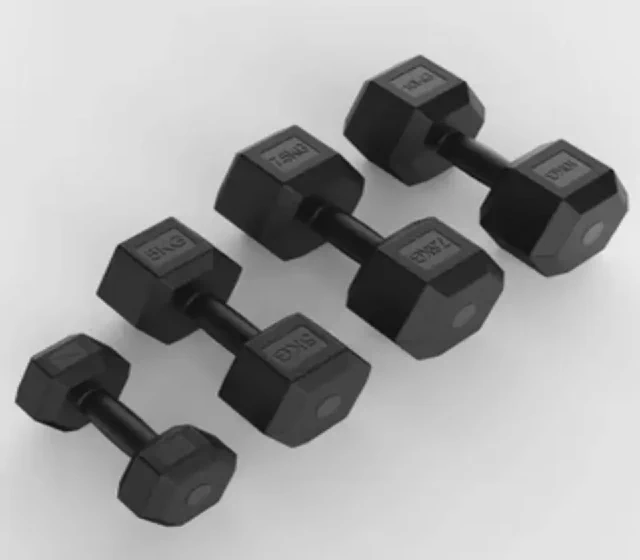
Commercial Eco Cement Core Hex Dumbbells, Low Noise Shock-Absorb Rubber Encased Anti-Roll Weights for Gym Studio Strength Gear
- MIC category
- Dumbbell
This supplier listing describes a commercial eco cement-core dumbbell with a rubber-encased, anti-roll hex design and a low-noise positioning. A fixed hex shape can be convenient for straightforward workouts: pick up the chosen pair, train and put them down without changing plates or selectors. The trade-off is that a complete training range needs multiple pairs and a deliberate storage solution.
Best for People who prefer immediate setup and repeat a small selection of exercises and weights.
- Fixed format allows quick transitions between sets
- Hex shape is described as anti-roll
- Rubber-encased construction is listed as a low-noise feature
Confirm before inquiry: The listing does not establish the product's exact dimensions, total weight range, floor compatibility or long-term durability.
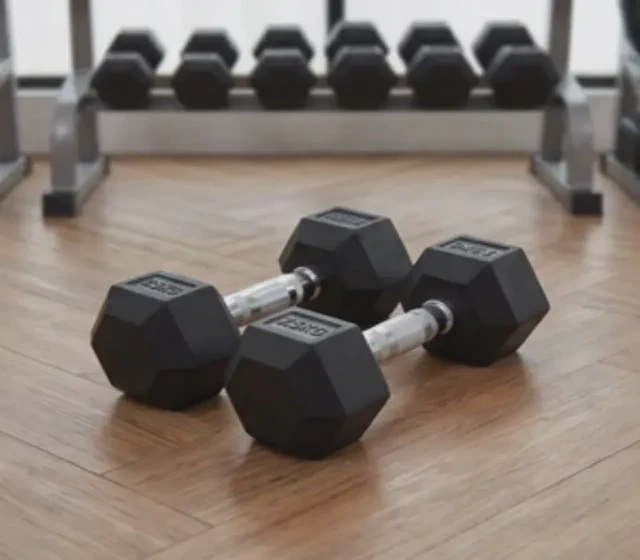
Non-Slip Customizable Iron for Home Gym Workout Rubber Hex Dumbbell
- MIC category
- Dumbbell
The supplier listing names this as a customizable iron dumbbell with a non-slip surface and rubber hex construction. It fits the uncomplicated end of home strength training: a fixed pair is ready whenever you are, with no adjustment hardware to operate. That simplicity can be appealing for beginners, although building a broad range of weights will require more individual pairs and more storage.
Best for Home users who want familiar fixed dumbbells for a focused routine.
- Fixed weight keeps setup simple
- Listing describes a non-slip surface
- Hex shape can make storage and floor placement easier than round heads
Confirm before inquiry: Confirm the available weights, handle dimensions, coating details and customization options with the supplier before ordering.
Durability and maintenance
Fixed dumbbells have fewer moving parts, which is a meaningful advantage for long-term simplicity. There is no selector mechanism to jam and no adjustment base to keep aligned. That does not guarantee better durability: construction, handle attachment, coating and storage conditions still matter.
Adjustable sets need a little more care. Keep the mechanism free of dirt, avoid dropping the dumbbell and check that plates or locking components are secure before lifting. A damaged adjustment part can affect the whole set, whereas damage to one fixed pair does not necessarily affect the rest of a collection.
The supplier descriptions for the fixed options mention rubber-encased construction, cement or iron cores, and non-slip or low-noise features. Treat these as listing claims rather than independently verified performance results. Before purchase, ask for clear specifications on materials, handle diameter, available weights and any care instructions.
Which format suits a simple full-body workout?
Choose adjustable dumbbells if you want to perform a broad range of movements with minimal equipment. They are particularly useful for a small-space routine built around goblet squats, Romanian deadlifts, one-arm rows, floor presses, overhead presses, split squats and curls. You can progress by adding weight gradually, provided the increments suit your training.
Choose fixed dumbbells if you want the most direct training experience. They are a good fit for a routine with a few repeated exercises, or for a household where more than one person trains at different fixed loads. They are also convenient when you regularly move between exercises without wanting to adjust anything.
A mixed approach can work too. Some people use one adjustable set for heavier compound movements and one or two fixed pairs for lighter exercises. That can be a sensible compromise, but it only saves space if the fixed additions stay limited.
Buying checklist for a small home
Before choosing, measure the storage area rather than relying on a product photo. Check the dumbbell length, the base or tray footprint and the clearance needed to pick the weight up safely.
Then consider:
- How many different weights will you actually use?
- Do you perform circuits or take longer rests between sets?
- Is the handle comfortable for pressing and pulling?
- Can you store the dumbbells without blocking a walkway?
- Will the coating or rubber surface suit your floor?
- Are the listed weight increments appropriate for gradual progression?
- Does the supplier provide the dimensions and adjustment details you need?
For most beginners in a small home, start with the format that removes the biggest obstacle. If clutter is the problem, choose adjustable. If fiddly changes are the problem, choose fixed. Either can support effective strength training when the load is manageable, technique is controlled and the equipment is stored safely.
Health note: Strength training is not risk-free. Begin with a load you can control, keep a clear workout area and stop if you feel sharp pain, dizziness or unusual shortness of breath. If you have an injury, medical condition or are returning to exercise after a long break, seek advice from a qualified health professional before starting.
This article offers general information, not medical advice. Adjust activity to your experience and seek qualified guidance when needed.
FAQ
Are adjustable dumbbells better than fixed dumbbells for a small home gym?
Usually, yes, if you need several weights but have limited storage. One adjustable set can replace multiple pairs. Fixed dumbbells may still be better if you value quick weight changes, simple handling and maximum durability.
Are adjustable dumbbells difficult to change during a workout?
They can be slower than picking up a different fixed pair, particularly when the adjustment system requires several steps. They work best for routines with planned sets rather than rapid circuits that change weight constantly.
Do fixed dumbbells take up more space?
A single pair does not, but a useful range of fixed weights needs a rack, shelf or several floor positions. That storage footprint can become much larger than one adjustable set.
What should beginners buy first?
Choose an adjustable set if your priority is covering presses, rows, squats, lunges and curls with minimal equipment. Choose fixed dumbbells if you prefer the simplest possible setup and already know which few weights you will use.
Are rubber-encased or cement-core dumbbells suitable for home use?
They may be practical for home workouts, but the listing description is not a substitute for checking construction details. Look for a comfortable handle, secure heads, sensible noise control and a surface that will not damage the floor.