Adjustable Dumbbells vs Fixed Dumbbells: Which Set Works Best in a Small Home?
Comparing adjustable dumbbells, compact fixed pairs and selectorized systems for storage, comfort, weight changes, durability and value in a small home gym.
If you have a small home, start with adjustable dumbbells unless you strongly prefer the feel and simplicity of a fixed pair. One adjustable set can cover several training loads in the footprint of a single pair, while fixed dumbbells become space-hungry as soon as you add more than one or two weights.
That does not make fixed dumbbells a poor choice. They are often quicker to pick up, easier to understand and more familiar in the hand. The better option in the adjustable dumbbells vs fixed dumbbells debate depends on how much room you have, how often you change weights, and whether your workouts are simple or varied.
The three formats to consider
A fixed dumbbell is a single, permanent weight. You pick it up and train; there are no plates to add and no selector to check. A compact fixed pair can be ideal for a beginner who has a short routine built around movements such as goblet squats, rows, presses and curls.
Traditional adjustable dumbbells change load by adding or removing plates or other components. They can provide several weights in one pair, but changing resistance takes more time and requires somewhere to place the loose parts.
Selectorized dumbbells use a dial, pin, twist handle or another built-in mechanism to select resistance. They are generally the quickest adjustable format for circuits, although the mechanism adds complexity and the body can be longer or less familiar than a fixed dumbbell.
Storage: the clearest difference
For a small home, storage is usually the deciding factor. General comparisons put a pair of adjustable dumbbells at roughly 2–5 square feet of floor space, while a comparable fixed set with a rack may need around 10–25 square feet or more. These are broad estimates rather than guarantees: trays, stands, handle length and the number of weights all change the result.
The important point is that fixed dumbbells multiply. A pair at 10 pounds is manageable, but a useful collection might also include 15, 20, 25 and 30 pounds. Even if each pair is compact, the total takes up room and needs a safe, organized storage spot.
An adjustable set can free that space for a bench, exercise mat or simply a clear area to train. Do not measure only the cupboard or shelf where the dumbbells will sit. Leave enough room to remove them, adjust them and put them down without catching a wall, sofa or nearby furniture.
Weight changes and workout flow
Fixed dumbbells win for speed. There is no setup between sets, which matters if you are moving through a circuit or alternating exercises quickly. They are also convenient when two people are training together, since each person can use a different pair.
Adjustable dumbbells are slower when the load must be changed. Plate-loaded versions may require several steps, while selectorized designs are faster but still need to be returned to their cradles or trays correctly. For a straightforward session with long rest periods, that inconvenience is usually minor. For fast-paced circuits, it may become noticeable.
Think about your actual routine. If you perform three movements at one weight and then finish, a fixed pair may be all you need. If you train your shoulders with light loads, your legs with heavier loads and your rows somewhere in between, adjustability becomes more valuable.
Comfort and handling
Fixed dumbbells tend to have a familiar, balanced shape. The handle is often shorter and the ends are less likely to interfere with your body during curls, lateral raises or pressing movements. A hex profile can also help prevent the weight from rolling away when you set it down.
Adjustable dumbbells can feel different. Selectorized models may have longer handles or wider ends because the mechanism needs space. That can affect close-to-body exercises and may require a slightly different path during curls or raises. Plate-loaded designs can also feel less balanced if the plates are not secured properly.
For either format, grip comfort matters more than a small difference in advertised capacity. A dumbbell that feels awkward or unstable can discourage consistent training. If possible, check the handle diameter, total length and adjustment method before committing to a model.
Durability and safe use
Fixed dumbbells have a construction advantage: there are fewer moving parts. A simple cast, steel or encased design can withstand regular use with relatively little maintenance. That does not mean every fixed dumbbell is indestructible, especially on hard floors or when dropped from overhead.
Adjustable models contain parts that must be treated with more care. Selectors, pins, collars and plates should be checked before each session. Use the dumbbells as directed, keep loose components together and avoid dropping an adjustable model unless the manufacturer specifically says it is designed for that use.
A rubber-encased fixed dumbbell may be quieter on the floor, but it still deserves a controlled set-down. In an upstairs apartment, a mat can reduce noise and protect both the floor and the equipment.
Capacity and value
Adjustables can offer better value when they replace several pairs. They also support gradual progression: you can increase resistance as a movement becomes easier without buying a new set every few weeks.
The limitation is maximum weight. Many adjustable systems top out around 50 pounds, while quality fixed dumbbells are available at 100 pounds or more. A beginner may never need that upper range, but a strong lifter could outgrow a compact system and need to buy again.
Do not buy by maximum weight alone. Check the starting weight, increments and whether the load is suitable for light exercises such as raises and warm-ups. A set that starts too heavy may be less useful than a smaller system with more practical lower settings.
For a product-led comparison, the supplier-listed Adjustable Dumbbell 24kg 52.5lb 40kg 90lb Gym Dumbbell Fitness Equipment offers two stated capacity options, while the Commercial Eco Cement Core Hex Dumbbells provide a simpler fixed format. The Adjustable Dumbbell Set 24kg 40kg 52.5lb 90lb is presented as a set format for users who want adjustable resistance across two dumbbells. In each case, confirm the exact configuration and included components before ordering.
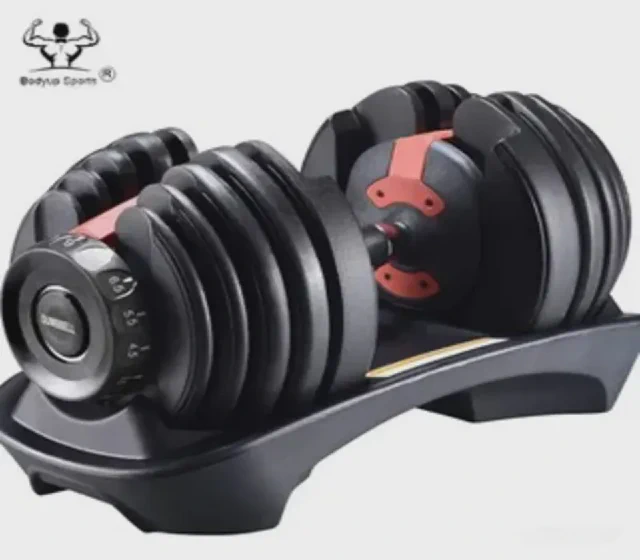
Adjustable Dumbbell 24kg 52.5lb 40kg 90lb Gym Dumbbell Fitness Equipment
- MIC category
- Dumbbell
This supplier-listed adjustable dumbbell is presented in 24 kg (52.5 lb) and 40 kg (90 lb) versions. That range gives a small-home buyer a way to match capacity to current training without storing a full run of fixed pairs. Confirm the exact configuration, adjustment method and whether the listing refers to one dumbbell or a pair before ordering.
Best for People who want one compact adjustable format with the option of choosing between moderate and heavier capacity.
- Supplier listing presents 24 kg (52.5 lb) and 40 kg (90 lb) versions
- Can reduce the need for multiple fixed-weight pairs
- Capacity should be selected according to realistic training needs
Confirm before inquiry: The details above are supplier-listing claims, not independent product testing. Check the complete specification and handling instructions before purchase.
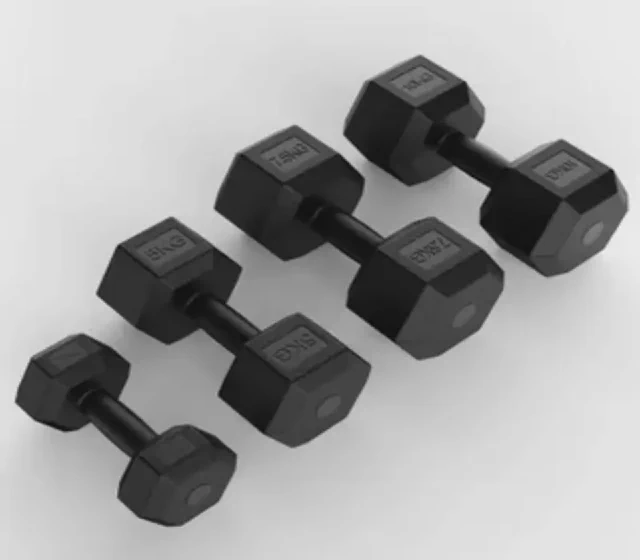
Commercial Eco Cement Core Hex Dumbbells, Low Noise Shock-Absorb Rubber Encased Anti-Roll Weights for Gym Studio Strength Gear
- MIC category
- Dumbbell
This supplier-listed fixed dumbbell uses a cement core with a rubber-encased, anti-roll hex design. A fixed pair has no selector or removable plates, which can make it straightforward to pick up and use between exercises. The trade-off is that adding more training loads means buying and storing more pairs.
Best for Beginners who prefer simple handling and expect to train with one compact pair rather than build a complete dumbbell range.
- Fixed-weight construction
- Hex profile designed to resist rolling
- Rubber-encased construction is listed as a lower-noise feature
Confirm before inquiry: These features come from the supplier listing. Confirm the actual weight, dimensions and pair configuration before ordering.
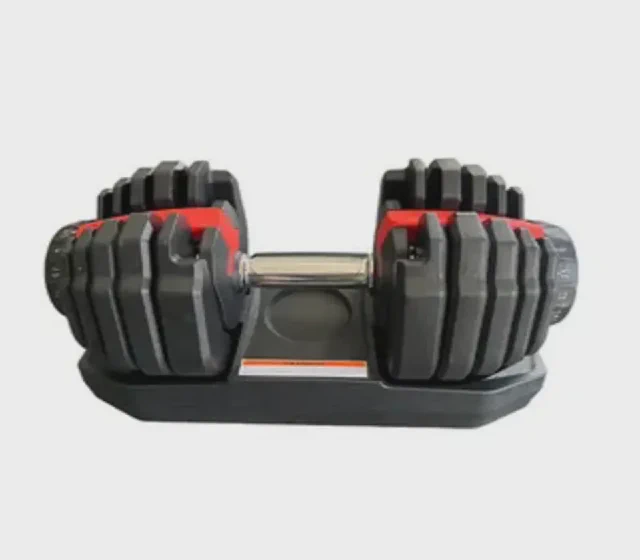
Adjustable Dumbbell Set 24kg 40kg 52.5lb 90lb for Fitness Equipment Gym Equipment
- MIC category
- Dumbbell
This supplier-listed set is described in 24 kg (52.5 lb) and 40 kg (90 lb) versions for fitness and gym use. As a set, it may suit a buyer looking for two adjustable training tools rather than a single dumbbell, but the listing should be checked carefully for the included quantity, adjustment system and storage arrangement.
Best for Home users who want adjustable resistance for two-handed exercises and a broader range of movements without purchasing numerous fixed pairs.
- Supplier listing presents 24 kg (52.5 lb) and 40 kg (90 lb) versions
- Set format can support bilateral exercises
- Potentially more space-efficient than a complete fixed collection
Confirm before inquiry: The product information is based on the supplier listing and has not been independently verified by Adore Sport.
Which should you choose?
Choose adjustable dumbbells if your storage space is tight, you want several resistance levels, or you expect to progress beyond one beginner weight. A selectorized system is especially useful when quick changes matter, while a plate-loaded design may suit a slower, more deliberate workout.
Choose a fixed pair if you want the simplest possible setup, already know the weight you need, or value a shorter, more familiar dumbbell shape. It can be the better low-clutter choice when you genuinely plan to own only one pair.
Before buying, measure the storage location, check the complete pair dimensions, identify the lightest and heaviest settings, and decide whether you will need both dumbbells at the same load. In a small home, the best set is not the one with the most metal. It is the one that fits safely, changes easily enough and gets used consistently.
This article is for general information and does not replace medical or professional exercise advice. If you have an injury, medical condition or questions about starting strength training, speak with a qualified healthcare professional. Stop exercising if you experience unusual pain, dizziness or other concerning symptoms.
This article offers general information, not medical advice. Adjust activity to your experience and seek qualified guidance when needed.
FAQ
Are adjustable dumbbells better than fixed dumbbells for a small home?
Usually, yes. One adjustable pair can replace several fixed-weight pairs and may need roughly 2–5 square feet of floor space, while a fixed set with a rack can use around 10–25 square feet or more. Exact dimensions vary by model and storage method.
Are fixed dumbbells more durable than adjustable dumbbells?
Fixed dumbbells have a simpler construction, so there are fewer moving parts to maintain or damage. Adjustable models can still be durable, but plates, selectors, pins and locking mechanisms need more careful handling and should not automatically be dropped like commercial fixed dumbbells.
What dumbbell weight should a beginner buy?
That depends on the exercise and the person. Many beginners can start around 5–15 pounds for common upper-body movements, while lower-body exercises may call for more. Choose a load that allows controlled repetitions without compromising technique, and consider an adjustable set if your strength is likely to progress.
What is the difference between adjustable and selectorized dumbbells?
Both change resistance, but traditional adjustable dumbbells generally require adding or removing plates, collars or other components. Selectorized dumbbells use a dial, pin, twist handle or similar mechanism to select the load from a built-in stack. Selectorized systems are faster to change but can have more specialized parts.
Can adjustable dumbbells replace a full fixed-dumbbell set?
For many home workouts, yes. A suitable pair can cover presses, rows, curls, raises, squats and deadlifts across several loads. However, serious lifters may eventually need heavier maximum weights, multiple pairs for faster circuits or the more familiar balance of fixed commercial dumbbells.