Adjustable Dumbbells vs Fixed Dumbbells: Which Home Set Is Worth the Space?
Compare adjustable and fixed dumbbells for a small home gym: space, durability, grip, change speed, cost, and progressive overload.
Choose adjustable dumbbells if you need one pair that can grow with you and your workout corner is closer to a closet than a garage. Choose fixed dumbbells if you want the fastest possible change between weights and you have room for a rack. For most beginner home lifters, the adjustable option is the more practical first purchase: it replaces a row of fixed pairs, supports progressive overload, and lets you start training without committing to a wall of iron.
What ‘worth the space’ really means
The biggest difference between adjustable and fixed dumbbells isn’t the steel — it’s the footprint. A complete set of fixed dumbbells on a rack can take up 10 to 25 square feet, while an adjustable pair can cover a similar training range in roughly 2 to 5 square feet. That gap changes everything in a small apartment, spare bedroom, or shared living space.
For a beginner, the storage advantage is also the consistency advantage. When you don’t have to clear away a rack or rearrange furniture to train, you’re more likely to actually use the dumbbells. A single adjustable pair with its base is a complete setup. There’s no second shelf, no heavy rack, and no collection of plates scattered on the floor.
Change speed: grab vs dial
Fixed dumbbells have one important advantage: when you own the right pairs, changing weight is just setting down one dumbbell and picking up another. That’s why drop sets, supersets, and circuits feel smoother with a fixed rack. But a small fixed set of two or three pairs doesn’t give you that benefit across a full workout. You still have to work with the increments you own.
Adjustable dumbbells take more time between sets. Some selectorized models change weight in a few seconds with a dial or pin; plate-loaded adjustable dumbbells can take longer. The motion is straightforward, but it’s not as instant as grabbing a different pair. For a beginner doing straight sets with a planned rest period, the extra seconds don’t matter much. If your training style is fast and improvisational, fixed weights feel more natural.
Grip shape and feel
The feel of a dumbbell in your hand matters more than most beginners expect. Fixed dumbbells use a simple handle-and-plate shape. The handle is exposed steel, and the weight sits outside your hand at both ends. That shape is balanced, familiar, and rarely gets in the way of an exercise.
Adjustable dumbbells are less uniform. Selectorized models often use a wider central block or a cradle-based plate housing, which can feel bulky during curls, presses, or movements where the dumbbell needs to pass close to the body. Plate-loaded adjustable dumbbells feel more like conventional dumbbells, but changing the plates is slower. If grip comfort and natural movement are priorities, handle length and plate shape may be the deciding factor.
Durability and the drop test
Fixed dumbbells are simple by design. Rubber-coated or urethane-coated heads protect your floor and the dumbbell, and there are few moving parts to fail. They tolerate being set down hard, and some commercial-style models are built for years of gym abuse.
Adjustable dumbbells have moving parts. Weight-select mechanisms, plastic bases, and alignment pins can shift or break if dropped repeatedly. That doesn’t mean they’re delicate; it means they reward controlled lifting. If you’re learning good form and using a mat, an adjustable pair can last a long time. But if you expect to drop weights after failed reps, fixed dumbbells are more forgiving.
Cost and progressive overload
Adjustable dumbbells are generally the cheaper way to cover a wide range of weights. One pair can replace a whole row of fixed pairs, and the upfront price is lower than buying a full set. For a beginner who isn’t sure which weights they’ll need in a year, that flexibility is valuable: you buy one pair, and the weight grows with you.
Fixed dumbbells require more planning. Buying only the weights you need at the moment is the smart approach. You can start with one or two pairs and add more later. If you eventually train heavy enough to exceed the maximum of a typical adjustable set — usually around 50 to 80 lb per dumbbell — fixed dumbbells give you a path to heavier loads without switching tools.
If you choose fixed dumbbells, buy them with a plan
A fixed dumbbell set isn’t a mistake; it’s a bigger commitment. Start with a small selection instead of a full rack. Look for a coating that suits your floor, a hex or contoured shape that won’t roll, and a handle that feels comfortable in your hand.
The three fixed-dumbbell formats below show different ways to build a compact set.
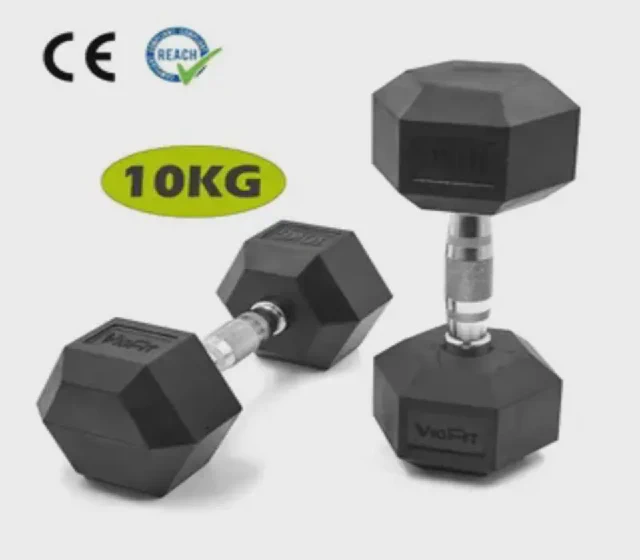
This is a straightforward fixed dumbbell with a rubber-coated hex head. The hexagonal design stops it from rolling away during a circuit, and the rubber coating protects both the floor and the dumbbell when you set it down. The supplier listing positions it as a commercial gym product, but a single fixed weight like this can also work for a home lifter who wants to start with one pair and add heavier pairs later.
Best for A beginner who wants one simple fixed dumbbell and is not ready to commit to a full rack.
- Rubber-coated hex head
- Hex shape prevents rolling
- Commercial-style fixed dumbbell per supplier listing
Confirm before inquiry: Confirm whether the listing price covers one dumbbell or a pair before ordering.
A single fixed option is a low-risk way to see if fixed dumbbells fit your routine. Rubber-coated hex heads are stable, and the shape doesn’t roll between sets.
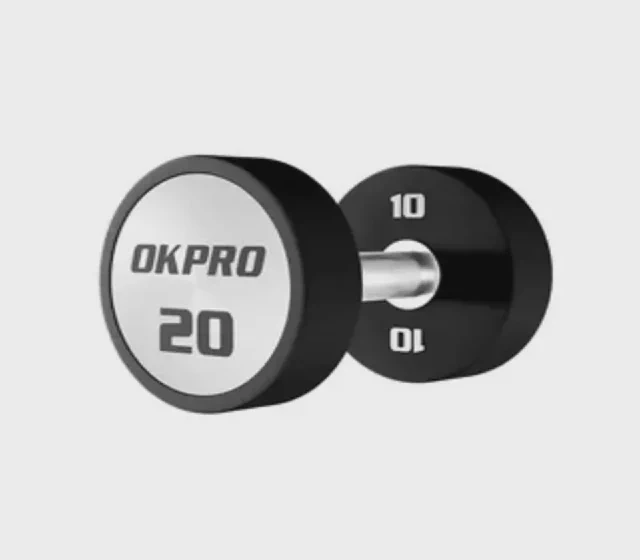
Factory Direct Selling High Quality Urethane Dumbbell Set for Commercial Gym Fitness
- MIC category
- Dumbbell
This is a urethane-coated dumbbell set aimed at commercial fitness use, according to the supplier listing. Urethane is a harder-wearing coating than vinyl, which is useful if you train regularly and don't want the dumbbell heads to scuff. A small set like this can be paired with a compact rack, giving you multiple fixed weights without taking over the room.
Best for A home lifter who wants several fixed weights in a durable, commercial-style finish.
- Urethane coating for durability
- Set format allows multiple weights
- Commercial gym positioning per supplier listing
Confirm before inquiry: Check the exact weight increments in the set to make sure they cover the loads you need.
If you know you want multiple weights, a small set can still fit a modest space. Urethane coating is one of the more durable finishes used on dumbbells, which makes this format a longer-lasting choice for regular home training.
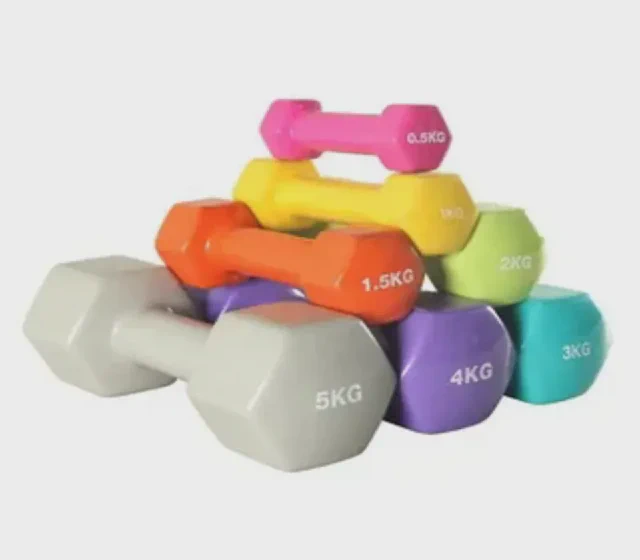
Sport Vinyl Dipped Dumbbell Set Colorful Hex Hand Weight Hex Dumbbell
- MIC category
- Dumbbell
This is a vinyl-dipped hex dumbbell set with a colorful coating. Vinyl is lighter-duty than rubber or urethane, so this format is better suited to controlled home training on a mat or carpet. The hex shape keeps the dumbbell stable between sets, and the colors make it easy to grab the right weight quickly.
Best for A budget-conscious beginner who wants an easy-to-read, floor-friendly set for lighter workouts.
- Colorful vinyl coating
- Hex shape prevents rolling
- Entry-level fixed dumbbell format
Confirm before inquiry: Because vinyl can be scratched by repeated drops, use this set on a mat and lower the weights under control.
A vinyl-dipped hex set is a budget-friendly entry point. The hex shape keeps the dumbbells stable, and the colorful coating makes it easier to identify weights quickly. It’s best for controlled training on a mat.
The final call
For a beginner with a small workout corner, adjustable dumbbells are usually the better use of space. They give you a full range of weights in one compact pair, keep the floor clear, and support progressive overload without a second trip to the store. Fixed dumbbells still make sense if you want instant weight changes, a traditional feel, or heavier loads. If that’s you, buy a small fixed set with a plan rather than a full rack you don’t have room for.
As with any strength training routine, check with a doctor or physical therapist before starting a new program.
This article offers general information, not medical advice. Adjust activity to your experience and seek qualified guidance when needed.
FAQ
Can adjustable dumbbells fully replace a set of fixed dumbbells?
For most home beginners, yes. One adjustable pair can cover a wide range of weights in a fraction of the floor space, so it supports progressive overload without buying several fixed pairs. The main trade-off is that adjustable models can feel different in the hand and usually take a few seconds longer to change. If you mostly do straight sets and controlled movements, that trade-off is easy to live with.
Are adjustable dumbbells durable enough for daily lifting?
Yes, if you treat them carefully. The moving parts and locking mechanisms are stronger than they used to be, but they are not designed for repeated heavy drops. Use a mat, lower the weights under control, and keep the mechanism clean. Fixed dumbbells are more forgiving if you tend to drop weights, but for most controlled home training, an adjustable pair will hold up.
Which type is better for progressive overload?
Both. Progressive overload simply means gradually increasing the stress on your muscles. Adjustable dumbbells make it easy to add small increments without buying new gear. Fixed dumbbells also work, but you need to own or buy the next weight up. Adjustable is usually the more space-efficient and cost-effective way to progress at home, especially while you're still building strength.