Adjustable vs Fixed Dumbbells for Small Spaces: Which Is Easier to Start With?
A practical comparison of adjustable dumbbells, fixed-weight pairs and light hand-weight sets for beginners training in a small apartment.
If your priority is starting strength training without turning a small apartment into a permanent gym, choose adjustable dumbbells first. One pair can cover several exercises and resistance levels while taking the place of multiple fixed pairs. Fixed dumbbells are easier to pick up and use immediately, and light hand-weight sets can feel less daunting, but both formats are easier to outgrow when space is tight.
That answer comes with an important caveat: the best adjustable pair is not automatically the best first purchase. A bulky, awkward model with large weight jumps can be frustrating for a beginner. Likewise, a single fixed pair may be the simplest and most affordable way to find out whether you enjoy training at home. The right choice depends on how much room you have, how often you expect to train and whether you want equipment that can progress with you.
The small-apartment comparison at a glance
Adjustable dumbbells: Best overall for limited storage and varied full-body training. They usually cost more upfront than one fixed pair and take a few seconds to change, but they can replace a growing pile of equipment.
Fixed-weight dumbbells: Best for simple handling, quick transitions and a conventional dumbbell feel. A single pair is compact enough, but a meaningful range of weights generally requires several pairs and some kind of rack or storage system.
Light hand weights or compact neoprene-style sets: Best for low-pressure first sessions, mobility work and light upper-body training. They are not necessarily a complete long-term strength solution, especially for lower-body exercises.
Adjustable dumbbells: the practical default for most renters
The strongest argument for adjustable dumbbells is not that they make training more effective; a weight is a weight when it is secure and you can use it well. Their advantage is that one pair can offer several loads in one compact storage footprint. That matters when your workout area is also your living room, bedroom or hallway between sessions.
For a beginner, adjustable weights also make exercise selection easier. You may need a relatively light setting for a shoulder press, reverse fly or biceps curl, but a heavier setting for a goblet squat, row or Romanian deadlift. With only one fixed pair, you often end up making one compromise: too light for your legs or too heavy for your shoulders.
The details to inspect are the minimum, maximum and increments. Smaller jumps are valuable. Moving from one setting to the next by a modest amount can make progression feel manageable; a large increase may be fine for squats but abrupt for smaller muscle groups. Do not assume an advertised maximum weight tells the whole story. Check whether it is per dumbbell or for the pair, and whether any expansion pieces are included.
There are trade-offs. Selectorized designs with dials, pins or cradles have moving parts. You need to set both dumbbells evenly, make sure the mechanism engages properly and return them carefully to their trays. Plate-loaded versions can take longer to adjust. That inconvenience becomes more noticeable in fast circuit workouts, although it is usually minor in a beginner routine built around a few controlled sets.
Adjustables can also feel longer or more squared-off than traditional dumbbells. Before buying, consider the exercises you want to do on the floor. A very bulky pair may feel less comfortable for push-ups with hands on the handles, close-grip pressing or some rowing positions. That does not rule them out; it simply makes compact design and secure handling worth prioritising.
Fixed dumbbells: easier in the moment, bigger over time
Fixed dumbbells have a direct appeal. There is no adjustment step, no selector to check and no tray to line up. You pick up the right pair and start your set. For a workout that alternates between several exercises, changing from a lighter pair to a heavier one is almost instant.
They are also mechanically simple. A well-made fixed dumbbell has no adjustment mechanism to maintain, and the familiar handle-and-head shape can feel predictable in the hand. For people who already know they want one or two specific weights for a concise routine, that simplicity is a real benefit.
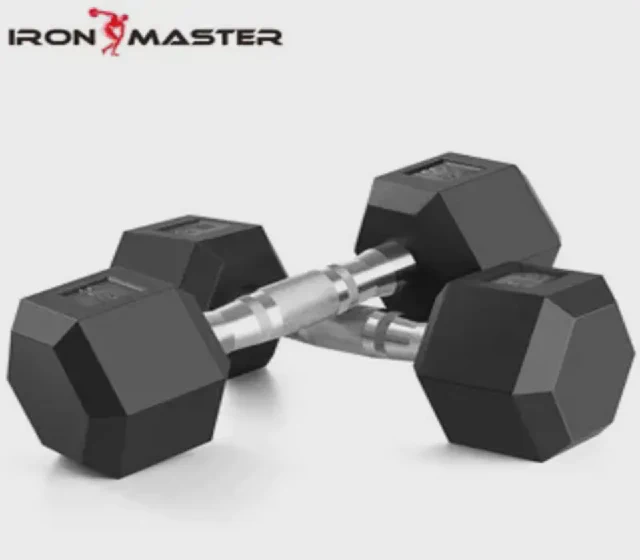
Rubber Coated Solid Steel Cast Hex Weights Dumbbells for Muscle Toning, Full Body Workout, Home Gym
- MIC category
- Dumbbell
A fixed hex dumbbell illustrates why many people still prefer traditional weights: pick up the pair and begin, with no dial, selector or plates to change. The supplier listing describes this option as rubber-coated solid steel cast hex weights for home-gym and full-body workouts. A hex shape can also be more settled on the floor than a round dumbbell, although no weight should be dropped in an apartment.
Best for People who want a straightforward pair for a consistent routine and have room to store one or two selected weights.
- Fixed-weight hex format
- Supplier listing describes rubber-coated solid steel cast construction
- Listed for muscle toning, full-body workouts and home-gym use
Confirm before inquiry: This is one fixed weight rather than a complete progression system. If you expect to need several loads, plan storage before adding more pairs.
The challenge is progression. One pair may be a perfectly sensible purchase, but it seldom stays sufficient for every exercise. Add lighter weights for shoulders, moderate weights for presses and rows, and heavier options for legs, and the storage question returns. Avoid keeping several loose pairs where they can roll, create a trip hazard or make cleaning difficult.
A full fixed set is most practical when you have a dedicated corner and can commit to safe storage. It is less appealing when furniture needs to move before every workout. Even a compact rack occupies floor space, and the space around it must still be usable.
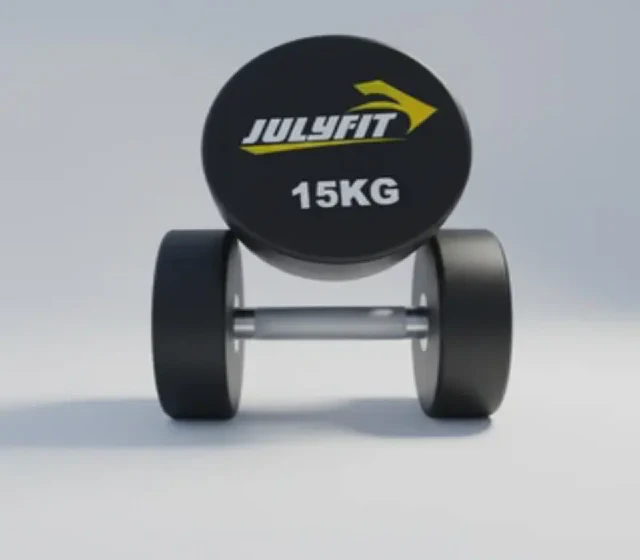
Home Gym Equipment Luxury Dumbbell Set Custom Logo CPU Dumbbells
- MIC category
- Dumbbell
A multi-pair fixed dumbbell set can make a home setup feel immediate and organised: each weight is ready when you need it. This supplier listing is for a custom-logo CPU dumbbell set. For an apartment beginner, its main lesson is practical rather than promotional: a set with multiple pairs needs a defined home, whether that is a low rack, a sturdy shelf designed for the load or a dedicated training corner.
Best for Home exercisers with a permanent workout area who want fast transitions between several fixed weights.
- Multi-pair fixed dumbbell-set format
- Supplier listing identifies CPU dumbbells
- Listed as home-gym equipment with custom-logo availability
Confirm before inquiry: Check the full set composition, individual weights, storage requirements and the total load placed on flooring or furniture. Supplier-listing customisation does not indicate that a particular configuration suits a small apartment.
If you choose fixed weights for a small apartment, resist the urge to buy an entire range immediately. Begin with one or two pairs chosen for your planned movements, then add only when consistent training proves you need them. This approach is slower than buying an adjustable system, but it avoids accumulating equipment that does not suit your routine.
Light hand weights and compact sets: the low-barrier route
Light hand weights are often the easiest format emotionally. They look approachable, are simple to store and can help you learn basic patterns such as pressing, rowing, carrying and controlled arm work. They also suit Pilates-inspired training, gentle conditioning and people returning to movement after a long break.
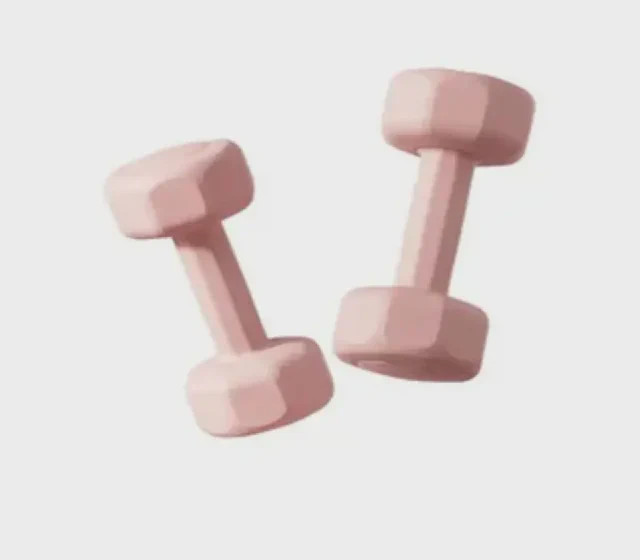
This listing is a useful example of the light hand-weight format that may appeal to someone who wants an unintimidating first step into home exercise. The supplier listing describes these as non-slip fitness hand bells for yoga and Pilates, which suggests a use case centred on controlled, low-load movements rather than heavy progressive lifting.
Best for Beginners prioritising gentle strength work, Pilates-style sessions, mobility routines or a compact supplement to bodyweight exercise.
- Light hand-weight format
- Supplier listing describes a non-slip design
- Positioned for yoga and Pilates-style training
Confirm before inquiry: Confirm the actual weight per hand bell before ordering. Light pairs can be practical for upper-body endurance work, but may be outgrown quickly for rows, squats and other larger-muscle exercises.
Their limitation is not that light training is useless. It can build confidence, improve coordination and provide meaningful challenge when repetitions, tempo and range of motion are appropriate. The limitation is that larger muscle groups usually adapt. If every set of squats, rows and hinges becomes easy, your options are to perform many more repetitions, use slower tempos, change the exercise or add resistance.
That makes compact light sets a good match for someone who wants a gentle first month, short living-room sessions or a supplement to walking, yoga and bodyweight work. They are a weaker match for a reader whose main goal is sustained full-body strength progression without buying more equipment later.
Noise, stability and the floor beneath you
For apartment training, the way you use dumbbells matters as much as their construction. Any dumbbell can create a sharp impact if dropped. Put a protective mat under your training area, lower weights deliberately and leave enough room to set them down safely. Do not rely on rubber coating, a soft-looking finish or a padded mat to make dropping weights acceptable for flooring or neighbours.
Fixed hex dumbbells tend not to roll as readily as round-headed weights, which can make between-set placement feel more secure. Adjustable dumbbells should be placed back in their intended trays with care, especially if the design uses loose plates or selector components. A rattling changeover may be more noticeable in a quiet building than the exercise itself.
Stability also means choosing an appropriate load. If you have to twist, jerk or lean heavily to get a weight moving, it is probably not the right starting resistance for that exercise. A lighter setting used with clean control is more useful than a heavier setting that changes your movement.
A realistic beginner progression plan
You do not need a different dumbbell for every workout. Two or three sessions a week can cover the fundamentals: a squat or lunge pattern, a hip hinge, a row, a press, a carry and some optional arm or shoulder work. Start with one or two sets of controlled repetitions, learn the movements and add volume or resistance gradually.
Adjustable dumbbells make this progression straightforward when they offer usable increments. Fixed pairs can work just as well if your programme is built around the weights you own, although you may eventually need another pair. Light hand weights work best when expectations are clear: they can start the habit, but they may not be the final equipment answer.
Stop an exercise if you feel sharp pain, numbness, dizziness or symptoms that concern you. If you are pregnant, managing an injury or medical condition, or returning after surgery, seek personalised guidance from a qualified health professional before beginning a new resistance-training routine.
The decision
Choose adjustable dumbbells if you want one purchase that can support a varied beginner programme, have very limited storage and are willing to spend a little time changing settings.
Choose one or two fixed pairs if you value the simplest possible setup, prefer traditional handling and have a clear plan for storage. They are especially sensible when you only need a limited range right now.
Choose light hand weights or a compact neoprene-style set if the main barrier is getting started at all. They can make home exercise feel accessible, but buy them knowing that strength progress may eventually require heavier resistance.
For most small-apartment beginners, adjustable dumbbells offer the least clutter and the most room to grow. But the easier system is ultimately the one you can store safely, lift with control and bring out often enough to make training a habit.
This article offers general information, not medical advice. Adjust activity to your experience and seek qualified guidance when needed.
FAQ
Are adjustable dumbbells good for beginners?
Yes, provided the lowest setting is manageable and the weight increments are not too large. A pair that changes in small steps can let a beginner use lighter resistance for presses, raises and curls while using heavier settings for rows, squats and deadlifts.
Should I buy fixed dumbbells instead of adjustable dumbbells?
Choose fixed dumbbells if you only need one or two pairs, value instant weight changes and prefer the familiar feel of a single-piece dumbbell. They make particular sense when your routine is simple and you have a reliable storage spot. A broad fixed set, however, becomes bulky quickly.
What dumbbell weights should a beginner start with?
There is no universal starting number. Your suitable weight depends on the exercise, your training history and your control. Many people need a lighter load for overhead pressing and lateral raises than for rows, squats or Romanian deadlifts. Start with a weight that allows steady, pain-free technique and leave a few good repetitions in reserve.
Are neoprene dumbbell sets enough for strength training?
They can be enough for a first phase of movement practice, light resistance work and exercises with higher repetitions. Their limitation is progression: once the weights feel easy, the next available pair may be too heavy or may not exist. They are often most useful alongside bodyweight training, bands or a plan to add heavier equipment later.
Will dumbbells annoy downstairs neighbours?
They can if they are dropped, set down sharply or used on a hard floor. Use a dense exercise mat or protective flooring, lower the weights under control and avoid exercises that encourage impact. Adjustable models should also be returned carefully to their trays because some mechanisms and loose components can rattle.