Adjustable vs Fixed Dumbbells: Which Set Works Best in a Small Home?
Comparing adjustable, selectorized, fixed hex and neoprene dumbbells for storage, comfort, noise, durability and progressive strength training in a small home.
If you have limited room and want to build strength progressively, choose an adjustable dumbbell pair first. It gives you several resistance options without filling a cupboard or wall with individual weights. Fixed dumbbells remain the simpler, faster option for circuits and drop sets, while a small neoprene set is more comfortable for light training but may not last as your main strength tool.
That is the practical answer to the adjustable vs fixed dumbbells question. The better choice depends on how much resistance you need, how often you change weights and whether your home can accommodate more than one pair.
The four formats worth considering
Compact adjustable dumbbells
A compact adjustable dumbbell uses one handle and a selection mechanism or plates to create different loads. It is usually the most efficient format for a small home because one pair can cover warm-ups, pressing, rows, lunges and heavier lower-body movements.
The trade-off is complexity. You need to check that the plates or internal mechanism are properly secured before every set. Some adjustable designs can also feel longer or less balanced than a fixed dumbbell, especially at lighter settings. If you regularly move between exercises, choose a system with clear, reliable adjustments rather than one that turns weight changes into a long interruption.
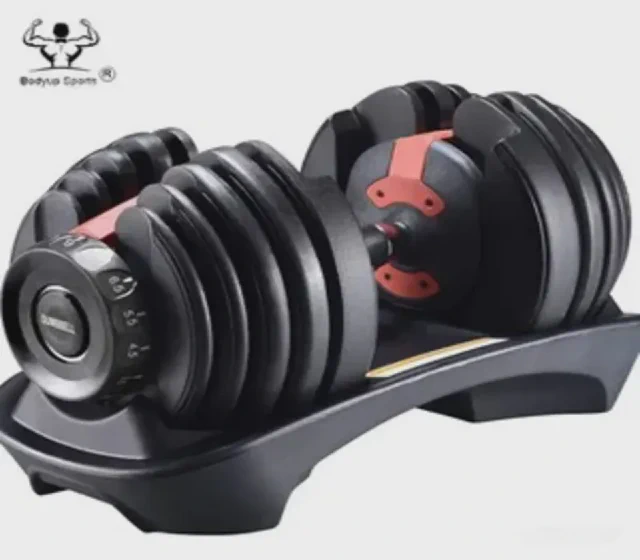
Adjustable Dumbbell 24kg 52.5lb 40kg 90lb Gym Dumbbell Fitness Equipment
- MIC category
- Dumbbell
The supplier listing from Hefei Bodyup Sports Co., Ltd. presents this as an adjustable dumbbell product in the 24kg/52.5lb and 40kg/90lb naming range. Its main appeal in a small home is the adjustable format: one pair can replace several fixed pairs, provided the mechanism feels secure and the selected load suits your training. Check the exact configuration, adjustment method and whether the stated load is per dumbbell or for the complete set before ordering.
Best for Adults who want one space-conscious pair that can support gradual progression beyond very light beginner work.
- Adjustable format reduces the need for multiple dumbbell pairs.
- The product name references both 24kg/52.5lb and 40kg/90lb configurations.
- Supplier: Hefei Bodyup Sports Co., Ltd.
Confirm before inquiry: Treat the listed weight figures as supplier-listing information and confirm the selected version, included components and locking system before purchase.
Selectorized adjustable sets
Selectorized dumbbells use a dial, pin or comparable control to select the load. They are the most convenient adjustable option when a workout includes frequent weight changes. A guide comparison places selectorized adjustments at under five seconds for many models, although actual speed depends on the design and how carefully you handle it.
Their main advantage is workout flow: you can use a lighter setting for lateral raises, a moderate one for presses and a heavier one for rows without assembling plates. Their disadvantages include a higher reliance on moving parts, a less traditional feel and the need to return the dumbbell fully to its base before changing the load. They should not be dropped or swung carelessly.
Traditional fixed hex dumbbells
Fixed hex dumbbells are the most straightforward option. Pick up the weight and train. There is no dial, collar or plate stack to check, and a hexagonal head can be useful for supported floor exercises because it is less likely to roll away.
They are also durable in a simple, understandable way: fewer mechanisms mean fewer adjustment parts to maintain. Rubber-coated versions can be less harsh on floors than bare cast iron, but they are not indestructible. Dropping weights can damage the dumbbell, flooring or your ears, particularly in an apartment.
The problem is storage. A pair takes little space, but a complete progression quickly becomes a collection. Industry comparisons commonly put a full fixed set with a rack at roughly 10–25 square feet or more, compared with around 2–5 square feet for many adjustable setups. Treat those figures as broad planning estimates rather than promises for every product.
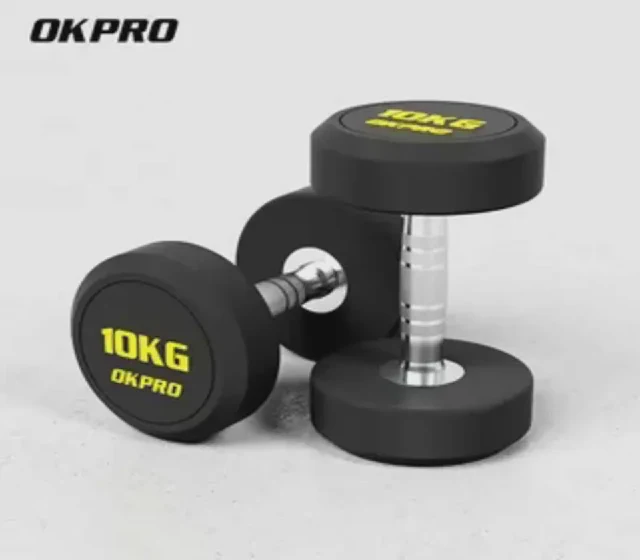
Wholesale Custom Logo Weight Lifting Sports Gym Equipment PRO-Style Rubber Dumbbell
- MIC category
- Dumbbell
Nantong Ok Sporting Co., Ltd. lists this as a wholesale custom-logo PRO-style rubber dumbbell. A fixed rubber dumbbell is ready to lift immediately, with no plates to load or mechanism to maintain. That simplicity suits circuits and short home sessions, but a single pair gives you only one resistance level. Building a useful range means buying more pairs and finding a stable storage solution.
Best for Users who prefer a conventional, grab-and-go dumbbell and have room for individual weights or already know the loads they use most.
- Fixed format means no adjustment before an exercise.
- Rubber construction may help protect surfaces compared with uncoated metal, when handled responsibly.
- Supplier: Nantong Ok Sporting Co., Ltd.
Confirm before inquiry: The listing provides the product format and supplier, but not a verified weight, dimensions or complete-set contents; confirm those details before purchase.
Small neoprene dumbbell sets
Neoprene dumbbells are often the friendliest starting point for light exercise. The coating feels warmer and softer in the hand than bare metal, which can help during high-repetition movements, mobility sessions or short beginner workouts. A small set with several pairs can also be stored in a case or drawer rather than on a rack.
The limitation is progression. Light neoprene weights may be enough for shoulder raises, arm work and conditioning, but they can become too easy for rows, squats and presses as you get stronger. They are best viewed as an accessible entry point or a complement to heavier equipment, not automatically as a complete long-term strength system.
Storage: measure the home you actually have
Before comparing prices, measure where the dumbbells will live. Consider the floor area, shelf strength, clearance around the handles and whether the equipment needs to be put away after every session.
An adjustable pair normally wins if the weights must fit under a desk, beside a wardrobe or in a cupboard. A selectorized model often needs its base to remain level and accessible, so do not count only the size of the dumbbell itself. Plate-loaded systems need room for loose plates and collars, which can make their real storage footprint larger than expected.
Fixed dumbbells need the most planning once you own several pairs. A small two- or three-pair collection is manageable on a low shelf, but heavier weights should sit on a stable surface rather than a fragile cabinet. Neoprene sets are usually easiest to organise, especially when supplied with a case, but check that the case is large enough for the complete set.
Grip comfort and handling
Comfort is not just a luxury. If the handle is too thick, slippery or rough, you may change your technique to finish a set. Neoprene coatings are generally pleasant for lighter work. Rubber-coated fixed dumbbells can offer a secure-feeling surface, though the exact texture and handle shape vary.
Adjustable dumbbells deserve a more careful check. Their handles may be longer, and the plates or housing can sit close to your wrist at certain settings. Try to keep your wrist neutral and avoid letting the dumbbell press into your forearm. For any format, a dry handle and a controlled grip are more important than simply choosing the softest coating.
Noise and durability in a shared home
Noise is affected more by behaviour and construction than by the word “adjustable” or “fixed”. A controlled fixed rubber dumbbell can be quiet, while a plate-loaded adjustable dumbbell may rattle if collars are loose. Any dumbbell can make a sharp impact if dropped.
Use a resilient exercise mat or suitable protective flooring, but do not assume a mat makes dropping weights safe. Lower the weights under control, keep children and pets away during sessions and inspect adjustable parts regularly. If a plate, collar, dial or locking component appears damaged, stop using that setting until it has been checked or replaced.
Value: compare the useful range, not the box price
Adjustable dumbbells often cost less than assembling a complete fixed set across the same range. Broad equipment comparisons place many adjustable sets around $200–$800, while a comparable fixed collection can exceed $1,000, though brand, weight range and local pricing vary considerably.
A cheaper adjustable set is not automatically better value if its weight increments are too large, its mechanism is awkward or its maximum load is below your likely needs. Likewise, buying several fixed pairs can be worthwhile if you train with a partner, perform rapid supersets or dislike changing equipment between exercises.
A plate-based route can spread purchases over time. However, the handle, plates and collars must be compatible, and loose components need a home of their own.
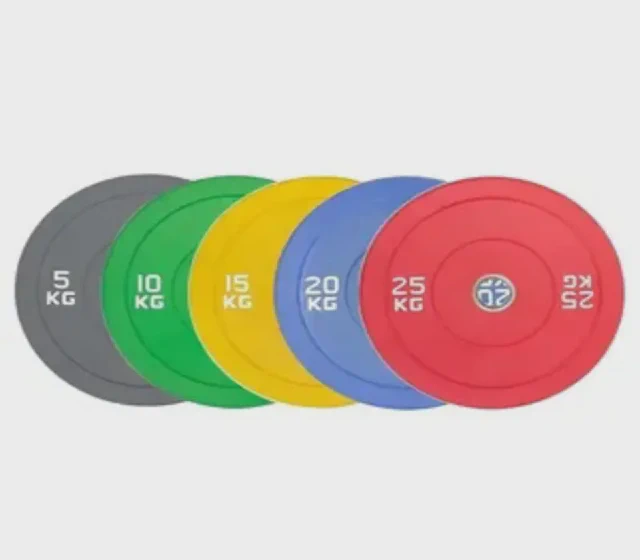
Gym Fitness Colored Weight Discs Rubber Bumper Weight Plates
- MIC category
- Dumbbell
Nantong Guli Fitness Co., Ltd. lists this product as coloured rubber bumper weight plates. It is not a complete dumbbell pair, but plates can be relevant if you are building a plate-loaded adjustable system or already own compatible handles. Rubber may be kinder to floors and less harsh in a shared home than bare metal, although plates still need to be stored securely and matched with compatible bars, collars and load limits.
Best for Home users who already have compatible adjustable dumbbell handles or want to build a modular resistance setup over time.
- Rubber bumper-style weight discs may help reduce floor impact during careful handling.
- A modular plate system can expand gradually instead of requiring a full fixed set.
- Supplier: Nantong Guli Fitness Co., Ltd.
Confirm before inquiry: The listing is for weight discs rather than a complete dumbbell set; verify dimensions, plate-hole compatibility, included quantity and total weight.
Which one should you buy?
Choose a compact adjustable pair if you live in a small home, want one main piece of equipment and expect to increase resistance gradually. Choose a selectorized set if quick changes matter most and you are comfortable caring for a mechanism. Choose fixed hex dumbbells if you value instant access, a solid conventional feel and simple maintenance. Choose neoprene dumbbells if your priority is light, comfortable training and easy storage.
For many beginners, the sensible path is to start with adjustable dumbbells and add a small fixed or neoprene pair only if a specific need emerges. Start with loads you can control, practise the movement pattern and progress in small steps. Strength training should challenge you without forcing painful positions or rushed repetitions. If you have an injury, a medical condition or uncertainty about safe exercise, ask a qualified healthcare or fitness professional for individual guidance.
This article offers general information, not medical advice. Adjust activity to your experience and seek qualified guidance when needed.
FAQ
Are adjustable dumbbells better than fixed dumbbells for a small home?
Usually, yes. One adjustable pair can cover several training loads while taking far less room than a full fixed set. Fixed dumbbells are simpler to pick up and use, however, so they can be the better choice if you have storage space and perform fast-paced workouts.
What is the difference between selectorized and plate-loaded adjustable dumbbells?
Selectorized dumbbells use a dial, pin or similar built-in mechanism to select the load, often in a few seconds. Plate-loaded dumbbells require you to add or remove plates and secure them, which takes longer but can offer a more familiar free-weight feel.
Are neoprene dumbbells suitable for strength training?
They can be useful for beginners, lighter upper-body exercises, conditioning and rehabilitation-style movements. Their usual limitation is the lower weight range, so they may stop being challenging as your strength improves.
Do fixed dumbbells make more noise than adjustable dumbbells?
Not necessarily. A solid rubber or hex dumbbell is generally quiet during controlled lifts, but dropping any dumbbell can create noise and damage floors. Plate-loaded adjustable dumbbells may rattle unless the collars and plates are secured firmly.
How heavy should beginner dumbbells be?
Choose a load that allows controlled repetitions with good technique while leaving a little capacity at the end of a set. The right weight differs by exercise and person. Start conservatively, learn the movement and increase resistance gradually rather than choosing a weight that compromises form.