
Beginner Golf Clubs for Small Cars: Half Sets, Starter Sets and Compact Carry Bags Compared
A practical comparison of half golf sets, full beginner starter sets and compact carry-bag setups for adults who need their clubs to fit comfortably in a small car.

If your car has a modest boot, start with a half set of six to nine clubs and a compact carry or stand bag. It is the least stressful option to load, leaves room for everyday life, and gives a new golfer enough equipment to learn every essential shot. A full beginner starter set is a sensible second choice if you expect to play regularly and have folding rear seats or a more accommodating hatchback. A compact carry-bag setup is the most flexible route of all, but it takes a little more thought because you choose the clubs yourself.
The important point is that a full 14-club bag is not a beginner requirement. It is simply the maximum number allowed under the Rules of Golf. For a new player, fewer clubs can mean fewer confusing choices, less weight to carry and less chance of the bag becoming permanent boot furniture.
The three realistic setups
1. Half set: the best default for small cars
A half set usually means about six to nine clubs. It is not a rigid product category: some packages arrive as reduced sets, while others are assembled from individual clubs or second-hand finds. Its strength is coverage without repetition.
A practical seven-club example is:
- Driver or a high-lofted fairway wood
- Hybrid
- 7-iron
- 9-iron
- Pitching wedge
- Sand wedge or lofted wedge
- Putter
An eight- or nine-club version could add a 5- or 6-iron and an 8-iron. The exact numbers matter less than having useful gaps between clubs. A hybrid is often more approachable than a long iron, while a wedge and putter ensure you can practise the shots that occur around every green.
For a small car, the benefits are straightforward. There are fewer shafts extending above the bag, less total weight to lift through a tight boot opening, and fewer headcovers and accessories to manage. A reduced set also suits a driving-range visit after work: pick it up, load it, practise, and bring it back indoors without making the trip feel like a relocation exercise.
The compromise is distance coverage. You may face a shot that falls between two clubs. That is not a major problem for a beginner; learning to make a controlled three-quarter swing or choosing a safer target is useful golf education. The bigger limitation arrives when you become more consistent and can genuinely notice the yardage difference between adjacent irons.
2. Full beginner starter set: more options, more bulk
A full beginner package commonly has around 10 clubs, sometimes more, plus a matching bag and headcovers. Typical contents include a driver, fairway wood, hybrid, several cavity-back irons, a wedge and putter. Matching clubs can make buying simpler because shaft style, grip size and overall design are intended to work as one set.
This is the better format for someone who knows they will play often, wants clubs for a broad spread of situations, and does not want to source equipment piece by piece. The extra irons can make club selection more intuitive once you begin learning your distances. It may also prevent an early upgrade if you quickly progress beyond a minimal setup.
But think beyond the number of clubs. Package sets are often paired with bags that have more pockets, a broader top and a more substantial base. That is useful on a course, especially when carrying waterproofs, food, balls and a drink. In a small car, though, a bulky bag can be awkward to angle through a narrow opening. The clubs may technically fit, but loading them can be irritating every time.
Before buying, measure the narrowest part of your boot opening, then measure the usable length inside. Check whether the rear seats fold flat and whether you are happy to use them when travelling alone. Do not rely solely on a car maker’s boot-volume figure: litres do not tell you whether a long, tapered golf bag will pass through the opening easily.
3. Compact carry-bag setup: maximum control, minimum clutter
This option combines a deliberately selected set of clubs with a lightweight carry bag or compact stand bag. It is often the smartest setup for people who live in flats, share a car, use public parking, or want their golf equipment stored at home rather than constantly in the vehicle.
A carry bag can be especially useful when you mostly visit the range or walk a short course. Look for a stable top divider, comfortable strap arrangement, a reliable stand if you want one, and enough pocket space for balls, tees, glove, water and a light layer. More pockets are not automatically better; oversized pockets encourage overpacking.
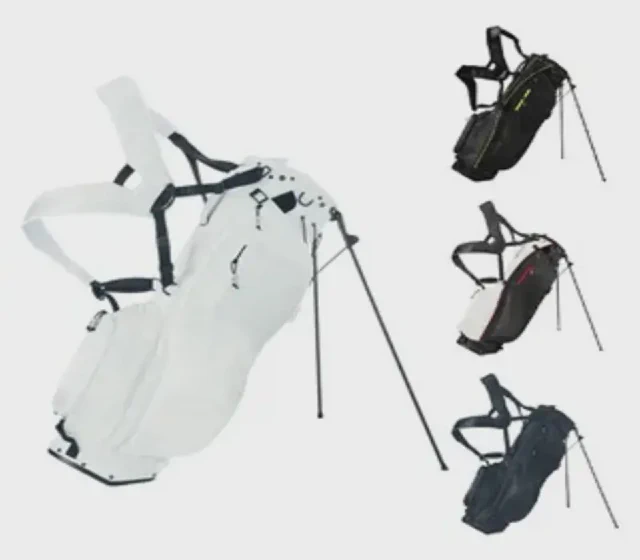
Custom Color Options Waterproof Heavy Duty Professional Stand Golf Bag
- MIC category
- Golf Equipment
A stand bag is the most relevant bag format for a beginner building a small-car golf setup. This supplier listing describes a waterproof, heavy-duty professional stand golf bag with custom colour options. A stand bag can work well for range trips and walking because it stands independently when you need to select a club. Before ordering any bag, ask for packed dimensions, weight, divider layout and whether its leg mechanism sits comfortably in your car’s boot.
Best for Beginners who want a bag that is easier to carry, store and use at the range than a larger cart bag.
- Stand-bag format
- Supplier listing describes waterproof and heavy-duty construction
- Custom colour options are stated in the listing
Confirm before inquiry: The listing does not provide dimensions, weight or storage capacity in the supplied product facts, so confirm these directly before deciding whether it suits a particular car.
The supplier listing for the Custom Color Options Waterproof Heavy Duty Professional Stand Golf Bag makes it relevant to this format, but dimensions and weight are not included in the supplied facts. Those two details should be decisive for a small-car buyer. Ask for the bag’s full length, its width with the stand folded, and its packed weight before treating it as a compact option.
A compact bag can hold a half set comfortably, and it can also temporarily hold a fuller collection if you later add clubs. Just avoid packing it to the point where it loses its advantage. Keep shoes in a separate ventilated tote, and take them out of the car after wet rounds. That reduces odour, protects upholstery and prevents a small boot becoming an untidy equipment locker.
What actually determines whether the setup fits
Club count matters, but bag geometry is often the deciding factor. Drivers are usually the longest club, so they determine the loaded length. A narrow, lightweight bag may fit diagonally across a hatchback boot even if a wide cart bag will not. A saloon boot can be more difficult because of the restricted opening between the rear seats and parcel shelf.
Use this simple pre-purchase checklist:
- Measure your boot opening at its narrowest point.
- Measure the interior length diagonally and straight across.
- Decide whether the rear seats will be available for golf trips.
- Check the bag’s stated length, base width and weight.
- Include accessories in your plan: shoes, waterproofs, towel, balls and water add surprising volume.
- Consider your lift. A bag that fits may still be unpleasant to manoeuvre if it is heavy or catches on the boot lip.
A soft travel cover can protect clubheads and car trim, but it also adds bulk. For routine local trips, headcovers on woods and a towel wrapped around clubheads may be enough, provided the bag is secured so it cannot slide around. Never leave loose clubs in the car; apart from damage, they can become dangerous projectiles under hard braking.
Build the smallest useful setup first
For adults beginning golf, forgiving club design matters more than owning every club number. Prioritise a driver or alternative tee club you can launch, a hybrid or fairway option for longer shots, a few cavity-back irons, a wedge and a putter. If a driver feels intimidating, there is no rule requiring you to use it on day one. A hybrid or lofted wood can be a more comfortable club for tee shots while you learn.
The same restraint applies to accessories. Carry a few balls, tees, a ball marker, a glove, water and weather protection. A glove is easy to keep in even the smallest bag pocket and can help maintain a consistent hold on the club.
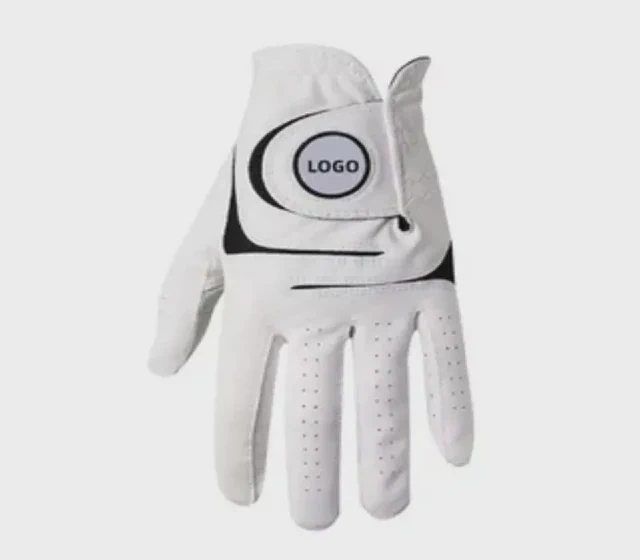
Men's Premium Synthetic Breathable Cabretta Weather Spann Golf Gloves
- MIC category
- Golf Equipment
A glove will not solve a boot-space problem, but it is one of the easiest additions to keep organised in a compact beginner setup. This supplier listing names a men's premium synthetic breathable Cabretta Weather Spann golf glove. Store a glove in a small outer pocket or separate pouch rather than loose with wet towels and balls. For fit, the glove should feel snug across the palm and fingers without bunching, as excess material can make gripping the club feel less secure.
Best for New golfers assembling a simple range bag with only the accessories they will use regularly.
- Golf-specific accessory
- Supplier listing references synthetic, breathable and Cabretta materials
- Takes virtually no meaningful luggage space
Confirm before inquiry: Material and performance descriptions are supplier-listing claims. Check sizing guidance and choose the hand that will sit at the top of your grip.
Course buggies solve a different problem: getting around after you arrive. They do not replace a transport plan for your own clubs, and they are not relevant to fitting equipment inside a personal small car.
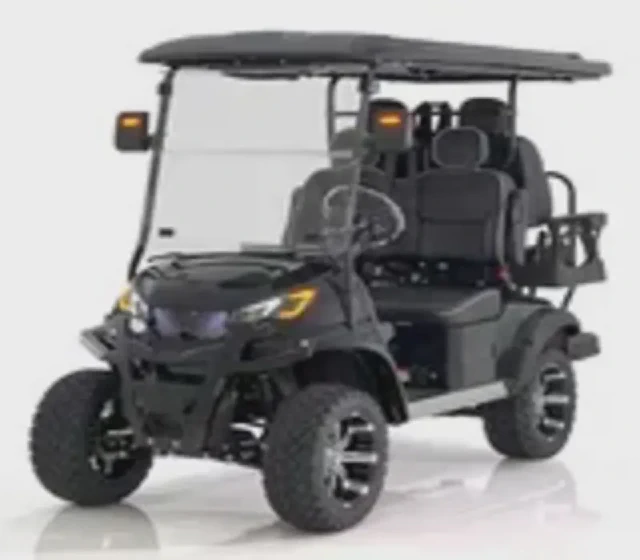
4 Seater Golf Buggy Electric Lithium Battery Powered 2+2 Person Electric Golf Car
- Displayed price
- US$ 1 / Piece
- MIC category
- Golf Equipment
An electric golf buggy is not an alternative to a compact club bag for someone travelling to the course in a small car. It is a course vehicle, not something intended to be carried in a hatchback. The supplier listing identifies this as a 2+2, four-seat electric golf car with lithium battery power and displays a price of US$ 1 per piece. Treat displayed marketplace pricing as a listing detail rather than a complete purchase cost, and confirm specifications, local rules and practical suitability directly with the supplier.
Best for Golf venues or organisations considering on-course passenger transport rather than individual beginners solving boot-space constraints.
- Four-seat 2+2 configuration stated in the listing
- Electric lithium-battery-powered description
- Listed in the Golf Equipment category
Confirm before inquiry: This product does not address the transport challenge of fitting beginner clubs into a small personal car. The displayed price is supplier-listing information and should be verified.
The practical choice
Choose a half set in a compact carry or stand bag if space is genuinely limited, you are unsure how often you will play, or you mainly plan range sessions and occasional rounds. Choose a full beginner starter set if you have reliable room with the seats down and want more distance options from the outset. Choose a self-built compact carry-bag setup if you value the lightest, most adaptable solution and are comfortable adding clubs gradually.
For most new golfers with a small car, the winning setup is not the biggest set that can be forced into the boot. It is the smallest setup you will happily load, carry and use often enough to improve.
FAQ
Can a golf bag fit in a small car?
Usually, yes, but the easiest option is a compact carry or stand bag holding a reduced set. A hatchback with folding rear seats is particularly practical. In a saloon or very small city car, check the boot opening, diagonal load length and whether the bag can sit across the rear seats.
How many clubs does a beginner need?
A beginner can start effectively with roughly six to nine clubs. A useful reduced set might include a driver or high-lofted fairway wood, a hybrid, three or four spaced irons, a pitching wedge or sand wedge, and a putter.
Is a half set enough to play a full round of golf?
Yes. Golf’s maximum is 14 clubs, not a minimum. A half set requires more creative shot-making between distances, but it covers the essential parts of the game and is enough for learning, range sessions and casual rounds.
Should I buy a carry bag or a cart bag for a small car?
A carry or lightweight stand bag is generally the more practical choice for a small car because it is narrower, lighter and easier to lift through a restricted boot opening. Cart bags provide more storage but can be bulkier even when they contain the same clubs.
What should I leave out of my golf bag to save space?
Avoid duplicating clubs with similar jobs at first. You may not need a 3-wood, 5-wood, several long irons, multiple specialist wedges and a large supply of spare balls. Keep essentials such as tees, balls, a glove, water and weather layers organised in separate small pouches.