Best Compact Treadmills for Small Spaces: Which Type Fits Your Home?
Choosing the best compact treadmill for small spaces depends on whether you need occasional walking, desk-friendly movement or light jogging. Compare the practical trade-offs befor
The best compact treadmill for small spaces is usually a folding walking treadmill, unless you only want gentle under-desk walking or already have a dedicated area for a heavier running machine. A foldable model gives most beginners a useful middle ground: it is more purposeful than a flat walking pad, but generally easier to store than a commercial treadmill.
The important distinction is not simply how small a treadmill looks in a product photo. You need to compare its operating footprint, folded footprint, running-deck length, handrail position, noise expectations and how easily one person can move it. The available supplier listings do not provide verified measurements for those points, so use the options below as format comparisons rather than as a substitute for checking the final specification.
First, choose the treadmill format
Under-desk walking treadmill: smallest day-to-day footprint
An under-desk treadmill is a low-profile walking machine without the full upright console and handrail of a conventional treadmill. It is designed for gentle movement while standing at a suitable desk or for short walking sessions elsewhere in the room.
Its main advantage is storage. Many models can slide beneath furniture, although you still need to check their actual height and weight. The compromise is versatility. A low-profile belt may not give you the same sense of security as a handrail-equipped treadmill, and it is generally a poor choice if your plan includes regular jogging, longer strides or faster changes of pace.
This format works best for someone whose realistic goal is to walk while working, watch television or accumulate easy daily steps. It may be less suitable if you are new to exercise and want the reassurance of holding a rail, or if your household needs a treadmill that several people can use for different types of training.
Folding walking treadmill: the most balanced option
A folding walking treadmill normally has a raised handrail or console and a running surface that folds, tilts or stores vertically. It takes more room during use than an under-desk model, but it can be more comfortable for focused walking and occasional light jogging.
For most small-home beginners, this is the sensible starting point. You get a more familiar treadmill posture, a clearer place to hold the controls and a machine that can potentially support more than one type of session. The trade-off is that the folded size may be taller or deeper than expected. A treadmill that fits beside a wall may not fit through a narrow doorway once assembled, and a model that rolls easily on one surface may be awkward to lift over a threshold.
The foldable option below is the most directly aligned with that use case.
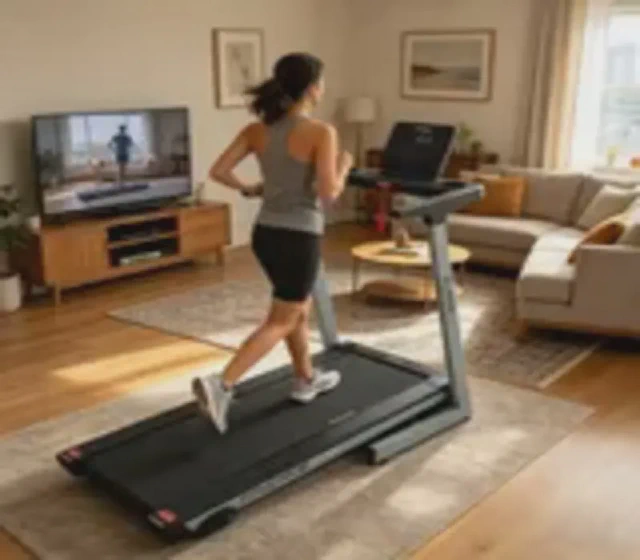
Easy Foldable Treadmill, Compact Walking & Running Machine for Small Home
- MIC category
- Treadmill
This is the clearest match for a beginner who wants one machine for everyday walking and occasional light jogging. Its supplier title specifically presents it as easy foldable, compact and intended for a small home, while the listing also describes it as quiet and portable. Those are useful aims, but they remain supplier-listing claims: exact folded dimensions, deck length, speed range and measured noise are not provided in the available information. Check whether its folded shape will fit your chosen storage space and whether the handrail, if included in the final configuration, can remain clear of shelves or doors.
Best for Beginners who want a conventional walking treadmill with some running flexibility and need to store it between sessions.
- Foldable format
- Supplier listing describes it as compact and portable
- Supplier listing describes it as quiet
- Positioned for home, office, walking and running use
Confirm before inquiry: Confirm the folded height and depth, wheel arrangement, assembly requirements, belt dimensions and maximum user weight before ordering.
Compact jogging treadmill: more room for movement
A compact jogging treadmill is still smaller than a full commercial machine, but it should be judged by the running deck rather than the frame alone. A short belt can feel restrictive if you have a long stride, while a lightweight frame may move or feel less planted when jogging.
If jogging is your priority, look for a clearly stated speed range, belt dimensions, maximum user weight, frame stability and motor information. None of those details should be inferred from the word “compact”. You also need more clear space around the machine because stepping off quickly is part of safe use.
The following listing has a more commercial running-machine profile, so it is better considered for a dedicated area than for casual under-furniture storage.
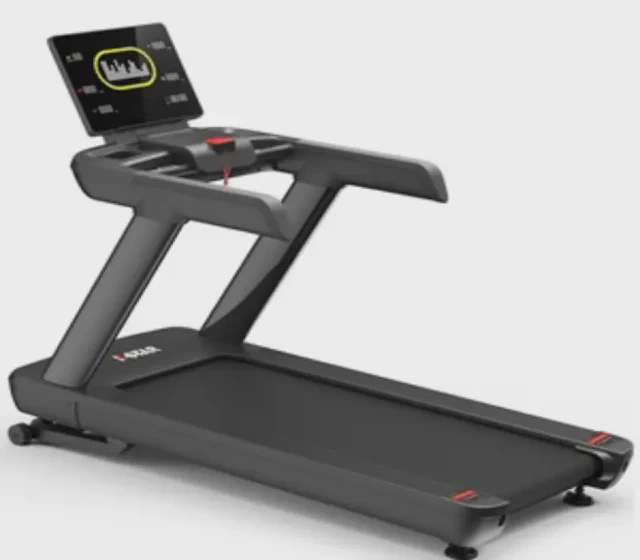
Customizedled Screen Gym Running Machine Indoor Cardio Training Commercial Treadmill for 18okg User
- MIC category
- Treadmill
The supplier describes this as a commercial indoor cardio treadmill with a customised LED screen and capacity for an 18okg user. That positioning makes it more relevant to someone seeking a stable, conventional running-machine setup than to someone whose priority is slipping a treadmill beneath a sofa. It may offer a more familiar console-based experience, but the listing does not supply the folded size, running-deck dimensions, speed range or noise level needed to establish how well it suits a small home.
Best for Users with a dedicated floor area who want a conventional electric treadmill for structured walking or running rather than maximum portability.
- Commercial indoor cardio positioning
- Customised LED screen listed by the supplier
- Supplier listing states capacity for an 18okg user
Confirm before inquiry: The 18okg figure is reproduced from the supplier's product title. Verify the intended user capacity, dimensions, electrical requirements and storage arrangement directly.
What about a curved, non-motorised treadmill?
A curved treadmill uses the user’s movement to drive the belt rather than relying on a motor to set the pace. It can provide a more active, self-paced feel, but that does not automatically make it easier for a beginner. Starting, stopping and maintaining a steady rhythm may require more attention than on a powered walking treadmill.
It is also important not to confuse a non-motorised design with a compact design. Commercial curved machines can be heavy, wide and difficult to store. If your available space is limited, measure the machine’s full footprint and consider how it will be delivered, assembled and moved before you focus on the curved deck.
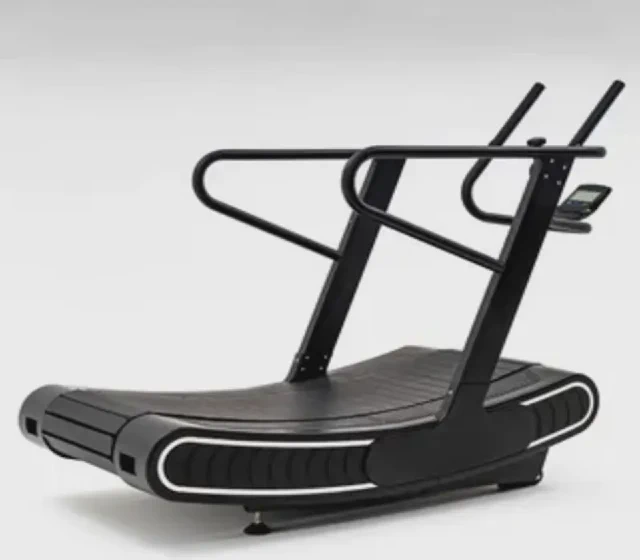
Commercial Customized Logo Non-Motorised Running Machine Sports Equipment Curve Treadmill
- MIC category
- Treadmill
This commercial-style curved treadmill is the least obvious choice for a very small home, but its non-motorised format may appeal to users who want to control the belt with their own stride rather than follow a powered pace. The curved deck can also encourage a more active running action. However, the supplier listing does not provide verified folded dimensions, deck measurements, weight or noise information, and the commercial positioning suggests that storage and handling deserve careful checking before purchase.
Best for Experienced users with a dedicated workout area who prefer self-powered walking or running and do not need to move the treadmill frequently.
- Non-motorised design
- Curved running format
- Commercial-style positioning
Confirm before inquiry: Do not assume that a non-motorised treadmill is automatically compact or quiet. Confirm its full footprint, weight, user limits and whether it can be stored upright.
How to compare a treadmill for a small home
1. Measure the usable space, not just the storage corner
Measure the treadmill in its operating position first. Include the handrail, console and any incline mechanism. Then measure the proposed storage position. Check door widths, lift access, stairs and turning space; a treadmill can fit against a wall but still be impossible to move there.
2. Treat deck size as a comfort feature
A narrower or shorter belt can save space, but it gives you less margin for an uneven step or a longer stride. For easy walking, that may be acceptable. For jogging, a longer deck and a stable frame become more important than saving a few extra centimetres.
3. Ask for the actual speed range
A product described as suitable for walking and running may cover a broad range of intended use. Confirm the minimum and maximum speeds, whether speed changes are easy to make and whether the machine is designed for continuous jogging. If the listing does not state these details, ask before ordering.
4. Plan for noise and vibration
Motor noise is only one part of the problem. Footfalls, belt impact and vibration through a hard floor can disturb people below or in adjacent rooms. A suitable mat, level flooring and regular maintenance may help, but no listing description can guarantee how a treadmill will sound in your particular home. The supplier describes the foldable option as quiet; treat that as a claim to verify rather than a measured result.
5. Consider handling as part of storage
A treadmill is not genuinely space-saving if you cannot move it safely. Look for useful wheels, a manageable folded shape and a storage location that does not require repeated lifting. If you live alone or have limited strength, a lighter walking format may be more practical than a heavier machine with stronger running credentials.
The bottom line
Pick an under-desk treadmill for low-intensity walking and the easiest everyday storage. Pick a folding walking treadmill if you want the best compromise for beginner walking, occasional light jogging and a small home. Choose a compact jogging or curved commercial treadmill only when you have enough dedicated space and are prepared to verify the detailed specifications.
Before buying, request the exact folded and unfolded dimensions, deck size, speed range, user-weight limit, noise information, assembly requirements and wheel details. Those measurements will tell you more about whether a treadmill belongs in your home than the word “compact” alone.
Health note: Start gradually, use the handrails and safety features as instructed, and stop if you feel pain, dizziness, chest discomfort or unusual shortness of breath. If you have a medical condition, are returning to exercise after an injury or are unsure whether jogging is appropriate, seek advice from a qualified healthcare professional.
This article offers general information, not medical advice. Adjust activity to your experience and seek qualified guidance when needed.
FAQ
What is the best compact treadmill for small spaces?
For most beginners, a foldable walking treadmill is the most practical compromise because it can support regular walking while offering a more familiar setup than an under-desk belt. If you only need gentle walking and have very limited storage, an under-desk model may fit better. For frequent jogging, prioritise deck length, stability and user clearance over the smallest folded footprint.
Are compact treadmills suitable for running?
Some are, but compact does not automatically mean suitable for running. Shorter decks can restrict a longer stride, while lighter frames may feel less stable at higher speeds. Check the supplier's stated speed range, running-surface dimensions, maximum user weight and recommended use before attempting to jog.
Is an under-desk treadmill better than a folding treadmill?
Neither format is universally better. An under-desk treadmill is usually easier to slide beneath furniture and suits low-intensity walking. A folding treadmill generally provides a handrail and more conventional posture, which can be more useful for focused walking or light jogging. The best choice depends on whether storage or versatility is your main constraint.
How much space should I leave around a compact treadmill?
Leave enough room to step on and off without twisting around furniture, and keep the area clear behind and beside the belt. Follow the final product's assembly and safety instructions because clearance recommendations vary by design. Also check ceiling height if you plan to use an incline or tall handrail.
How can I reduce treadmill noise in a flat or shared home?
Place the treadmill on a suitable equipment mat, keep it level, maintain the belt as instructed and avoid using it directly against a shared wall. Footfall often creates more disturbance than the motor, so supportive footwear and a moderate walking pace can help. Treat any supplier noise description as a claim to verify rather than a guarantee.