Adjustable Dumbbells vs Fixed Dumbbells vs Neoprene Sets: What Works Best in a Small Home?
A practical comparison of adjustable dumbbells, fixed hex dumbbells and neoprene sets for beginners training in limited space.
If you have limited floor space and want to build strength rather than simply add a little resistance to occasional workouts, adjustable dumbbells are usually the best dumbbells for small home workouts. One compact pair can replace several fixed pairs and gives you room to progress. Fixed hex dumbbells are the easier, faster option if you can store them safely, while neoprene sets make sense mainly for light exercise, rehabilitation-led movement under professional guidance, or a very gentle starting point.
The best choice is not the one with the most possible weight. It is the one you can store securely, pick up confidently and use consistently in the small clear patch of floor you actually have.
Start with the room, not the weight
Measure the practical training zone rather than the whole room. You need enough clear space to hinge, squat, press and lie down without striking furniture, walls or a low table. Then account for where the dumbbells live when you are not training. In a compact flat, weights left beside a sofa or in a corridor are not just untidy; they are a trip hazard.
A small exercise mat can define the area and reduce scuffs, but it does not make it safe to drop weights. Plan to lower every dumbbell under control. If neighbours live below you, this matters as much for noise as it does for flooring.
Adjustable dumbbells: strongest case for limited storage
Adjustable dumbbells combine several loads into one pair. Depending on the design, you change weight using a selector, plates, locking collars or a similar system. Their major advantage is obvious in a small home: instead of storing five or six pairs, you store one pair and its cradle or plates.
They are especially useful for beginners because different exercises call for different loads. A weight that is manageable for a goblet squat may be too heavy for a lateral raise. As technique improves, you can increase resistance in small, deliberate steps rather than needing to buy and store a new pair every few months.
The compromise is workflow. Changing the load can interrupt a circuit, and some adjustable models are longer or bulkier than a fixed dumbbell at lighter settings. You also need to check that the mechanism is fully secured before every set. Avoid dropping adjustable dumbbells, even if the workout feels demanding; selectors, collars and plate assemblies require more careful handling than a simple one-piece weight.
Choose adjustable dumbbells if storage is your chief constraint and you expect your training to progress beyond very light movements. They are less ideal if you want rapid-fire group-style circuits with frequent weight swaps, or if you strongly dislike setup between exercises.
Fixed hex dumbbells: simple, stable and ready immediately
Fixed dumbbells are the least complicated format. Pick them up, train, put them back. There are no plates to attach and no mechanism to inspect. That simplicity helps beginners concentrate on posture, range of motion and controlled repetitions.
Hex dumbbells are particularly practical at home because their shaped heads reduce the tendency to roll across the floor. This is helpful for exercises such as dumbbell rows, where a weight may be set down beside a bench or sturdy chair, and for transitions between movements. Rubber-coated versions may also be gentler on floors than bare metal when lowered carefully, although they can still damage surfaces if dropped.
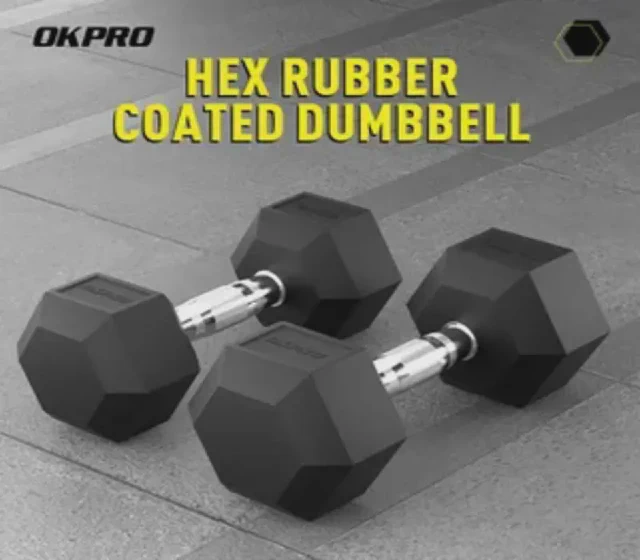
Factory Wholesale Customization Iron Dumbbell Set Gym Equipment Fitness Rubber Hex Dumbbell
- MIC category
- Dumbbell
This supplier listing presents a rubber hex dumbbell format, a familiar fixed-weight choice for home strength sessions. Fixed pairs remove the pause required to alter a selector or add plates, which suits people who prefer straightforward circuits, supersets and repeatable routines.
Best for Beginners who have room for a small number of carefully chosen fixed-weight pairs and value simple, immediate handling.
- Hex profile is designed to stay put more readily than a round dumbbell
- Rubber-coated fixed-dumbbell format
- Useful reference for a dedicated home-gym setup
Confirm before inquiry: The product page is a supplier listing. Confirm the specific weights, dimensions, coating details and purchasing terms directly with the supplier before making any decision.
The drawback is accumulation. One pair can fit under a bed, in a cupboard or on a low shelf. Three, four or six pairs need a stable storage plan. A rack occupies floor area, while loose weights can become difficult to move around safely. For a small home, a pair of moderately challenging dumbbells plus a lighter pair is often more realistic than chasing a complete gym-style range.
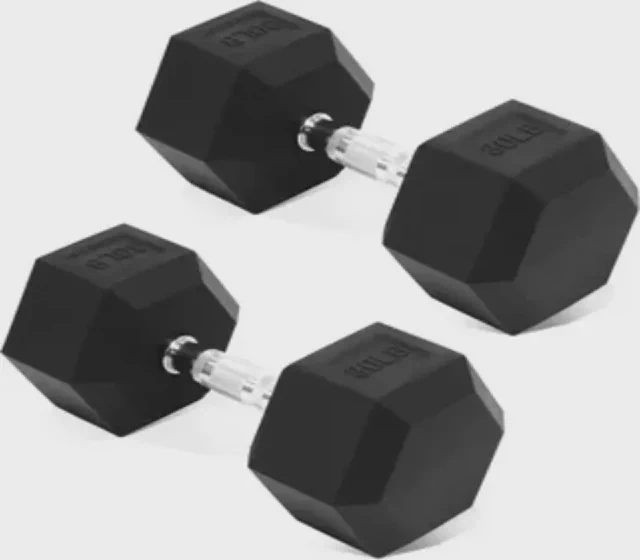
Fitness Training Dumbbell Home Gym Hex Dumbbell Set Rubber Coated Weight Lifting 10kg 20kg 50kg Gym Dumbbell
- MIC category
- Dumbbell
The listing describes a rubber-coated hex dumbbell set for home-gym training and names 10 kg, 20 kg and 50 kg in its title. A broad fixed-weight collection can make progression smooth because each weight is immediately available, but it is best suited to a home that can safely accommodate the rack or storage footprint.
Best for Households building a more permanent training corner and wanting quick changes between several fixed loads.
- Fixed hex-dumbbell set format
- Rubber-coated construction is stated in the supplier listing title
- Multiple weight references appear in the listing title
Confirm before inquiry: Weights mentioned in a listing title do not confirm what is included in every order. Check the exact configuration, pair quantity and total storage requirements with the supplier.
Fixed pairs suit you if you value zero-fuss training, want a robust and familiar feel, and have identified secure low-level storage. They are also a good choice when two people share a workout area and may need different weights without stopping to reset equipment.
Neoprene sets: comfortable entry point, narrower runway
Neoprene dumbbells are typically smaller, lighter fixed weights with a soft-feeling outer coating. Their tactile grip can feel less intimidating than metal, particularly for someone new to strength work. They are often convenient for controlled upper-body exercises, light conditioning, balance work and basic movement practice.
For a very small room, a compact neoprene set can be easy to tuck away. Their lighter mass also reduces the consequence of an accidental bump into furniture, although safe handling remains essential. They can be a sensible first step if your aim is to establish a habit with short, low-intensity sessions.
Their limitation is progression. Lower-body muscles and major pushing and pulling patterns can rapidly require more resistance than a light set provides. You can make an exercise harder with slower tempos, pauses, more repetitions or single-leg variations, but those methods do not replace loading forever. If your stated goal is strength gain, neoprene may become an additional tool rather than your only dumbbell solution.
Neoprene coatings can also become slippery when hands are sweaty. Wipe handles after training, avoid using lotions immediately beforehand and stop if your grip is compromised. Grip comfort is valuable, but secure control matters more than a soft finish.
Noise, grip and beginner exercise choices
For neighbour-friendly training, technique is more important than the format. Put weights down rather than releasing them, use a firm mat where appropriate, and leave enough space to reset safely. Rubber-coated hex dumbbells can reduce clatter compared with uncovered hard weights, but no dumbbell should be treated as drop-proof in a home.
A beginner can do a productive full-body routine with almost any of these formats: goblet squats, Romanian deadlifts, supported rows, floor presses, overhead presses, carries and light reverse lunges. Start with movements that let you maintain balance and keep the weight close to the body. A chair or wall can offer support for split squats and rows, but only if it is stable and cannot slide.
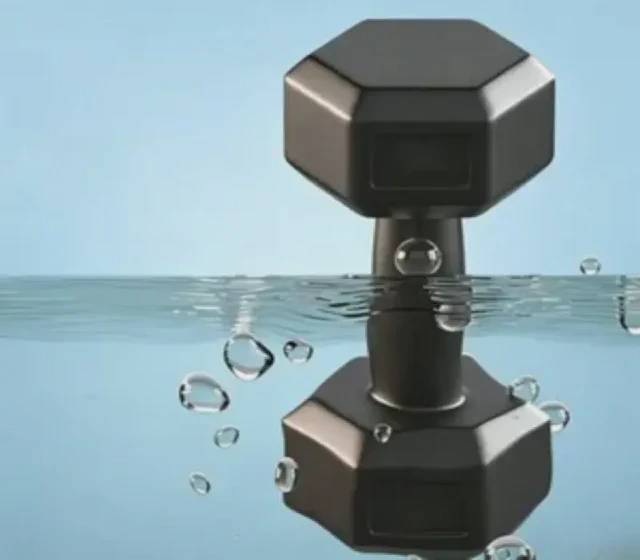
This listing is another example of the rubber-coated hex format often considered for home gyms. For a small home, one or two fixed pairs can be a sensible middle ground: they are ready to use, stable on the floor and less visually demanding than a full rack, while still allowing meaningful work with a limited exercise menu.
Best for People who want the ease of fixed dumbbells but do not intend to collect a full commercial-style set.
- Rubber-coated hex dumbbell format
- Home-gym positioning in the supplier listing
- Potentially practical as a limited-pair setup
Confirm before inquiry: This is not a recommendation based on hands-on testing. Review the supplier's current product specification and consider whether the weight range fits your planned exercises.
Do not choose a weight solely by what you can lift once. A more useful benchmark is whether you can complete controlled repetitions without holding your breath excessively, twisting to compensate or losing joint position. It is normal to use different loads for different movements.
A practical decision guide
Choose adjustable dumbbells when you have one small storage location, want a broad range of exercises and expect to increase load over the coming months. They offer the best space-to-progression ratio, provided you are happy to make controlled weight changes.
Choose fixed hex dumbbells when convenience is your priority and you can store at least one or two pairs securely. They are the most straightforward format for regular sessions and are particularly useful when you do not want a mechanism between you and the next set.
Choose neoprene sets when your sessions will stay light, you want a less imposing introduction to resistance work, or you need a compact supplementary set for accessory exercises. Treat them as a starting point, not automatically as a complete long-term solution for strength training.
If you are uncertain, resist buying a large collection at once. Build a routine first. A small, safe setup used two or three times a week is more valuable than a crowded corner full of weights that do not suit your body, space or goals.
Health note
Strength training is generally adaptable, but pain, dizziness, chest discomfort or loss of control are signals to stop. If you are returning after injury, are pregnant, have a medical condition, or are unsure which exercises are appropriate, seek advice from a qualified healthcare professional or suitably qualified exercise professional before beginning.
This article offers general information, not medical advice. Adjust activity to your experience and seek qualified guidance when needed.
FAQ
Are adjustable dumbbells good for beginners?
Yes. They can be a practical beginner option because one pair can cover several starting weights. Choose a design with a clear locking mechanism, practise changing the load before a workout, and begin with movements you can control confidently.
What dumbbell weights should a beginner buy for home workouts?
The right starting weight depends on the exercise and your current strength. You may need a lighter load for shoulder raises and a heavier load for squats or rows. A variable-weight option is useful because it lets you use different loads without filling the room with multiple pairs.
Do hex dumbbells take up less space than round dumbbells?
A single pair does not necessarily take up much less room, but hex-shaped heads are less likely to roll when placed on the floor. That can make them easier to manage in a compact workout area and safer to set down between exercises.
Are neoprene dumbbells enough for strength training?
They can support light resistance work, mobility-focused sessions and early exercise practice. However, many people outgrow lighter neoprene sets for lower-body training and larger pulling or pressing movements, where gradual increases in resistance matter.
How can I store dumbbells safely in a small apartment?
Keep them low to the ground in a stable rack, storage tray or sturdy cabinet designed for the load. Avoid balancing weights on high shelves, leaving them in walkways or storing them where children could pull them down. Use a mat or protective surface if flooring is a concern.