Folding, Upright or Recumbent: Which Exercise Bike Fits a Small Home?
Choose the best exercise bike for small spaces by comparing folding, upright, recumbent and desk-style pedal options for floor space, comfort, storage and everyday use.
If your main concern is fitting exercise into a small home, start with a folding upright bike. It is usually the best exercise bike for small spaces because it gives you a proper seated pedalling position while taking up less permanent room than a recumbent bike. Choose a compact fixed upright if you will ride often and can leave it assembled. Choose a recumbent only when back support, easy mounting and a more secure seated feel matter more than storage. Choose a desk pedal bike when space is so limited that a full bike is not realistic.
The important distinction is this: the smallest machine is not automatically the easiest one to use consistently. The best choice is the format you can set up safely, sit on comfortably and return to several times a week.
Begin with the room, not the product page
Before comparing resistance levels, screens or app features, measure the place where the bike will actually live. Record the length and width of the available floor area, then add working room around it. You need enough clearance to get on and off, turn the pedals without clipping furniture, adjust the seat and walk past the bike without creating a daily obstacle.
Also assess the route into the room. A compact bike that fits beside a window is no help if it cannot make the turn from the hallway. For upstairs rooms, consider how comfortably you can carry, roll or manoeuvre the machine. If you plan to fold it after every ride, test the storage routine in your mind: where will it go, will it block a cupboard, and can you move it without straining your back?
Flooring matters too. A level, firm surface helps a bike feel stable. A protective mat can reduce scuffs, catch sweat and soften minor vibration, but it cannot correct a wobbly frame or an uneven floor. In flats, magnetic resistance is generally worth prioritising because it is usually quieter than friction-based resistance. Quiet pedalling makes an early-morning or late-evening habit more realistic.
Folding upright bikes: the practical apartment choice
A folding upright bike normally uses an X-shaped or hinged frame. Its biggest advantage is not necessarily that it occupies almost no room while you ride; it is that it can be reduced and tucked away afterwards. Typical foldable upright models have a smaller footprint than fixed uprights and recumbents, though dimensions vary substantially between brands.
This format suits beginners who want low-impact cardio but share a living room, work from a bedroom or need the floor clear for family life. It also makes sense if your exercise habit is still forming. You can begin with relaxed 15- to 25-minute rides without committing a whole corner of the home to a large machine.
There are compromises. Folding frames are often lighter and may feel less solid during vigorous pedalling than a heavy fixed-frame bike. Many are designed mainly for seated riding, not repeated out-of-the-saddle efforts. Their saddles can be narrow, and the adjustment range may be less generous than on more substantial bikes. Check the stated user-weight capacity, inseam or height range, pedal straps, seat adjustment and whether the frame locks positively in both riding and folded positions.
A folding bike can work especially well if you reserve one predictable storage spot and avoid treating folding as a daily wrestling match. If moving it feels awkward, it will gradually become furniture.
Compact upright bikes: best for regular riders
A non-folding upright bike still has a relatively small floor footprint because it builds upward rather than outward. It resembles a conventional bicycle more closely: you sit over the pedals, support yourself with the handlebars and can vary your cadence and resistance for easy spins, steady cardio or short intervals.
For a beginner, this is often the best balance between space efficiency and a more natural cycling feel. The upright posture can involve more trunk control than a recumbent, and it may feel more familiar to anyone who has ridden a standard bike. It can also be the better format if your goal is eventually to progress to more energetic sessions.
The drawback is that it stays in the room. A compact upright may only need a modest patch of floor, but it remains visually present and needs a permanent safe route around it. Its higher step-over height can also be a barrier for anyone who finds lifting a leg over a frame difficult.
Look beyond the base measurements. Check handlebar reach, saddle height range and the room above your head. If the bike encourages standing pedalling, make sure there is adequate headroom and that the unit is designed to remain stable under that use.
Recumbent bikes: comfort first, space second
A recumbent bike places the pedals in front of you and uses a broad, chair-like seat with a backrest. For people who dislike narrow saddles, feel unsteady mounting an upright bike or want a more supported position, that can be a major advantage. The low step-through design often makes sitting down and standing up simpler too.
This format is particularly appealing for longer, gentle sessions. You can settle in, pedal at a manageable pace and focus on building a routine without the same pressure on the hands, wrists or saddle area that some people experience on an upright bike.
But the comfort comes with a clear small-home cost: length. The seat-and-pedal layout makes recumbents harder to place in narrow rooms and much less likely to fold away. They are often heavier, which may improve stability but makes repositioning more difficult. Think of one as a piece of furniture with a workout function, not an item to put behind the sofa after each ride.
Choose recumbent if you have a dedicated wall, enough clear floor depth and a genuine need for its supported seating. Do not choose it simply because it sounds easier. If its size means it ends up squeezed into a cluttered corner, mounting and using it can become less easy than expected.
Desk pedal bikes: a movement tool, not a full-bike replacement
Desk-style pedal exercisers are compact pedal units used from a chair. They can slide beneath a desk or sit near a sofa, making them attractive for very small homes and for people who want light activity while reading, watching television or working.
Their limitations are equally clear. Your chair must not roll or slide, the unit can creep across smooth floors and the short, low setup does not replicate the stable posture of a full exercise bike. Resistance may be modest, and vigorous pedalling may be impractical. Think of this format as a way to interrupt sitting time and add easy movement, not as the strongest option for structured indoor-cycling workouts.
A quick decision guide
Choose a folding upright bike if you need to reclaim the floor after every session, want seated cardio and are happy with mostly steady rides.
Choose a fixed compact upright bike if you have a permanent corner available, want a more conventional cycling feel and expect to use the bike often enough that setup would become annoying.
Choose a recumbent bike if comfort, back support and low-step access are your leading priorities and you can dedicate more floor length to the machine.
Choose a desk pedal unit if you have almost no storage space and your realistic goal is gentle, convenient movement rather than bike-style training.
Keep the purchase proportionate to the room
Small homes can make browsing broad fitness categories confusing. Some listings may sit beside products that are not exercise bikes at all. A treadmill, for example, usually demands more operating clearance than a compact seated bike and is a poor fit for many tight spaces.
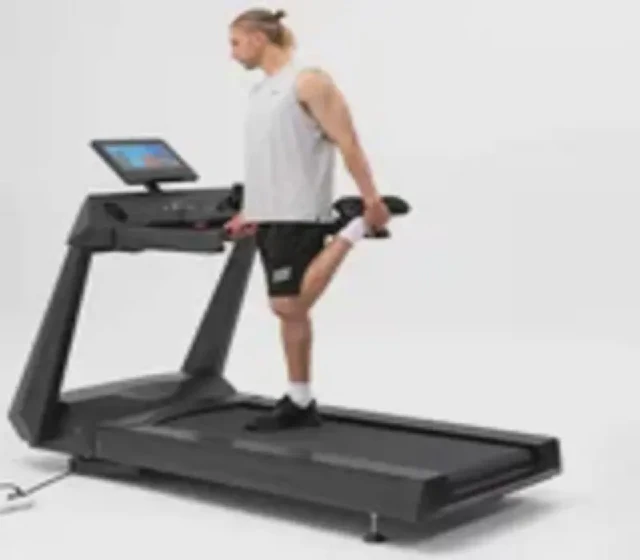
AC Motor Exercise Incline Motorized Sport Running Fitness Gym Treadmill Machine
- Displayed price
- US$ 930-950 / Piece
- MIC category
- Exercise Bike
This supplier listing is a treadmill rather than an exercise bike, but it is a useful reminder that a machine can appear in a broad fitness category without being right for a bike-focused, small-room plan. A motorised treadmill generally needs more operating clearance than a compact bike, including clear space behind the deck. Treat it as an alternative for walkers or runners with a dedicated exercise area, not as a substitute for a compact seated cycling setup.
Best for People comparing home-cardio formats and deciding whether a compact bike is the more realistic choice for a tight room.
- Supplier listing displays US$ 930-950 / Piece
- Listed by All Universe Fitness Technology (Qingdao) Co., Ltd.
- Motorised treadmill format rather than an exercise bike
Confirm before inquiry: The displayed price and classification are supplier-listing information. Confirm current specifications, dimensions, operating clearance and suitability directly with the supplier before making a purchase decision.
A mini stepper can occupy less floor area than a bike, but it changes the workout from seated pedalling to standing stepping. That may be useful as an alternative, not a direct comparison for someone seeking a comfortable bike routine.
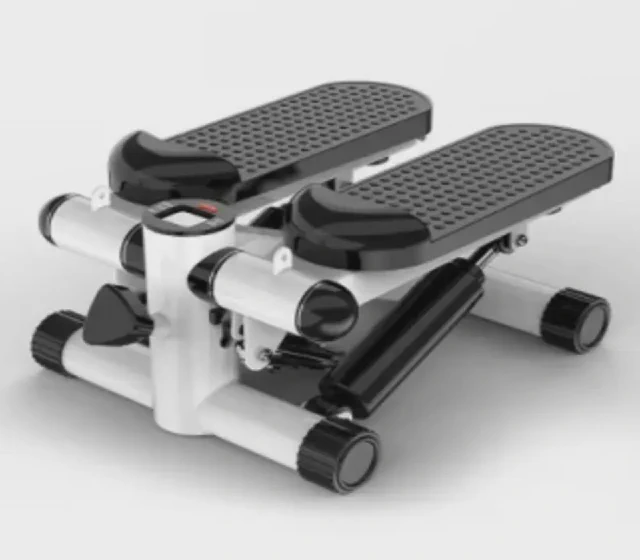
Niceday Steppers for Exercise Stair Stepper with Resistance Bands Mini Stepper
- MIC category
- Exercise Bike
A mini stepper is not a bike, but it can make sense when there is no safe place to park even a folding frame. It occupies little floor area and can be moved aside more easily than a full cardio machine. The trade-off is a different movement pattern, less seated comfort and no cycling-specific riding position. It may suit short movement breaks, while a bike remains the stronger choice for people who want low-impact seated pedalling.
Best for Very small homes where a full-size bike cannot be stored or left clear for safe use.
- Mini stepper format with resistance bands named in the listing
- Listed by Dingzhou Baiyun Trading Co., Ltd.
- Alternative to, rather than replacement for, a seated exercise bike
Confirm before inquiry: This is a supplier listing placed in the Exercise Bike category, but the named product is a stepper. Check the full listing for dimensions, stability details and any stated user guidance.
At the other end of the scale, a multi-station strength machine belongs in a planned home gym rather than a flexible small-room setup. It underlines why assembled dimensions and clearance should always come before feature lists.
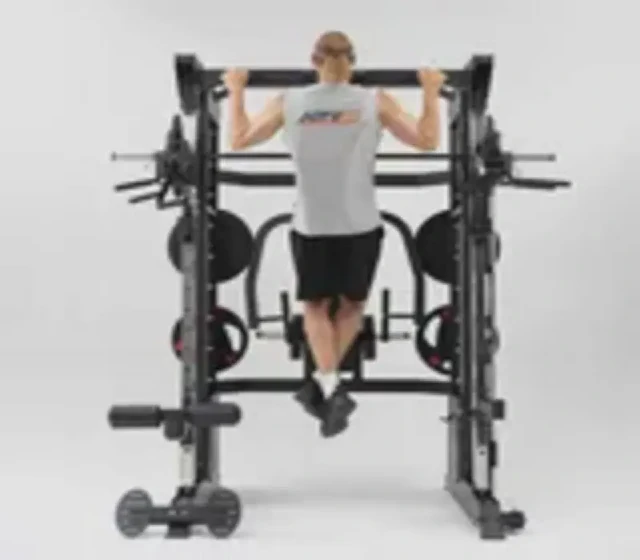
All-in-One Multi-Functional Smith Gym Machine for Home Gym Fitness
- Displayed price
- US$ 1150-1200 / Piece
- MIC category
- Exercise Bike
This multi-station gym machine shows why equipment type matters more than an online category label. A Smith-style home gym may appeal to someone building a dedicated training room, but it is the opposite of a store-away cardio solution. It needs permanent placement, room to load and move around it, and a realistic assessment of ceiling height and access. For a beginner seeking simple low-impact exercise in a small home, a compact bike is usually the more proportionate starting point.
Best for Dedicated home-gym spaces rather than apartment corners, bedrooms or shared living rooms.
- Supplier listing displays US$ 1150-1200 / Piece
- Listed by All Universe Fitness Technology (Qingdao) Co., Ltd.
- Multi-functional strength-training machine rather than an exercise bike
Confirm before inquiry: The displayed price and category information are supplier-listing claims. Ask the supplier for assembled dimensions, installation requirements and clearance needs before considering this type of equipment.
Make comfort a non-negotiable
Whichever format you choose, adjust it before judging it. On an upright, a very low saddle can make each pedal stroke feel cramped; a very high saddle can cause rocking at the hips. On a recumbent, set the seat so your knee retains a slight bend at the furthest point of the pedal stroke rather than locking straight.
Start easily. A comfortable pace and light-to-moderate resistance are enough to establish technique and tolerance. Stop if you feel sharp pain, dizziness, chest pain or unusual shortness of breath. If you have joint concerns, cardiovascular disease, balance limitations, persistent back pain or are returning after illness or surgery, speak with a qualified healthcare professional for individual guidance before beginning a new exercise programme.
For a small home, the winning bike is rarely the one with the longest specification sheet. It is the one that leaves enough room to live, feels comfortable enough to ride and is simple enough to use again tomorrow.
This article offers general information, not medical advice. Adjust activity to your experience and seek qualified guidance when needed.
FAQ
What is the best exercise bike for small spaces?
For many people, a folding upright bike is the most practical small-space choice. It has a relatively small operating footprint, can often be stored after use and still provides a recognisable cycling workout. A compact non-folding upright bike may be better if you expect to ride frequently and have room to leave it out.
Are folding exercise bikes stable enough for beginners?
They can be suitable for beginner steady rides when assembled correctly, used on a level floor and kept within the manufacturer's stated limits. Their folding frames may feel less planted than a heavier fixed bike during hard standing efforts or fast intervals, so check the frame design, stabiliser feet and user-weight guidance before buying.
Is a recumbent bike better for bad knees or back pain?
A recumbent bike's chair-like seat, backrest and low step-through entry can feel more comfortable for some people. However, comfort is individual and a bike is not a treatment for pain or injury. If you have persistent pain, a recent operation, mobility limitations or a health condition, seek personalised advice from a qualified clinician before starting or changing exercise.
Can I keep an upright exercise bike in a bedroom?
Yes, provided there is enough room to use it safely. Leave space around the pedals, allow for seat adjustment and make sure doors, drawers and walking routes are not blocked. Consider ceiling height too, especially if you might pedal standing up.
Do under-desk pedal exercisers provide the same workout as an exercise bike?
Not usually. Desk pedal exercisers can help add gentle movement while seated, but their small size, lower stability and limited riding position make them less suitable for sustained or higher-resistance cycling sessions than a full exercise bike.