PVC, Beaded or Weighted: Which Jump Rope Is Best for Beginners?
For most new exercisers, a lightly weighted or segmented beaded rope is easier to learn with than a very fast PVC speed rope. Here is how feedback, pace, noise and handle comfort c
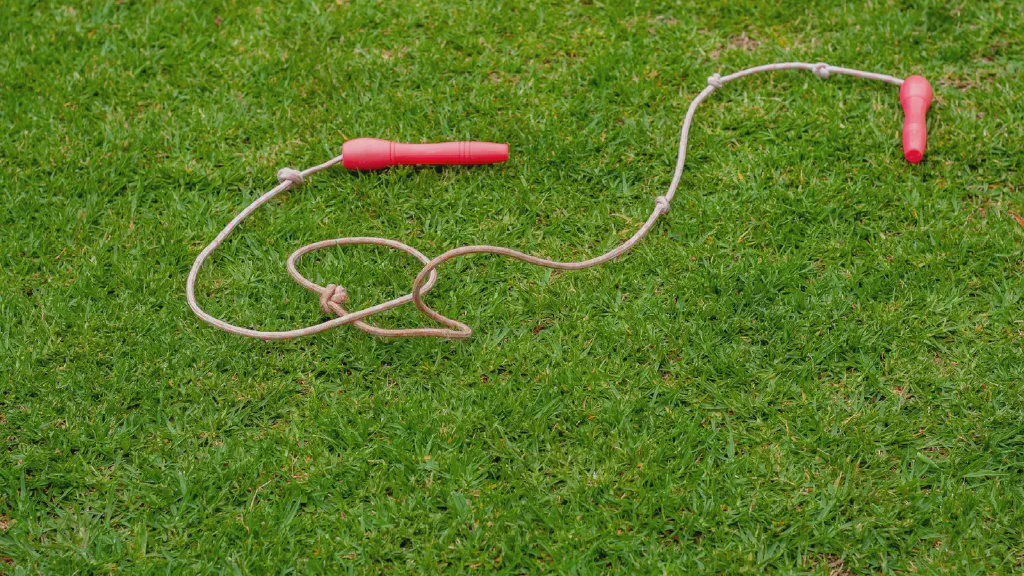
For most people starting jump-rope fitness, the best jump rope for beginners is not the fastest one. Choose a segmented beaded rope if you want the clearest rhythm and the most obvious feedback, or a lightly weighted rope if you prefer a smoother workout feel with a little more awareness of each turn. An adjustable PVC speed rope is a practical third option: it is light, portable and versatile, but it asks for more precise timing.
The right choice depends less on how advanced a rope looks and more on what helps you make relaxed, repeatable jumps. In early sessions, the aim is to clear the rope with low hops, turn it from the wrists and stop before fatigue makes the landings loud or the shoulders tense. A rope that is too fast, too heavy or badly sized can make that learning process needlessly frustrating.
The short comparison
A PVC speed rope is usually the quickest and least visually obvious of the three formats. It tends to suit someone who wants a compact cardio tool, has a reasonably smooth exercise surface and is willing to adjust the rope carefully. The light cord can move quickly, which is useful later on, but it gives comparatively little warning if your hands drift apart or your timing changes.
A segmented beaded rope has small plastic sections along a cord. Those segments add structure, making the rope easier to see as it travels around the body. It also makes a distinct sound when it contacts the floor. That sound is not merely cosmetic: it gives a beginner a beat to work with. If the rope reaches the floor before you leave it, or if it lands unevenly, you have immediate feedback. For learning a basic two-foot bounce, this is often the most forgiving format.
A lightly weighted rope sits between those options. A modestly heavier cord or handles can make the rope easier to feel without creating the high effort of a heavy conditioning rope. The trade-off is fatigue. More resistance can make every rotation satisfying and deliberate, but it can also encourage large arm circles or irritate wrists and shoulders if you start with too much volume. “Lightly weighted” is the useful phrase here; a rope marketed for intense strength or endurance work is not automatically beginner-friendly.
Why feedback matters more than speed
New jumpers tend to miss the rope for predictable reasons: the rope is too long, the hands are held too wide, the elbows move away from the ribs, or the jumper hops too high and loses rhythm. A beaded or lightly weighted rope makes some of these errors easier to identify because you can feel, see or hear the rotation.
PVC speed ropes reduce air resistance and can turn very efficiently. That can feel excellent once you have a consistent rhythm. Before then, however, a thin, quick cable may seem to appear at your feet without much warning. It is not a bad beginner choice; it is simply a choice that rewards patient setup and slower practice.
If you are drawn to a conventional adjustable rope, the following supplier-listed option is framed for exercise and training rather than as a specialist competition model:
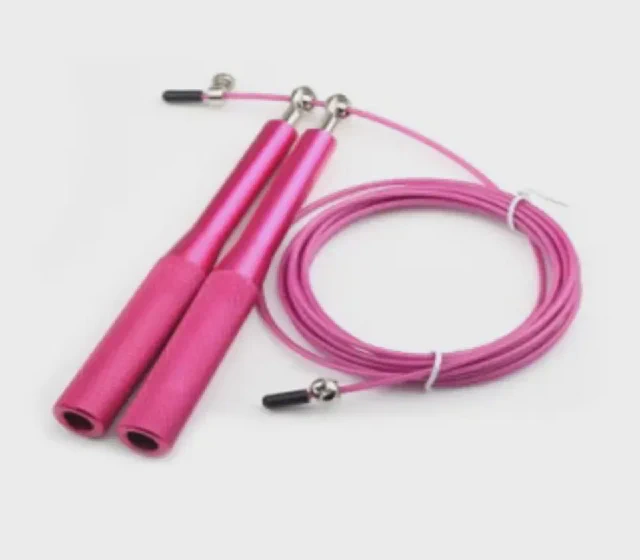
Jump Rope, Wastou Speed Jumping Rope for Training Fitness Exercise, Adjustable Adults Workout Skipping Rope for Men, Women, Kids, Girls
- MIC category
- Jump Rope
This listing is positioned by Dingzhou Baiyun Trading Co., Ltd. as an adjustable speed jumping rope for fitness exercise and training. Its stated adjustable design makes it the closest fit here for a beginner who wants a conventional, light-feeling rope that can be shortened to suit their height. A speed-oriented rope is generally less forgiving than a beaded model, so it is best approached with slow, low jumps rather than a rush to build pace.
Best for Beginners who want an adjustable, compact rope for basic cardio and expect to progress towards a quicker rhythm.
- Supplier listing describes it as adjustable
- Listed for adult, women's, men's and children's exercise use
- Speed-rope style can support compact wrist-driven rotations
Confirm before inquiry: The supplier listing does not establish cable weight, bearing construction or specific handle dimensions. Check the adjustment mechanism and final rope length before use.
An adjustable rope is especially useful when more than one person may use it. Do not assume factory length will work straight away. Start by shortening gradually, test a few easy jumps and change one small variable at a time. A rope that is overly long may drag behind you and force a wider arm path. One that is overly short can catch your toes or require you to hunch.
Pace: choose a rope that lets you stay calm
The best beginner pace is one you can interrupt and restart without losing form. Think of 15 to 30 seconds of easy jumping followed by a generous rest, not a five-minute test of willpower. A beaded rope naturally supports this approach because its contact sound acts like a metronome. A lightly weighted rope can do the same through feel.
With a PVC rope, intentionally slow the first rotations. Keep the hands just forward of the hips, with elbows bent and close to the body. Let the wrists turn the rope; do not windmill the arms. Aim for a tiny bounce rather than a high jump. If you are repeatedly catching the rope, practise rope turns without jumping, then add one jump at a time.
A bearing-equipped design may appeal to someone ready for a freer rotation. The listing below identifies the product as a bearing skipping rope, though the approved supplier information does not provide further construction detail.
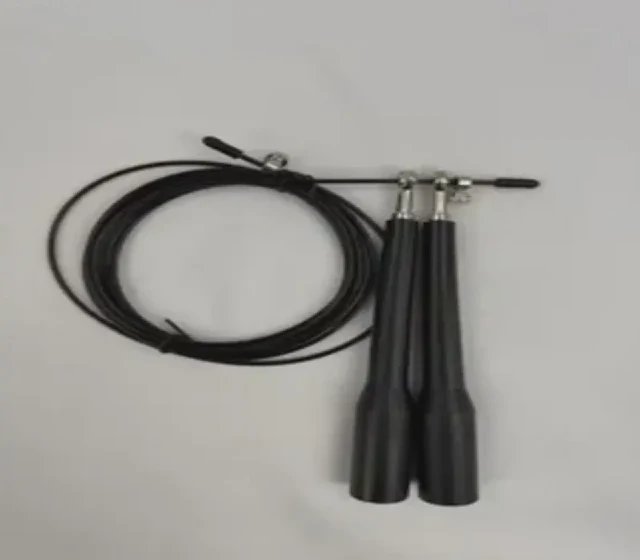
Bearing Skipping Rope Professional Fitness Jump Rope Gym Accessory
- MIC category
- Jump Rope
Nantong ELF Sports Co., Ltd. lists this as a bearing skipping rope and professional fitness gym accessory. Bearings can be relevant to a rope's rotational feel, but they do not automatically make a rope easier for a first-time jumper: a very free-spinning rope may expose inconsistent wrist timing. It is a sensible format to consider once basic single jumps feel controlled and you want less drag through the handles.
Best for New jumpers who already have a steady basic bounce and value a potentially smoother handle rotation.
- Supplier listing identifies a bearing rope format
- Presented as a fitness and gym accessory
- Potentially relevant for users moving beyond a deliberately slow learning pace
Confirm before inquiry: No rope material, rope weight, adjustment range or bearing specification is provided in the approved listing information. Confirm those practical details with the supplier before selecting it.
Bearings are not a substitute for technique. In fact, a smooth-turning rope can make it easier to accelerate beyond your current coordination. Treat that as a reason to keep early sets short and controlled, not as a reason to avoid the format altogether.
Noise, flooring and where you will train
Beaded ropes are normally the noisiest option because the segments tap the surface. That is useful feedback outdoors or in a garage, but less ideal in a flat with neighbours below. PVC ropes are generally quieter on a mat or smooth indoor floor, although any rope can create repeated impact noise if you jump heavily.
Avoid rough concrete where possible, especially with a thin PVC cable. Abrasion can shorten a rope’s working life, and hard ground makes repeated landings less pleasant. A firm exercise mat, gym flooring, timber floor or smooth outdoor surface is usually a more comfortable starting point. Whatever the surface, clear a generous area around you. You need room not only above your head but also behind and in front of your body as the rope arcs.
Handle comfort is a real beginner feature
A comfortable handle helps you keep a light grip. That matters because beginners often grip harder after a few catches, which tires the forearms and sends tension into the neck and shoulders. Look for handles that sit securely in your hand and do not force your wrists into an awkward angle. If your palms become slippery, pause, dry your hands and reset rather than squeezing harder.
The following listing from GOOD SELLER CO., LTD describes leather handles and makes a non-slip claim. It may be relevant if handle feel is high on your list, although the listing information does not identify the rope as beaded, PVC or weighted.
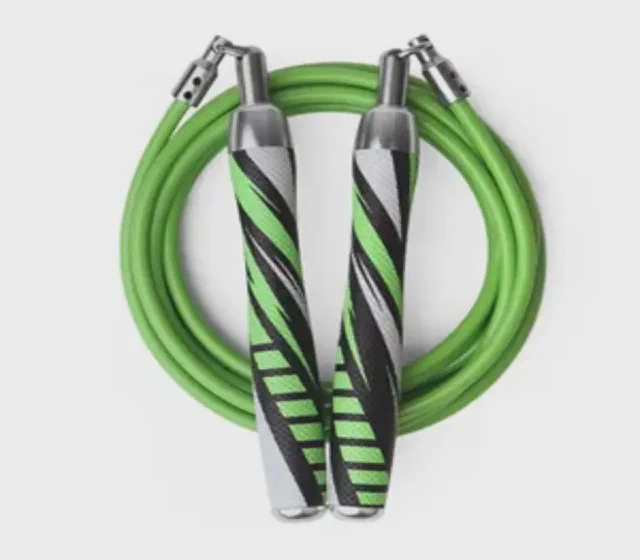
Hot Selling Wholesale Sporting Goods Home Gym Equipment Sport Home Fitness Product Equipment Leather Handles Non-Slip Jump Skipping Rope
- MIC category
- Jump Rope
GOOD SELLER CO., LTD lists this skipping rope with leather handles described as non-slip. For beginners, handle comfort matters more than it may seem: gripping too tightly can fatigue the forearms and turn a small wrist movement into a large arm swing. This option is worth considering if the feel and security of the handle are your main priorities, while remembering that the listing title alone does not confirm the rope's weight or whether it is intended as a slow learning rope.
Best for Adults who prioritise a secure handhold for short, relaxed home cardio sessions.
- Supplier listing describes leather handles
- Listing claims non-slip handles
- Presented for home gym and fitness use
Confirm before inquiry: Leather-like handle comfort can vary with finish, sweat and hand size. The approved listing information does not specify the cord material, adjustability or total rope weight.
Handle material alone does not decide whether a rope is beginner-friendly. It should be assessed alongside rope length, cord behaviour, available space and the pace you intend to use.
A simple first-week approach
Spend the first session finding a workable rope length and practising relaxed turns. Then use short sets: perhaps six to ten rounds of 15 to 30 seconds, resting as needed. If continuous jumping is difficult, try single turns: rotate the rope, make one jump, pause, then reset. This removes the pressure to sustain a rhythm before you have learned it.
As coordination improves, add duration before adding speed. A beaded rope can remain useful for skill practice even after you move to PVC for faster cardio. A lightly weighted rope can be a good occasional change of stimulus, but it does not need to be your default tool for every session.
If you have pain in the feet, ankles, knees, wrists, elbows or shoulders, stop and reassess your setup, surface and volume. People returning to exercise after injury, living with joint conditions or managing cardiovascular concerns should seek individual advice from an appropriately qualified health professional before starting a new high-impact activity. Jump rope can be scaled, but it is still repetitive impact exercise.
The practical answer is simple: choose beaded for maximum feedback, lightly weighted for a more tangible but measured rotation, and adjustable PVC for a lighter route into faster cardio. For a first purchase, control beats speed every time.
This article offers general information, not medical advice. Adjust activity to your experience and seek qualified guidance when needed.
FAQ
What is the best jump rope for beginners?
For many adults, a segmented beaded rope or a lightly weighted rope is the easiest place to start because it gives clearer feedback about where the rope is. An adjustable PVC rope is a good choice if you prefer a lighter, quicker feel and are happy to spend a little time getting the length right.
Are weighted jump ropes good for beginners?
Lightly weighted ropes can be useful for beginners because the extra mass makes each rotation easier to feel. Avoid starting with a heavily weighted model if your wrists, elbows or shoulders are not used to repetitive exercise; it can make technique break down sooner.
Why do beginners often like beaded jump ropes?
The segmented beads create audible contact with the floor and make the rope hold a more visible shape as it swings. That feedback can help a new jumper time the hop and spot when the rope is too long or turning unevenly.
How should I size a jump rope?
Stand on the middle of the rope with both feet. As a starting point, handles reaching roughly towards the lower chest or armpit area are commonly manageable for basic two-foot jumps. Adjust in small increments, then refine the length based on whether the rope catches behind your feet or slaps too far in front.
Should a beginner use a speed rope?
A speed rope can work well, particularly an adjustable PVC model, but it rewards compact wrist rotations and a consistent rhythm. It is usually better for a beginner who wants a portable cardio rope than for someone who needs maximum visual and audible feedback while learning.