Pickleball Paddle Shapes Explained: Widebody vs Elongated vs Hybrid for New Players
Choosing your first pickleball paddle? Compare widebody, elongated and hybrid shapes for sweet spot size, reach, hand speed and beginner-friendly control.
For most new players, the best pickleball paddle shape for beginners is a widebody. Its wider face generally gives you the most forgiving contact area, helping you keep serves, dinks and quick volleys more consistent while your technique is still developing. Choose an elongated paddle if extra reach and a little more leverage matter more to you than maximum forgiveness. Choose a hybrid if you want a middle ground.
That does not mean every beginner must buy a widebody. Paddle shape is a starting point, not a verdict on your game. Weight, grip size, balance and construction can make one paddle feel entirely different from another with a similar outline. Still, understanding the three common profiles will help you shop with clearer questions and avoid buying reach or power you do not yet need.
The quick comparison
| Shape | What it tends to help with | Main trade-off | Best starting point for |
|---|---|---|---|
| Widebody | Larger sweet spot, fast handling, touch and blocks | Less reach | Most beginners and doubles players |
| Elongated | Reach, leverage, drives and overheads | Narrower sweet spot, slower hands | Players who prioritise reach or play more singles |
| Hybrid | Balanced reach, control and manoeuvrability | No single standout advantage | Recreational all-court players |
The differences can look minor on a shop page, but they show up quickly at the non-volley zone—often called the kitchen—where you have little time to react.
Why widebody is usually easiest to learn with
A widebody, sometimes called a standard shape, is usually shorter and broader than an elongated paddle. The important benefit is not simply that it looks wider. More face width tends to create a more generous hitting zone from side to side, so a ball contacted slightly away from the centre is more likely to feel stable and travel where you intended.
That is useful in the shots beginners hit most often:
- Serves and returns: You are learning timing and direction at the same time. A forgiving face reduces the penalty for imperfect contact.
- Dinks: Soft shots require touch, but they also expose small mishits. A wider platform can make it easier to settle the ball over the net.
- Blocks and volleys: At the kitchen, a compact paddle shape is generally easier to get into position quickly when an opponent speeds the ball up.
- Defence: When you are late on a body shot, stability on a less-than-perfect contact can be more valuable than extra swing power.
The compromise is reach. A widebody will not extend as far across the court as an elongated paddle, so you may have to move your feet rather than relying on the paddle to rescue a wide ball. For a newer player, that is often a healthy trade: building positioning and footwork will help more than chasing maximum reach.
If you are comparing unclassified supplier listings, do not guess the shape from a product photo alone. Ask for overall length and face width, as well as weight and grip measurements.
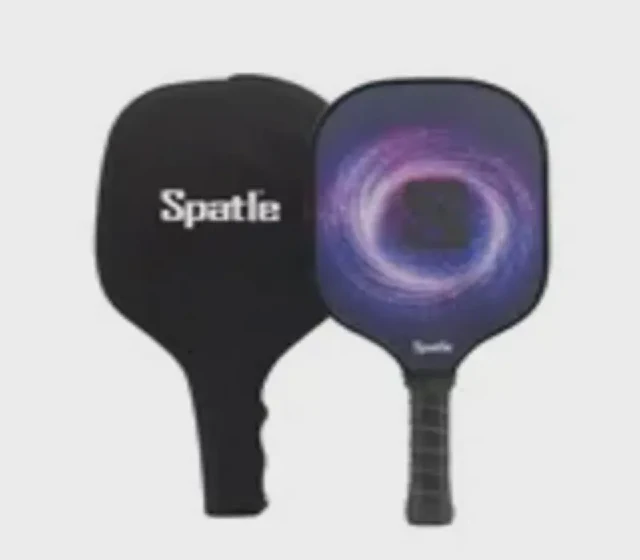
Factory Thermoformed Pickleball Paddle with Neoprene Paddle Cover
- Displayed price
- US$ 8.5-20 / Piece
- MIC category
- Pickleball Equipment
The Factory Thermoformed Pickleball Paddle with Neoprene Paddle Cover is listed by TIANCHANG ZHENGMU TECHNOLOGY CO., LTD. as a paddle-and-cover option. The supplied listing information does not state its shape, dimensions, weight or grip size, so a beginner should confirm those details before treating it as a widebody, hybrid or elongated choice.
Best for Buyers who want to ask a supplier for the full paddle specification and value an included cover.
- Supplier listing includes a neoprene paddle cover in the product name
- Displayed price: US$ 8.5-20 / Piece
- Listed in the Made-in-China Pickleball Equipment category
Confirm before inquiry: The displayed price and product details are supplier-listing information. Confirm the exact shape, weight, grip dimensions, materials and order terms directly with the supplier.
The Factory Thermoformed Pickleball Paddle with Neoprene Paddle Cover is listed by TIANCHANG ZHENGMU TECHNOLOGY CO., LTD. at a displayed price of US$ 8.5-20 / Piece. The supplied listing details do not identify its shape or dimensions. If you are seeking a beginner-friendly widebody, request those specifications before ordering, along with the actual weight range and grip circumference. The included cover named in the listing may also be practical for keeping a paddle protected from scuffs between sessions.
What an elongated paddle changes
An elongated paddle trades some width for extra length. That added length can give you a modest but noticeable reach advantage on wide dinks, passing shots and defensive stretches. It also creates more leverage through a fuller swing, which is why players who enjoy baseline drives, overheads and singles often gravitate towards this format.
For a beginner, however, the same features can introduce a few challenges. The face is narrower, so the useful contact area is usually less forgiving laterally. A ball struck towards the edge may twist the paddle more or lose direction and pace. The extra length can also make the paddle feel a fraction slower in rapid hand exchanges.
None of this makes elongated paddles a bad beginner choice. They can suit you if you are tall, frequently find yourself reaching for balls, or know that you enjoy hitting firmer groundstrokes. Just be realistic about the trade-off: extra reach does not automatically create better control. It can make clean contact easier on distant balls while making centre contact more important on routine ones.
A practical test is to imagine your typical game. If you mostly play social doubles and spend plenty of time exchanging dinks and reacting at the net, favour forgiveness. If you regularly play singles or feel your current paddle comes up short on wide balls, the elongated profile deserves a closer look.
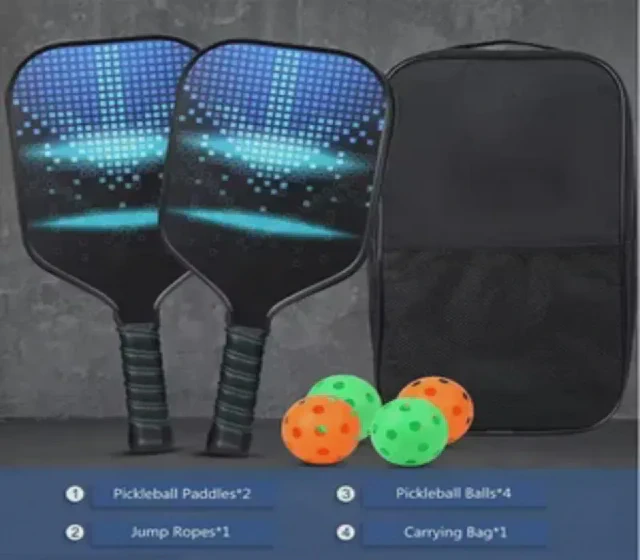
Lightweight T700 Graphite Black Glass Pickleball Paddle for Factory Sale
- MIC category
- Pickleball Equipment
Ivory Tiger Technology (Shenzhen) Co., Ltd. lists the Lightweight T700 Graphite Black Glass Pickleball Paddle for Factory Sale. “Lightweight” appears in the listing title, but the supplied information does not provide a verified weight, face dimensions or shape category. Those details are essential when comparing how quickly a paddle will move at the kitchen line.
Best for Buyers looking to request a lighter-handling paddle specification while comparing widebody, hybrid and elongated profiles.
- “Lightweight” appears in the supplier listing title
- T700 graphite and black glass appear in the supplier listing title
- Listed in the Made-in-China Pickleball Equipment category
Confirm before inquiry: Do not assume the shape or playing characteristics from the listing title alone. Ask the supplier for weight range, balance point, paddle dimensions, grip circumference and intended shape.
The Lightweight T700 Graphite Black Glass Pickleball Paddle for Factory Sale is listed by Ivory Tiger Technology (Shenzhen) Co., Ltd. “Lightweight” and the named materials appear in the supplier title, but the available listing facts do not confirm its weight, shape or measurements. A lighter paddle can be easier to manoeuvre, but weight alone does not tell you whether it is widebody, hybrid or elongated—or how stable it will feel on an off-centre volley. Request the complete specification before using it as a shape comparison.
Hybrid: the sensible compromise
A hybrid paddle aims to split the difference. It is commonly a little longer than a widebody but not as long and narrow as an elongated design. In practical terms, that can mean some additional reach without surrendering as much sweet-spot width or quickness at the net.
For recreational players who mix doubles with the occasional singles game, a hybrid is an appealing one-paddle solution. It can feel adaptable rather than specialised: enough reach for a stretched dink, enough face width for routine resets, and enough manoeuvrability for kitchen exchanges.
The limitation is equally straightforward. A hybrid cannot fully duplicate the biggest sweet spot of a widebody or the reach and leverage of a truly elongated paddle. If you already know that your priority is soft-game consistency, a widebody remains the clearer answer. If your style is built around drives and court coverage, an elongated paddle may be the more satisfying fit.
Think of hybrid as the choice for an undecided player with a balanced game, not automatically as the “best of both” in every category.
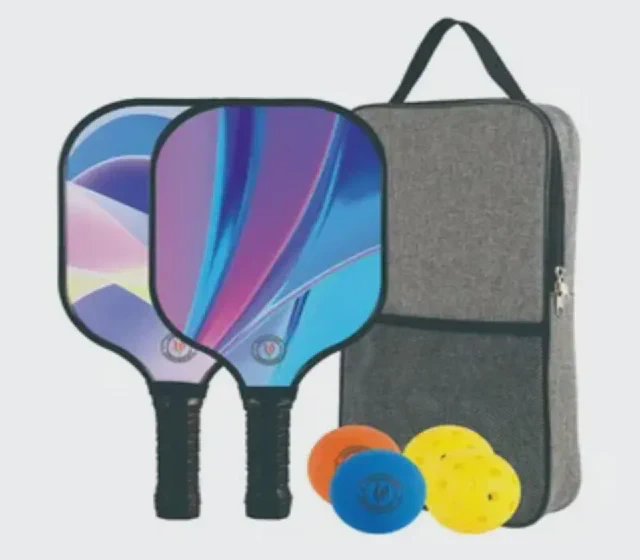
Wholesale Custom Logo Edgeless Pickle Ball Wood Pickleball Paddle
- MIC category
- Pickleball Equipment
The Wholesale Custom Logo Edgeless Pickle Ball Wood Pickleball Paddle is listed by Lishui Holykingchess. Co. Ltd. Its title points to a wood construction and custom-logo option, rather than confirming a particular widebody, hybrid or elongated geometry. For a first paddle, ask specifically about face width, overall length, weight and whether the design is intended for recreational play.
Best for Clubs, events or buyers exploring custom-logo wood paddle options and willing to verify the playing specification.
- Wood construction appears in the supplier listing title
- Custom-logo option appears in the supplier listing title
- Listed in the Made-in-China Pickleball Equipment category
Confirm before inquiry: Wood paddles can feel and handle differently from composite paddles. The supplier listing details provided do not confirm dimensions, weight, edge construction or paddle shape.
Lishui Holykingchess. Co. Ltd lists the Wholesale Custom Logo Edgeless Pickle Ball Wood Pickleball Paddle as a custom-logo wood option. The supplied listing information does not identify its dimensions or shape, so it should not be assumed to be hybrid just because it is marketed as a general pickleball paddle. Wood construction can also produce a different feel from composite options. Ask about the paddle’s overall length, width, weight, grip and edge construction before choosing it for a new player.
Shape matters, but fit matters too
Once you have narrowed down the shape, check the details that affect comfort and handling. A paddle that is technically a perfect widebody can still feel awkward if it is too heavy, too head-heavy or too large in the grip.
Weight: Lighter paddles are often easier to move and can reduce the sense of fatigue in longer beginner sessions. Heavier paddles may feel more solid on blocks and add momentum to drives, but can be slower to reposition. There is no universal best number; the useful question is whether you can hold the paddle out, make repeated swings and react at the net without straining your hand or forearm.
Grip: Your fingers should wrap around the handle comfortably without you having to squeeze hard. A grip that is too large can limit wrist movement and feel cumbersome. One that is too small can encourage excessive squeezing. An overgrip can increase circumference modestly, so it is often easier to build up a slightly small handle than reduce an oversized one.
Balance: Two paddles at the same listed weight can move differently. More weight towards the head can add swing momentum but make quick exchanges feel slower. A more evenly balanced or handle-biased paddle may be easier to manoeuvre.
Storage: Keep your paddle out of extreme heat, direct sun and a damp car boot. A simple cover helps protect the face from knocks when it shares a bag with balls, shoes and keys. Wipe off dirt after play and let the grip dry before packing it away.
A simple first-paddle decision
Choose a widebody if you want the easiest route to reliable contact, fast hands and controlled dinks. It is the default recommendation for most adults learning social doubles.
Choose an elongated paddle if reach is your clear priority and you accept a narrower, less forgiving face. It can be a rewarding choice for a player drawn to drives, overheads and singles coverage.
Choose a hybrid if your game is mixed and you want one paddle that feels broadly capable across the court.
If you can try paddles before buying, hit a few soft dinks, quick volleys and full serves with each shape. The best choice is not the one that promises the most power or reach; it is the one that lets you make repeatable contact and enjoy learning the next shot.
FAQ
What is the best pickleball paddle shape for beginners?
A widebody shape is usually the safest choice for beginners. Its wider face generally gives you a larger, more forgiving sweet spot and is easier to move quickly when learning dinks, blocks and volleys.
Are elongated pickleball paddles harder to use?
Not necessarily, but they can be less forgiving. The extra length helps with reach and leverage, while the narrower face can make off-centre contact more noticeable. They often suit players who already know they value drives, overheads or singles coverage.
Is a hybrid pickleball paddle good for a beginner?
Yes. A hybrid can be a sensible option for a beginner who wants a balanced all-court feel and a little more reach than a widebody. It is usually not quite as forgiving as a widebody, however.
Does a larger paddle face always mean a larger sweet spot?
Shape influences sweet-spot size and placement, but it is not the only factor. Construction, core, weight distribution, edge design and face materials also affect stability and feel. Compare the full specification rather than judging from shape alone.
Should beginners choose a light or heavy pickleball paddle?
Many beginners find a lighter or mid-weight paddle easier to manoeuvre and less tiring in long sessions. A heavier paddle can feel more stable and add pace, but may be slower at the net. If possible, hold or demo a few weights before deciding.