Best Pilates Equipment for a Small Apartment: Reformer, Ring or Mat?
A practical comparison of Pilates mats, rings and compact reformers for small apartments, covering storage, setup, comfort, exercise variety and beginner suitability.
If you are choosing the best Pilates equipment for a small apartment, start with the format you will use most consistently: a mat for simplicity, a ring for compact resistance or a reformer for the widest range of movement. For most first-time users, the mat is the sensible starting point. It is easy to roll away, needs almost no setup and supports the foundations of Pilates. A ring is the best space-saving upgrade. A reformer can offer a richer apparatus-based workout, but it asks much more of your room, budget and storage plan.
The quick answer: mat, ring or reformer?
Choose a Pilates mat if you want the lowest barrier to entry. Choose a Pilates ring if you already enjoy mat work and want to add resistance without storing a large object. Choose a compact reformer only if you have enough clear floor space to exercise safely and a realistic plan for storing or leaving it in place.
The important distinction is that small-space Pilates is not only about the size of the equipment. You also need room to lie down, extend your arms and legs, get on and off the equipment and move without catching a table, sofa or wall. A machine that fits against one wall may still be impractical if it blocks the only route through your apartment during a workout.
Pilates mat: the easiest place to start
A mat is usually the best first purchase for beginners. It supports floor-based exercises, gives your spine and joints some cushioning and can be rolled into a cupboard or stored behind furniture. Setup is almost instant: clear the floor, unroll the mat and begin.
The trade-off is that a mat provides no built-in resistance and fewer points of support than a reformer. Your progress depends on bodyweight control, positioning and the quality of your movement. That is not a disadvantage for learning the basics. Breathing, alignment, pelvic control and steady tempo are central skills, and mat work gives you a practical way to develop them.
Comfort matters in a small apartment because you may be more likely to practise briefly and often. A mat that is too thin can make kneeling or lying exercises uncomfortable, while one that is very soft may make balance and control less predictable. Look for enough cushioning for your body without choosing a surface so thick that it feels unstable.
Pilates ring: small storage, more challenge
A Pilates ring, sometimes called a magic circle, is a compact resistance tool. It can be placed between the thighs, hands or ankles to create gentle pressure and make familiar exercises more demanding. It also gives you feedback: maintaining contact with the ring can encourage awareness of alignment and muscle engagement.
For apartment living, its main advantage is storage. A ring can fit in a drawer, wardrobe or equipment basket, and it does not require a dedicated workout zone beyond the space needed for mat exercises. It is therefore a useful choice for someone who wants more variety but cannot justify a reformer.
The limitation is that a ring can encourage people to squeeze too hard or rush through a movement. Resistance should not replace control. Start with moderate pressure, keep your breathing steady and stop if you feel sharp pain, numbness or joint discomfort. A ring is an accessory, not a shortcut to better technique.
Reformer: the broadest exercise range, with the biggest space cost
A reformer uses a moving carriage and resistance system to support or challenge movement. Compared with a mat, it can offer more ways to adjust load, body position and assistance. That may make it attractive to people who want a structured home practice or who find floor exercises difficult to vary.
However, a reformer is not automatically the best choice for a beginner or a small room. It needs more setup, more clearance and more attention to safe use. You need to be able to mount and dismount without twisting around furniture, and the machine needs stable placement. Springs, straps and moving parts also require you to understand the equipment before attempting unfamiliar exercises.
A compact or foldable model can improve storage flexibility, but “foldable” should not be treated as “effortless to store”. Check how the machine folds, whether it can be moved safely by one person and where it will rest when not in use. You should also confirm the full working footprint rather than judging it by its folded appearance.
For shoppers considering a more permanent setup, the supplier-listed Commercial Maple Full Track Pilates Reformer Half Tower Equipment for Home Gym Yoga is a full-track reformer format.
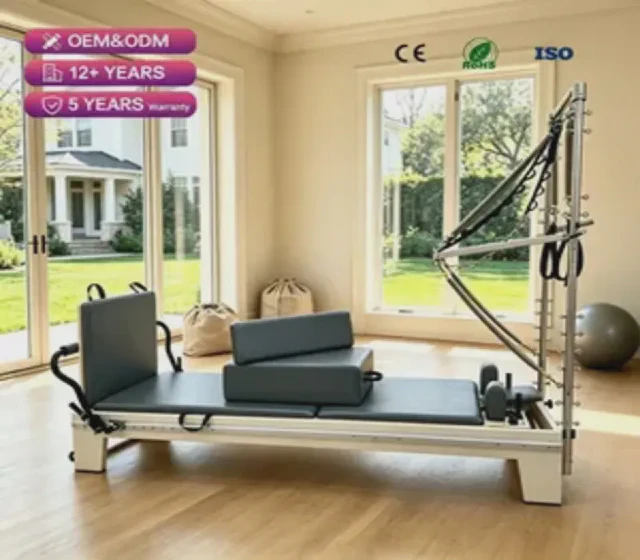
Commercial Maple Full Track Pilates Reformer Half Tower Equipment for Home Gym Yoga
- MIC category
- Pilates Equipment
The supplier listing presents this as a commercial maple full-track reformer with a half tower for home-gym and yoga use. Its larger, more structured format is aimed at shoppers who want the movement options associated with a full reformer and have a permanent place to keep it. For a small apartment, the main consideration is not just whether it can fit, but whether the room can remain clear around it during use.
Best for Apartment dwellers with a dedicated workout area and a strong preference for reformer-based exercise variety.
- Full-track reformer format
- Half-tower configuration
- Maple construction stated in the supplier listing
- Listed for home-gym and yoga use
Confirm before inquiry: The listing identifies it as commercial equipment, so confirm the assembled footprint, handling needs and storage arrangement with the supplier before treating it as a small-space solution.
Its half-tower configuration may suit someone seeking more apparatus-based exercise variety, but the commercial positioning makes careful space planning particularly important. Ask the supplier for the exact assembled dimensions and any handling requirements before placing it in an apartment.
Another supplier-listed option is the Cp101W Model Pilates Core Bed, Professional Home Fitness Equipment Pilates Reformer Sliding Bed.
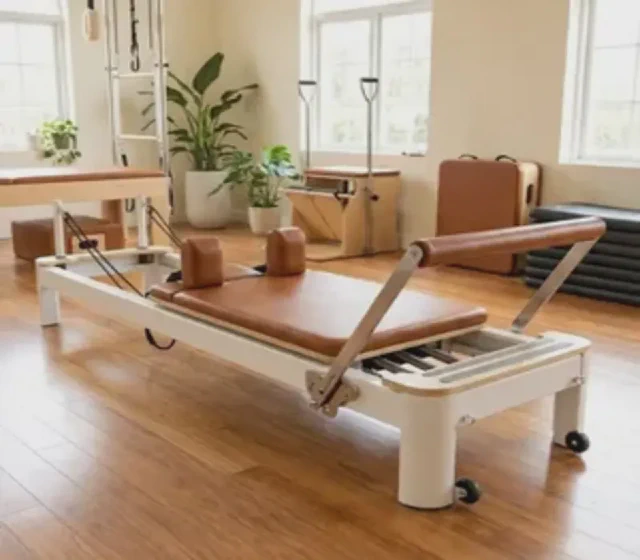
Cp101W Model Pilates Core Bed, Professional Home Fitness Equipment Pilates Reformer Sliding Bed
- MIC category
- Pilates Equipment
This supplier-listed Pilates core bed is described as professional home fitness equipment and a sliding bed. The bed-style design may appeal to someone who wants a dedicated apparatus rather than a collection of small accessories. It is still a substantial piece of equipment, so apartment buyers should prioritise clearance, access and stable placement before considering its exercise potential.
Best for Users who want a dedicated sliding-bed format and can leave adequate space for setup and use.
- Described as a Pilates core bed
- Sliding-bed format
- Listed for professional home fitness use
- Designed as a dedicated Pilates apparatus
Confirm before inquiry: The supplier listing does not establish that it is compact or foldable. Ask for exact dimensions and storage guidance before buying for a small room.
The core-bed and sliding-bed format is designed as a dedicated piece of equipment rather than a small accessory. It may be a better fit for a room that can stay arranged as a workout area than for a living room that must be reset after every session.
If storage is your main reformer concern, the supplier-listed Foldable Maple Wood Home Pilates Reformer Machine for Core Training is the most directly relevant format in this comparison.
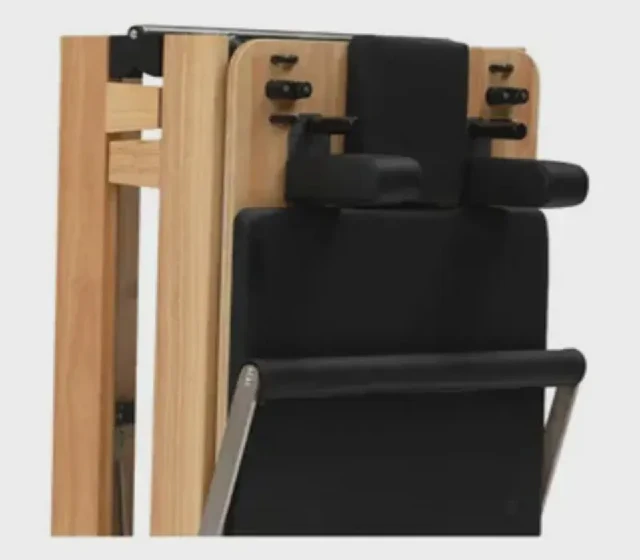
Foldable Maple Wood Home Pilates Reformer Machine for Core Training
- MIC category
- Pilates Equipment
The supplier listing describes this as a foldable maple wood home Pilates reformer for core training. Foldability is valuable in an apartment because it can make it easier to reclaim floor space between sessions. It does not remove the need for a clear exercise area, however, and the machine may still be awkward to move or store depending on its construction and your furniture layout.
Best for Reformer users who need to store the machine between workouts and can manage its weight and handling.
- Foldable home reformer format
- Maple wood construction stated in the supplier listing
- Listed for core training
- Designed for home use
Confirm before inquiry: Confirm the folded and unfolded dimensions, lifting requirements and recommended storage position with the supplier.
A foldable frame may help you reclaim space after training, but check both folded and unfolded dimensions. Also consider whether you have a safe place to move and store it without dragging it across the floor or lifting it awkwardly.
Comparing comfort and beginner-friendliness
For comfort, the mat gives you the most familiar starting point, but its suitability depends on cushioning and surface stability. The ring does not replace a mat, so it adds challenge without changing the basic floor setup. A reformer can provide support through its carriage and resistance system, but comfort depends on correct adjustment, secure placement and learning how the machine responds.
For a first-time user, fewer setup decisions can be helpful. A mat lets you concentrate on movement. A ring adds one simple variable. A reformer introduces a larger set of components and adjustments, which can be rewarding but may feel like a steep learning curve without instruction.
Consider taking an introductory class or using guidance from a qualified Pilates instructor before attempting complex reformer exercises. Stop if you experience pain, dizziness or unusual symptoms. Pilates is generally low impact, but low impact does not mean risk-free, especially if you have an injury, are pregnant, are returning to exercise or have a medical condition. Seek appropriate medical advice when needed.
How to choose for your apartment
Measure the area where you plan to exercise, not just the place where you will store the equipment. Leave enough clearance to lie down and move your limbs freely. Then ask yourself three questions:
- Will I use this at least a few times a week?
- Can I store it without creating a trip hazard or damaging furniture?
- Am I comfortable learning how to set it up and use it safely?
If any answer is uncertain, begin with a mat and add a ring later. This combination covers a wide range of low-impact exercises while keeping storage simple. A reformer makes more sense when you already know you enjoy Pilates, want its particular movement options and can dedicate space to it.
The best Pilates equipment for a small apartment is therefore the equipment that matches your available floor area and your willingness to set it up. Start small if you are unsure. Consistent, comfortable practice is more useful than owning a larger machine that remains folded in a corner.
This article offers general information, not medical advice. Adjust activity to your experience and seek qualified guidance when needed.
FAQ
What is the best Pilates equipment for a small apartment?
For most beginners, a supportive Pilates mat is the best starting point because it rolls away and needs very little storage. A Pilates ring is a useful next step if you want added resistance without the footprint of a large machine. A compact reformer suits people who have enough clear floor space and want more exercise variety.
Is a Pilates ring worth buying for beginners?
Yes, if you want a small and portable way to add gentle resistance. A ring can make familiar mat exercises more challenging, but beginners should start with controlled movements and light pressure rather than forcing the ring to compress.
Can you use a reformer in a small apartment?
You can, provided there is enough unobstructed space around the machine for safe movement and access. Check the assembled footprint, storage position and handling requirements before buying. A foldable model may be easier to store, but it still needs a suitable workout area when opened.
Should beginners start with a mat or reformer?
A mat is usually the more approachable starting point because it requires less setup and teaches basic alignment, breathing and control. A reformer can be appropriate for a beginner who wants guided spring resistance, but professional instruction can help with unfamiliar equipment and technique.
How much space do I need for home Pilates?
You need enough room to lie down comfortably on a mat and extend your arms and legs without hitting furniture. A reformer requires more space than its frame alone suggests because you need room to get on and off and complete movements safely. Measure your available area before purchasing.