Which Resistance Bands Are Best for Beginners? A Head-to-Head Comparison of Loop, Tube, and Flat Bands
A beginner-friendly comparison of loop, tube, and flat resistance bands to help you choose the best set for home strength training. Includes expert-backed recommendations and compl

If you’re new to strength training and staring at a wall of resistance bands, the choice can be paralyzing. Loop, tube, and flat bands each claim to be the best, but the right answer depends on your goals, space, and comfort. Here’s the short answer: for a beginner looking for the most versatile starting set, a combination of loop bands (for lower body and mobility) and tube bands with handles (for upper body exercises) offers the best value. Flat therapy bands are better for rehab and stretching. Let’s break down each type.
Loop Bands (Seamless, Continuous) Loop bands—also called mini bands or glute bands—are wide, elastic rings. They excel at activating and strengthening the glutes, hips, and thighs. Exercises like glute bridges, clam shells, lateral walks, and squats become instantly more effective. They come in various thicknesses, with lighter bands for warm-ups and heavier bands for strength. The seamless design means no handles to hold; you loop them around your legs or arms. Pros: Excellent for lower body; durable; easy to pack. Cons: Can roll up and pinch skin; limited for upper body isolation exercises like bicep curls; resistance may feel inconsistent if the band twists.
Tube Bands with Handles Tube bands are hollow elastic tubes with molded handles on each end, often including a door anchor for attachment. They mimic cable machine movements, making them ideal for bicep curls, rows, chest presses, and tricep pushdowns. The handles provide a familiar grip, and the tubes come in a range of resistance levels. Many sets include an ankle strap for leg exercises. Pros: Great for upper body; comfortable grip; easy to adjust resistance by using different tubes. Cons: Handles and anchors add bulk; tubes can snap if overstretched; the door anchor may require a sturdy door.
Flat Therapy Bands Flat bands are long, thin strips of latex without handles. They are commonly used in physical therapy for shoulder, knee, and hip rehab. The resistance is typically lighter, and you tie knots or grip the ends to perform movements like rows, pulls, or leg extensions. Pros: Very gentle on joints; highly portable; inexpensive. Cons: Limited resistance range; harder to control for strength work; can dig into hands without proper grip.
Head-to-Head: Which One for Which Goal?
- Strength Building: Tube bands or heavy loop bands (thicker resistance) work best. Tube bands allow progressive overload with multiple tubes, and loop bands can be stacked.
- Portability: All three are portable, but flat bands pack smallest. Loop bands are also very compact. Tube bands with handles are slightly more cumbersome.
- Grip Comfort: Tube bands win due to padded handles. Flat bands can be uncomfortable without handles. Loop bands are okay but may irritate the skin.
- Versatility: Loop bands can be used for both lower and upper body (e.g., banded push-ups, pull-aparts), but tube bands offer more exercise variety for the upper body.
- Safety: Flat bands are safest; loop and tube bands can snap if worn or used on sharp surfaces.
Building Your Beginner Home Gym A smart starter approach is to purchase a set of tube bands (4-5 resistance levels) plus a set of 3-4 loop bands. This covers most compound and isolation exercises. But don’t stop there—a few well-chosen accessories can make your workouts safer and more effective.
First, consider adding the Adjustable Ankle Wrist Weights from Hebei Dili Sports Commerce Co., Ltd. These adjustable ankle and wrist weights from Hebei Dili Sports Commerce Co., Ltd. are a versatile companion to resistance bands. Filled with sand, they can be strapped around ankles or wrists to increase the load during leg lifts, glute bridges, or marching exercises. They complement bands by adding constant tension even when the band is relaxed. The adjustable design lets you gradually increase weight as you progress. Best for Adding extra resistance to lower body band exercises, walking, and running Confirm before inquiry: Product from Hebei Dili Sports Commerce Co., Ltd.
Adjustable Ankle Wrist Weights Weighted Sandbags Fitness Training Wrist Ankle Weights for Running Yoga Workout
View product listing
Second, if you find your wrists aching during push-ups or band rows, the Best Wrist Support Brace from Telamon Sports Goods (Shanghai) Co., Ltd. can make a big difference. The CE-approved wrist support brace from Telamon Sports Goods (Shanghai) Co., Ltd. is a smart addition for anyone new to resistance training. When performing push-ups with loop bands or pulling movements with tube bands, beginners often experience wrist strain. This brace provides gentle compression and alignment, reducing discomfort and letting you focus on proper form. It's also handy for yoga and lifting. Best for Providing wrist stability during band exercises and other workouts Confirm before inquiry: Product from Telamon Sports Goods (Shanghai) Co., Ltd.
Best Wrist Support Brace Gym for Yoga Lifting Carpal Tunnel CE Approved
View product listing
Third, if your tube bands come with cheap plastic handles that slip or dig into your palms, swap them out for the Chrome-Coated Multi-Function Pull Handle from Nantong ELF Sports Co., Ltd. Many tube bands come with plastic handles that can become slippery or uncomfortable. This chrome-coated multi-function pull handle from Nantong ELF Sports Co., Ltd. is a durable upgrade. It attaches to carabiner-equipped tube bands, offering a secure, non-slip grip for exercises like lat pulldowns, rows, and curls. The chrome coating resists rust and looks professional. A simple way to improve your band setup. Best for Replacing or upgrading tube band handles for better grip Confirm before inquiry: Product from Nantong ELF Sports Co., Ltd.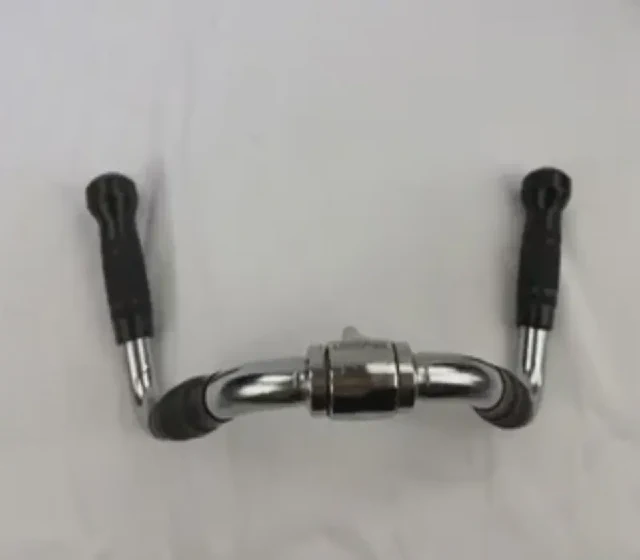
Gym Fitness Equipment Chrome Coated Multi-Function Pull Handle
View product listing
Final Verdict For a beginner, start with a tube band set that includes door anchor and handles, plus a pack of loop bands. That combination gives you the widest range of exercises and the easiest learning curve. Supplement with the accessories above to address comfort and add resistance options. Flat therapy bands are better left for rehab or travel when space is extremely limited. Whichever path you choose, remember that consistency outweighs the type of band. Happy training!
This article offers general information, not medical advice. Adjust activity to your experience and seek qualified guidance when needed.
FAQ
What is the difference between loop, tube, and flat resistance bands?
Loop bands are continuous elastic loops, typically used for glute exercises, squats, and lateral walks. Tube bands have handles and a hollow center, allowing for a wide range of upper body exercises similar to cable machines. Flat therapy bands are long strips without handles, often used in physical therapy and stretching for low to moderate resistance.
Which type of resistance band is safest for beginners?
Flat therapy bands are generally the safest because they have no handles or snaps that could break, and they offer gentle resistance. However, tube bands with molded handles can be safe if made of quality latex and used within their rated range. Loop bands can snap if overstretched or if they have nicks; beginners should inspect bands regularly.
Can I build significant muscle using resistance bands?
Yes, especially with loop and tube bands that offer higher resistance levels. Progressive overload is possible by using thicker bands or stacking bands. However, for maximal strength gains, free weights or machines may be more efficient. Bands excel for isolation, toning, and accommodating resistance.
Are resistance bands portable enough for travel?
Absolutely. All three types are lightweight and packable. Tube bands may be slightly bulkier due to handles, but they still fit easily in a gym bag. Flat bands can be folded small. Loop bands can be tied or rolled.