Which Resistance Bands Are Best for Beginners in a Small Home: Tube, Loop or Fabric?
Comparing tube, loop and fabric resistance bands for beginner home workouts, including setup, comfort, portability, grip and exercise range.
The best resistance bands for beginners in a small home are usually the ones you can set up quickly, grip securely and store without rearranging the room. For the broadest range of strength exercises, start with tube bands and handles. Choose fabric mini bands if comfort around the thighs is your priority, or long loop bands if you want a flat, highly portable option for assistance and mobility work.
You do not need a rack, bench or full home gym to begin. A clear patch of floor and one appropriately light band can be enough for squats, rows, presses, hinges and controlled upper-body work. The important distinction is that each band style solves a slightly different problem.
Tube bands: the most versatile starting point
Tube bands are narrow elastic tubes, often used with detachable handles. Many sets can also include ankle straps, door anchors or connecting clips, although the contents vary by set. Their main advantage is familiarity: the handles give you something solid to hold, which can feel more natural than gripping a thin loop.
For a beginner, tube bands are useful for standing rows, chest presses, biceps curls, triceps work, lateral raises, squats and deadlift-style hinges. With a suitable anchor, they can also create more exercise options in a small room. You can usually separate the handles from the band and store the pieces in a drawer or small cupboard.
The trade-off is setup. An anchor must be secure and positioned correctly, and a band can snap back if it is poorly attached or released under tension. Handles also make a tube set slightly bulkier than a single flat loop. If you buy a kit, check what is actually included rather than assuming every set has the same attachments.
Tube bands are the strongest all-round choice for a beginner who wants to train the whole body and prefers a conventional handle. Start with a manageable resistance. A band that makes you compensate, twist or shorten the range of motion is too challenging for learning the movement.
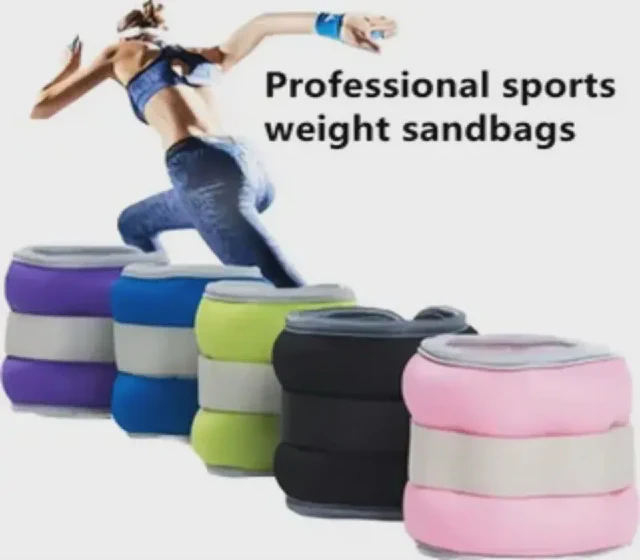
Adjustable Ankle Wrist Weights Weighted Sandbags Fitness Training Wrist Ankle Weights for Running Yoga Workout
- MIC category
- Fitness Accessories
The supplier listing describes these as adjustable weighted sandbags for the wrists and ankles. They do not replace a resistance band, but they may interest beginners who want a compact way to add load to controlled walking, yoga or bodyweight movements. Unlike bands, they do not provide elastic tension and cannot be used for rows, presses or anchored exercises.
Best for Beginners who want optional wearable resistance alongside, rather than instead of, a band-based programme.
- Listed for wrist and ankle use
- Adjustable weighted format
- Compact compared with larger home-gym equipment
Confirm before inquiry: Use conservative loads at first. Added weight can alter joint stress and movement technique, particularly during running or fast exercises.
Long loop bands: compact and adaptable
Long loop bands are continuous circles of elastic material with no handles. They are easy to fold or roll, take up very little storage space and can be used for assisted pull-ups, mobility drills, rows, presses, squats and some lower-body exercises. They are also useful for adding resistance to movements where you want the band to travel around the body or between the hands and feet.
Their biggest limitation for beginners is grip. A narrow loop can dig into the hands, and a strong band may be difficult to control when it is stretched far. A longer loop can also feel awkward if you are working in a confined room and do not yet understand how to position it. Shoes, clothing and the floor surface can affect how securely the band stays in place.
Long loops are a good choice if portability matters most or if you want to progress towards band-assisted movements. A set with several resistance levels is more useful than one very strong band, because beginners usually need different tensions for upper- and lower-body exercises.
When using a loop around the feet or legs, check that it is not twisted unless the exercise requires it. Keep the band away from sharp furniture edges and avoid stretching it beyond a comfortable, controlled range.
Fabric mini bands: comfortable for lower-body work
Fabric bands are commonly made as short loops with a woven outer surface. They are especially popular for glute bridges, clamshells, squats, lateral walks and other lower-body exercises. Compared with smooth elastic, fabric often feels less slippery and may be less likely to roll down the thighs.
That comfort can make fabric mini bands a sensible first purchase for someone who is new to exercise or dislikes elastic rubbing against the skin. They are also simple to store: a pair can fit in a drawer, small bag or even a coat pocket.
The limitation is exercise range. A short fabric loop is not designed for every movement. It may be unsuitable for upper-body pulling and pressing, and it offers little help with exercises that require a long stretch between the hands and feet. Some fabric bands also feel fixed at one resistance, so you may outgrow a single band as your strength improves.
Choose fabric if your first goal is consistent lower-body training and you want a band that feels stable around the legs. A set with different resistance levels gives you more room to progress without making the band excessively tight.
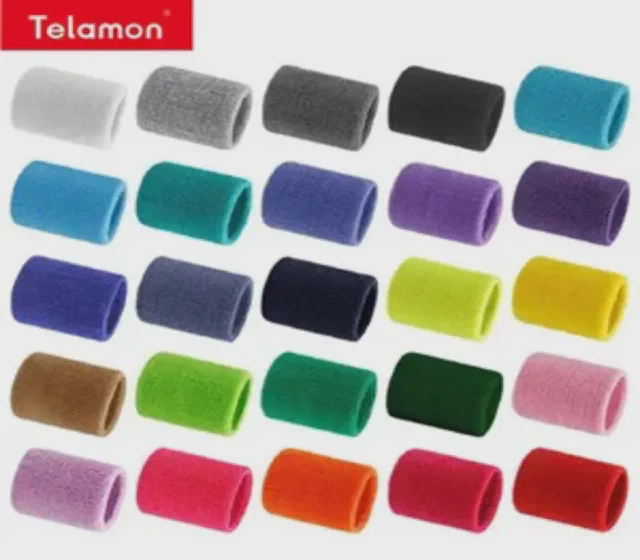
Best Wrist Support Brace Gym for Yoga Lifting Carpal Tunnel CE Approved
- MIC category
- Fitness Accessories
The supplier listing presents this as a wrist support brace for gym, yoga and lifting use. It is not resistance equipment and will not change the tension supplied by a band. It may be relevant if wrist comfort affects how you hold handles or support yourself during floor exercises, but a brace should not be used to ignore pain or compensate for poor setup.
Best for People considering wrist support as a separate comfort accessory during suitable home workouts.
- Listed for gym, yoga and lifting activities
- Designed as a wrist-worn support accessory
- Separate from resistance-band selection
Confirm before inquiry: Follow the supplier's fitting guidance and stop if you experience numbness, tingling, swelling or increased pain.
Which style is easiest to use in a small home?
For storage, fabric mini bands and long loops have the smallest footprint. For exercise variety, tube bands usually win because handles and optional anchors make positioning more straightforward. For comfort around the legs, fabric is often the most appealing. For assisted movements and mobility, long loops are usually the most adaptable.
A practical decision guide looks like this:
- Choose tube bands if you want one system for rows, presses, curls, squats and hinges.
- Choose fabric mini bands if you mainly want glute and leg exercises with a secure feel.
- Choose long loops if you value portability, stretching options or assisted exercises.
- Choose two styles only if they cover different needs; for example, tube bands for upper-body work and a fabric mini band for lateral walks.
Do not assume a bigger set is automatically better. More pieces can mean more resistance choices, but they can also create clutter and make a beginner less likely to start. A smaller set with clear resistance levels is often easier to understand and use regularly.
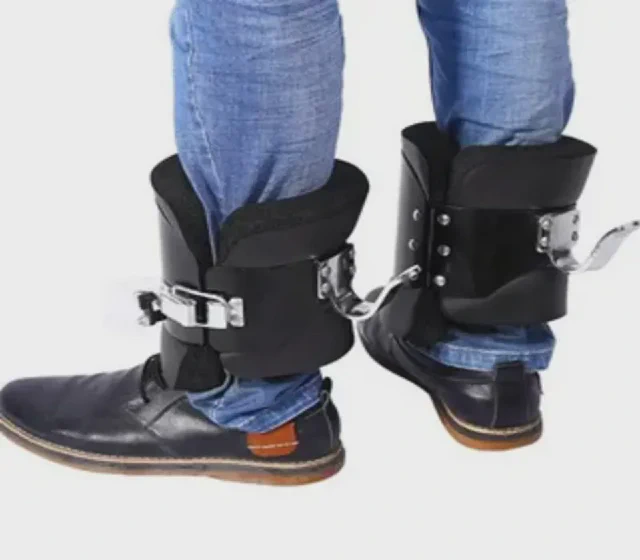
Fitness Exercise Hanging Pull up Boot Compression Relief Anti Gravity Inversion Boots
- MIC category
- Fitness Accessories
The supplier listing describes these as hanging pull-up and inversion boots. They are a specialist piece of equipment rather than a beginner resistance-training tool, and they require a suitable overhead setup. They should not be treated as an alternative to tube, loop or fabric bands in a small home.
Best for Experienced users with an appropriate, secure setup and a clear reason to use inversion equipment.
- Listed for hanging and inversion exercises
- Specialist rather than general-purpose home fitness equipment
- Requires careful consideration of the overhead attachment point
Confirm before inquiry: Do not use hanging equipment from an unverified door frame, ceiling fixture or other unsuitable support.
Safety and progression for beginners
Inspect a band before every session. Do not use it if you see cracking, cuts, severe thinning, sticky patches or damaged stitching. Test the anchor with gentle tension before committing your body weight, and never attach a band to glass, a sharp edge, a loose door or an unverified overhead fitting.
Begin with slow repetitions and leave a little reserve rather than training to failure immediately. You can progress by adding repetitions, slowing the lowering phase, increasing the number of sets or moving to a stronger band. Keep your joints aligned, avoid jerking the band and return it under control.
Stop if you feel sharp pain, unusual numbness, dizziness or loss of control. Resistance-band exercises can be useful, but they are not risk-free simply because the equipment is small. If you have an injury, a medical condition, persistent pain or limited exercise experience, ask a qualified health professional for individual guidance.
For most beginners with limited space, tube bands are the best single-format purchase because they offer the widest exercise range in a compact package. If your priority is comfort and simple lower-body training, fabric is the better fit. Long loops are the most versatile flat option, but they reward careful positioning and may take slightly longer to master.
This article offers general information, not medical advice. Adjust activity to your experience and seek qualified guidance when needed.
FAQ
Which resistance bands are best for beginners?
The best choice depends on your exercises. Tube bands with handles are the most versatile for general strength training, fabric mini bands are comfortable for lower-body exercises, and long loop bands are useful for assistance, mobility and full-body movements.
Are fabric resistance bands better than rubber bands?
Not universally. Fabric bands are often more comfortable and less likely to roll on the thighs, while rubber or latex-style bands usually offer a wider range of lengths, tensions and exercise options. The better format is the one that suits your planned workouts and feels secure.
Can I build strength with resistance bands in a small home?
Yes. Bands can provide progressive resistance for exercises such as rows, presses, squats, hinges, lateral walks and assisted movements. Progress by using a stronger band, increasing repetitions, slowing the movement or adding sets while keeping good form.
Do I need a complete resistance-band set?
No. Beginners can start with one light-to-medium band suited to their main exercises. A larger set becomes useful when you want to train different muscle groups or gradually increase resistance.
How should I store resistance bands?
Keep them clean, dry and away from direct sunlight, heat and sharp edges. Store them loosely rather than tightly knotted, and inspect them before each workout for cracks, thinning or other damage.