Resistance Bands vs Mini Bands vs Tube Bands: Which Is Easiest for a Small-Space Beginner Workout?
Flat resistance bands, mini loop bands and handled tube bands compared for comfort, storage, setup and beginner-friendly home workouts in a small space.
For a small-space beginner, mini loop bands are usually the easiest place to start: they are small, quick to put on and particularly straightforward for glute, hip and lower-body exercises. Flat resistance bands are the best all-rounder if you want more exercise variety in one very portable tool. Handled tube bands can feel most familiar for upper-body exercises, but they require more attention to anchoring, band condition and setup.
The best resistance bands for beginners are not necessarily the strongest or most feature-packed set. The right first choice is the one you can set up in under a minute, use without discomfort and store in a drawer. Here is how the three main formats compare.
Mini loop bands: the simplest start for lower-body training
Mini bands are short, closed loops. You typically wear one above the knees, around the ankles or around the feet. Because there are no loose ends to hold and no door anchor required, they remove a common beginner barrier: working out exactly where to put the band.
They work well for lateral walks, glute bridges, clamshells, standing hip abductions, squat variations and activation drills before a walk, run or strength session. In a bedroom or living room, you need little more than enough space to lie down or take two or three steps sideways.
Their limitation is equally clear. A mini band is not the most convenient tool for rows, chest presses or other large upper-body movements. It can also roll, pinch or pull at body hair. Narrow rubber loops are more likely to bunch than wider loops; fabric-style loops may feel more comfortable for some people, though they can be bulkier and are not automatically better for every exercise.
For a beginner, choose a multi-resistance set rather than assuming one loop will cover everything. A light loop may be enough for shoulder or mobility work, while a medium or heavier loop may be more useful around the thighs. Do not judge the band by colour alone: colour systems vary by brand.
Flat resistance bands: the most versatile in the smallest package
Flat bands are long strips of elastic material, often sold individually or in a set. Some are open-ended therapy-style bands; others are continuous long loops. They take up almost no storage space and can support an impressively broad menu of exercises.
A flat band can assist a gentle mobility session, add resistance to glute bridges, support seated rows, create a chest press when safely anchored, or provide light resistance for shoulder exercises. For travel and truly limited storage, this format is hard to beat: roll it up, keep it away from heat and sharp edges, and it can live in a small pouch or drawer.
The trade-off is handling. You need to control the band length, hold it without over-wrapping it around your hands and avoid letting it snap back. Some exercises also need a stable anchor point. Beginners can make flat bands easier by starting with floor-based or seated movements where the band is held under the feet rather than attached to a door.
Comfort depends on the material and the exercise. A wide, softer flat band can feel kinder against the skin during leg work. A very thin band may be useful for rehabilitation-style movements but can feel awkward when higher tension is needed. Never stretch a band beyond the manufacturer guidance, and stop using it if you see cracks, nicks, thinning or damaged seams.
Handled tube bands: intuitive for arms and upper body, but less grab-and-go
Tube bands are elastic tubes with handles at each end. Many sets include several tubes or attachments such as door anchors, ankle straps or a central bar. For a person who associates strength training with dumbbell-style movements, the handles can make biceps curls, triceps extensions, rows and presses feel more immediately recognisable.
They are also easy to hold: handles may be more comfortable than gripping a flat strip, particularly if hand strength is limited. A tube band can be stood on for curls, overhead presses and deadlift-pattern practice, which means you do not always need an anchor.
However, the apparent simplicity can hide more setup. You need enough length to stand on or pull the tubes through a comfortable range, and door-based work requires a secure door and a correctly positioned anchor. A failed anchor or worn tube can recoil quickly. Before each use, inspect the tube, handles, attachment points and any metal fittings. Keep your face and other people out of the line of tension.
Tube bands can also feel less comfortable for lower-body band walks than mini loops. If your main purpose is glute and hip work, the extra hardware is unlikely to make training easier.
A quick choice guide
Choose mini loop bands if you want the lowest-learning-curve option for legs, glutes, warm-ups and short home sessions. They are the strongest answer for someone who says, “I want something tiny that I will actually use.”
Choose flat bands if you want one compact format that can grow with you. They ask for slightly more practice, but they offer the greatest range across mobility, lower-body and light upper-body work.
Choose handled tube bands if your priority is upper-body resistance work and you prefer a handle. They can be an excellent next step, provided you are willing to learn safe anchoring and inspect the equipment carefully.
A practical first purchase for many beginners is a mini loop set plus a light-to-medium flat band. That combination remains inexpensive in storage terms, covers a large number of foundational movements and avoids needing a door anchor on day one.
How to select your first resistance level
Ignore the urge to begin heavy. A suitable beginner resistance lets you complete roughly 8 to 15 slow repetitions while maintaining normal breathing, a stable posture and control at the end of the movement. The final few repetitions should feel challenging, but not force you to shorten the movement, shrug your shoulders, arch your back or twist.
Resistance is exercise-specific. You may need a light band for shoulder external rotations and a much stronger one for glute bridges. This is why a small set of levels is generally more useful than one supposedly universal band.
Also remember that bands become harder as they stretch. Start with a shorter range and build gradually. Position yourself so you are not beginning with a band already pulled tight, especially when learning a movement.
Small-space storage and safety checklist
Store bands dry, out of direct sunlight and away from radiators, pets and sharp furniture edges. Wipe them clean according to the maker’s care guidance, and do not use harsh cleaning products unless the instructions permit them. A small fabric pouch, drawer compartment or lidded box is sufficient.
Before every workout, check for cracking, fraying, cuts, brittle areas, loose handles and damaged stitching. Replace a compromised band rather than trying to repair it. When anchoring a band, use only equipment intended for that purpose and test the setup gently before applying full force.
If an exercise causes sharp pain, dizziness, numbness or unusual joint symptoms, stop. People returning after injury, living with a medical condition or unsure about a new exercise plan should seek advice from an appropriately qualified healthcare or fitness professional.
Compact accessories: useful context, not substitutes for bands
Wearable weights are another compact category, but they load the limb rather than create elastic resistance. The following supplier-listed accessory is not a resistance band, yet it may help illustrate the difference between portable equipment types.
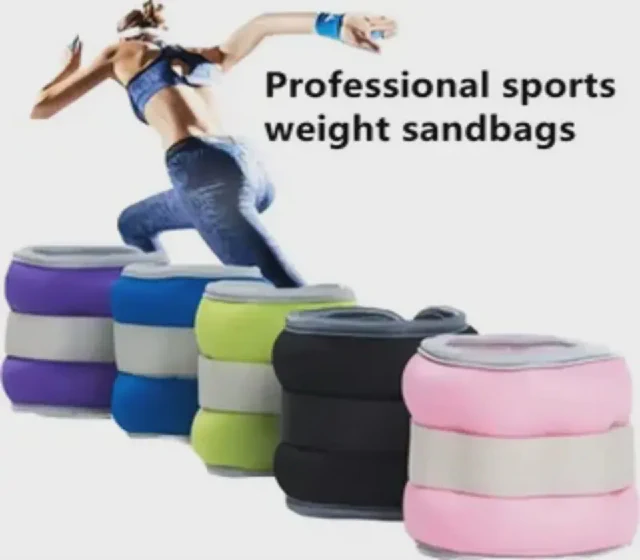
Adjustable Ankle Wrist Weights Weighted Sandbags Fitness Training Wrist Ankle Weights for Running Yoga Workout
- MIC category
- Fitness Accessories
This is not a resistance-band option, but it is relevant for beginners considering compact ways to make walking, mat work or simple bodyweight drills feel more challenging. The supplier listing describes adjustable weighted sandbags for running, yoga and workouts. Unlike a band, wearable weight does not need an anchor or stretch, but it adds load throughout a movement and may not suit every exercise or joint.
Best for People who already enjoy controlled bodyweight routines and want a compact non-band accessory to consider.
- Supplier listing places it in the Fitness Accessories category
- Designed as wearable ankle or wrist weight according to the product title
- Does not require the grip, stretching or anchoring used with resistance bands
Confirm before inquiry: Use added wearable load conservatively, particularly for repetitive arm or leg movements. The listing information should be checked directly with the supplier before purchase.
A power sled may be valuable in a dedicated training environment, but its space demands make it a poor match for an apartment-friendly first workout kit.
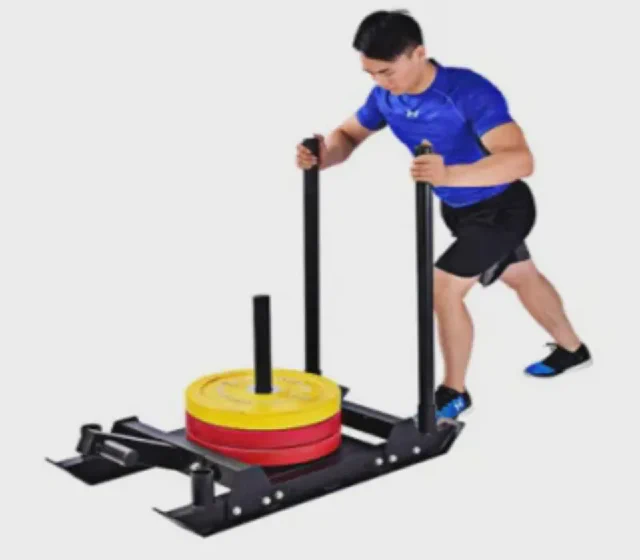
China Wholesale Gym Equipment Fitness Training Power Sled
- MIC category
- Fitness Accessories
A power sled is the opposite of the compact, low-setup band solution most apartment beginners need. The supplier listing identifies this item as a fitness training power sled. Sled work can be a demanding conditioning format, but it normally needs clear floor space and a suitable surface, so it is not a substitute for flat bands, mini bands or tube bands in a small-room workout.
Best for Users with dedicated training space rather than a compact home setup.
- Supplier listing places it in the Fitness Accessories category
- Power sled format identified in the product title
- Requires more usable floor space than portable resistance-band formats
Confirm before inquiry: Confirm dimensions, loading requirements and surface compatibility directly with the supplier. It is not the practical first-buy choice for the small-space problem covered in this guide.
Likewise, inversion boots are specialist equipment rather than a beginner-friendly alternative to bands. They require compatible overhead setup and careful consideration of individual suitability.
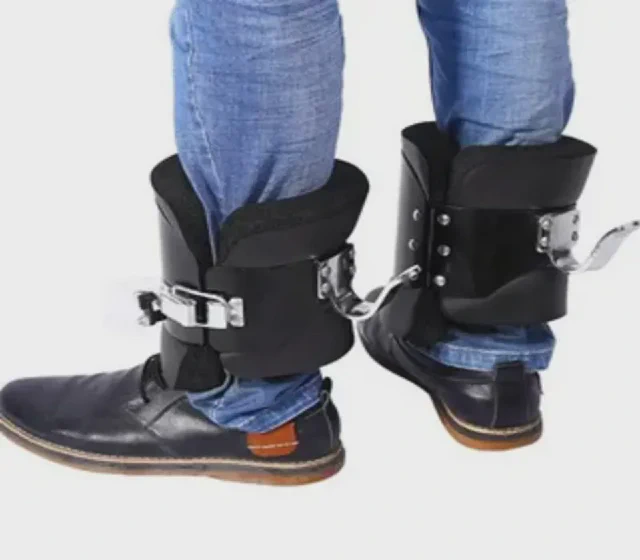
Fitness Exercise Hanging Pull up Boot Compression Relief Anti Gravity Inversion Boots
- MIC category
- Fitness Accessories
The supplier listing describes these as hanging pull-up, compression-relief and anti-gravity inversion boots. They are not resistance bands and are not an appropriate replacement for a simple beginner band routine. Inversion equipment depends on compatible, secure overhead equipment and introduces a much higher setup and suitability threshold than floor-based band exercises.
Best for Experienced users considering specialist equipment only after assessing equipment compatibility and personal suitability.
- Supplier listing places it in the Fitness Accessories category
- Inversion-boot format is stated in the product title
- Not a compact substitute for beginner resistance-band training
Confirm before inquiry: Inversion exercise is not suitable for everyone. Seek qualified medical advice if you have a health condition, are pregnant, have dizziness or blood-pressure concerns, or are unsure whether inversion is appropriate.
For the original choice, keep it simple: buy mini loops for easy lower-body sessions, add a flat band for versatility, and consider handled tubes only when upper-body training and safe anchoring are priorities. A band you can reach, understand and use consistently will serve a beginner far better than a complicated kit stored out of sight.
This article offers general information, not medical advice. Adjust activity to your experience and seek qualified guidance when needed.
FAQ
What are the best resistance bands for beginners in a small apartment?
A set of mini loop bands is usually the simplest first purchase if your priority is lower-body work, mobility and minimal setup. Choose flat bands if you want one lightweight tool for a wider range of movements. Choose handled tube bands if upper-body rows, presses and curls are your main goal and you have a safe setup plan.
Should beginners start with light or medium resistance bands?
Start with a resistance that lets you perform slow, controlled repetitions with full comfortable movement. For many exercises that will be a light band. A set with several levels is useful because lower-body exercises may need more resistance than shoulder or arm exercises.
Do mini bands roll up during exercise?
They can, especially narrow latex loops worn on bare skin or over slippery leggings. Wider fabric-style loops may feel more secure for leg work, while careful placement above the knees and controlled movement can reduce rolling with rubber loops.
Are tube bands safe to use with a door anchor?
They can be useful when the anchor is designed for the band and the door is solid, closed and secured so it cannot open toward you. Check the band, stitching, carabiners and anchor before use. Never use a damaged band or improvise an anchor on unstable furniture.
Can resistance bands replace weights?
Bands can provide effective resistance for many beginner strength exercises, but their tension changes as they stretch and they are not identical to dumbbells. They are an accessible training tool, particularly for learning movement patterns, but progressive training still requires appropriate resistance and good technique.