Folding vs Under-Desk vs Compact Treadmills: Which Fits a Small Home?
Looking for the best treadmill for a small apartment? Compare folding treadmills, under-desk walking pads and compact fixed-frame models for storage, stability, noise and beginner
If you want to walk at home and may eventually try gentle jogging, a folding treadmill with a proper handrail is usually the best treadmill for a small apartment. It gives you more confidence and a wider range of use than a basic under-desk walking pad, yet it can be stored when the room needs to function as a living space again.
Choose an under-desk treadmill instead if your priority is low-speed walking, desk use and the slimmest possible storage profile. Choose a compact fixed-frame treadmill if you can leave it in one place and value a more planted, traditional treadmill feel. The right answer is not simply the smallest machine: it is the one you can set up safely, use comfortably and put away without dreading the process.
The three small-home treadmill formats
1. Folding treadmills: the all-rounder for walking and beginner jogging
A folding treadmill normally has an upright console or handrail section, plus a deck that folds upward or a frame that collapses flatter for storage. This category ranges from conventional treadmills with a lifting deck to slim hybrids whose handle folds down over the belt.
For a beginner, the greatest advantage is support. A stable handrail is useful when getting on and off, finding your rhythm and recovering your balance after changing speed. It should not become something you grip tightly throughout a workout, but it can make the first few weeks feel less intimidating. Folding models also tend to offer a more familiar console arrangement, accessible controls and higher speed potential than basic walking pads.
The trade-off is handling. “Foldable” does not necessarily mean lightweight or easy to move. Some decks are heavy, and a machine may need to be tilted, rolled, turned and lifted around furniture before it reaches its storage place. Measure the route as carefully as the final storage space. A treadmill that technically fits under a bed but cannot comfortably be manoeuvred there is not solving your space problem.
Look for a secure locking mechanism, transport wheels that work on your flooring, a handrail that does not wobble and a folded shape you can genuinely accommodate. If jogging is part of the plan, also check the manufacturer’s stated speed range, deck length and intended use. Shorter decks can be perfectly workable for walking, but they can feel restrictive when stride length increases.
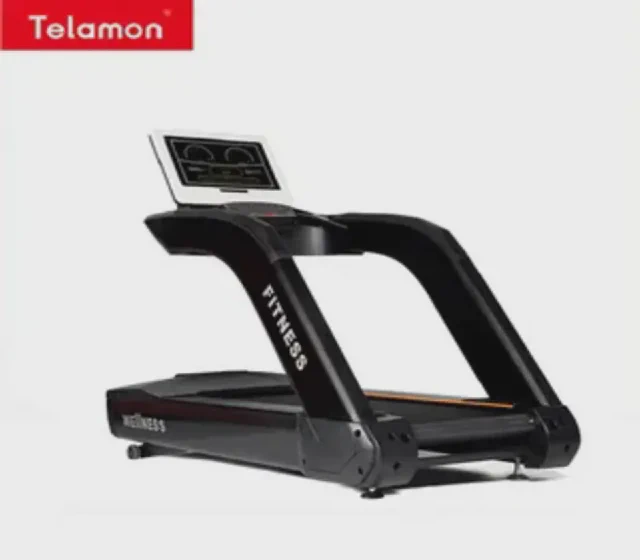
Foldable Smart Portable Commercial Hand Grip Rubber Damper Heart Rate Walking Treadmill
- MIC category
- Treadmill
Of the supplied listings, this is the clearest match for the apartment-friendly folding-treadmill format. Its name includes “Foldable,” “Portable,” “Hand Grip” and “Walking Treadmill,” all of which point towards the useful middle ground between a bare walking pad and a large fixed-frame runner. A hand-grip setup can give a beginner more reassurance while stepping on, changing pace and learning a comfortable walking rhythm. The listing name alone does not confirm its folded dimensions, maximum speed, incline, user-weight limit or jogging suitability, so those details should decide whether it is the right fit.
Best for Beginner home walkers who want a potentially stowable treadmill format with a hand-grip feature.
- Supplier-listing name describes it as foldable and portable
- Naming includes hand grip, rubber damper and heart-rate features
- Listed supplier: Telamon Sports Goods (Shanghai) Co., Ltd.
Confirm before inquiry: Confirm whether the hand grip is a full stabilising rail, whether the deck locks securely in storage and whether the manufacturer rates the machine for jogging rather than walking only.
2. Under-desk treadmills and walking pads: best for storage-first walkers
Under-desk treadmills, often called walking pads, are low-profile belt machines designed to slide under a standing desk, bed or sofa. Many have no upright console and are controlled by a remote, app or small display near the front of the deck. Their lower step-up height can make them approachable, while their slim frame is especially appealing in a studio or multipurpose room.
This is the easiest category to recommend to someone whose main goal is adding steps during the workday, watching television while walking or taking a short indoor movement break. Walking pads are commonly shorter, narrower and easier to stand on edge or store flat than conventional treadmills. Some fold in the middle, reducing their storage length further.
Their limitations matter. Without a handrail, you need to be comfortable balancing independently. That can be fine for steady walking, particularly beside a stable standing desk, but it is less reassuring for someone new to treadmill exercise. Many models have modest top speeds and smaller motors intended for walking rather than regular running. Even hybrid units marketed for both walking and running may require the handrail to be raised before higher speeds are available.
Do not mistake a light machine for a carefree one. A walking pad still needs a level surface, enough clearance to step off safely and a power cable that does not create a trip hazard. If you intend to use it under a desk, assess the desk height, keyboard position and your natural arm swing. Working while walking is generally more suitable for easy movement than for a purposeful fitness session.
3. Compact fixed-frame treadmills: best when the treadmill can stay out
A compact fixed-frame treadmill has a smaller footprint than a full-sized home runner but does not rely on frequent folding. This can be the best fit for a spare-room corner, enclosed balcony used safely and appropriately, or a living-room nook where the machine can remain ready.
Its advantage is simplicity. There is no daily folding routine, no deck to lift and no need to move a machine before every workout. A fixed frame can also feel sturdier because fewer parts need to collapse or lock into position. For beginners who worry that they will skip exercise if setup takes too long, permanent readiness can be a meaningful benefit.
The obvious cost is floor space. Compact is not the same as invisible, and a small treadmill can still dominate a room if it is permanently open. Make a mock footprint with masking tape, including room to mount the deck and a sensible clear exit behind it. Consider sightlines too: if the treadmill turns your only calm sitting area into a gym, you may be less happy to keep it there.
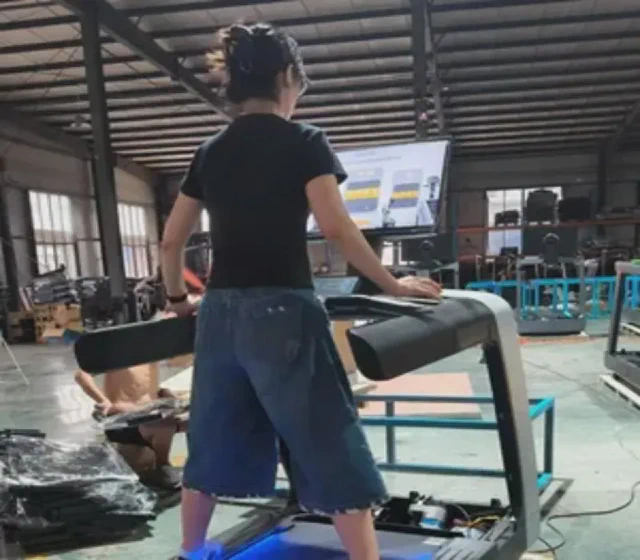
Curved Projection Screen Multi-Function HD Fitness AC Electric Treadmill Unit
- MIC category
- Treadmill
The supplier listing calls this a “Curved Projection Screen Multi-Function HD Fitness AC Electric Treadmill Unit,” which suggests a feature-led electric treadmill rather than a minimalist walking pad. However, the supplied listing facts do not provide dimensions, folded size, machine weight, deck measurements or speed range. Those omissions are important in a small apartment: a display-focused treadmill can be enjoyable, but it may also occupy more visual and physical space than a simple folding model.
Best for A buyer with a defined workout nook who can verify the full footprint and wants a more traditional treadmill-style setup.
- Supplier listing identifies it as an AC electric treadmill unit
- Naming refers to a curved projection screen and multi-function fitness use
- Listed supplier: Ningjin Baoxuan Fitness Technology Co., Ltd.
Confirm before inquiry: Do not assume this treadmill folds, is compact or is suitable for apartment storage. Ask for assembled dimensions, transport wheels, machine weight, power requirements and noise information.
Compare the dimensions that affect daily life
Marketing terms such as portable, mini and compact are not standardised. Compare the specification sheet using these practical questions:
- What is the assembled length and width? This is your actual exercise footprint.
- What are the folded dimensions? A vertical-folding machine needs wall height as well as floor space; a flat-folding machine needs clearance beneath furniture.
- How much does it weigh? Consider not only whether you can lift it but whether you can safely control it while rolling it over thresholds.
- How large is the running belt? Walking needs less space than jogging, but a cramped belt can undermine confidence.
- What is the step-up height? Lower decks are easier to mount, particularly in tight rooms.
- What is the stated user-weight capacity? Stay within the manufacturer’s limit and consider that a more robust frame may be heavier to store.
- Is the intended use walking, running or both? Do not infer this from product photos alone.
A tape measure, a note of door widths and an honest look at your storage routine are more useful than trying to find a single perfect specification.
Noise is about more than the motor
Apartment treadmill noise has two parts: airborne sound from the motor and belt, and vibration travelling through the floor. Walking at a controlled pace is usually less disruptive than jogging, but individual stride, flooring and building construction can change the experience substantially.
Place the treadmill on a dense mat made for exercise equipment, provided it does not conflict with the manufacturer’s setup instructions. Keep the machine on a firm, level floor rather than a soft, uneven rug. Check belt alignment and lubrication according to the manual; a poorly maintained belt can add noise and wear. In a shared building, avoid early-morning or late-night jogging and be especially cautious if your room sits above a neighbour’s bedroom.
A quiet-motor claim is not a promise of silent use. If apartment friendliness is essential, prioritise walking-focused use, good maintenance and vibration control over an ambitious maximum-speed figure.
Stability and handrails: what a beginner should prioritise
A beginner does not need the biggest treadmill, but should not accept a machine that feels insecure. Before choosing, look for a frame that remains steady at your intended pace, a belt wide enough for natural foot placement and controls you can reach without looking down for long.
Handrails are useful, but their quality matters. A full upright rail is generally more supportive than a short bar or folding handle. If you are considering a walking pad without rails, begin at a very easy pace and use it in an uncluttered location. Do not rely on unstable furniture for support.
The supplied product inventory also includes an item whose listing identifies it as a foldable adjustable weight bench, rather than a treadmill. It may be useful in a compact strength setup, but it is not a substitute for a walking or jogging machine.
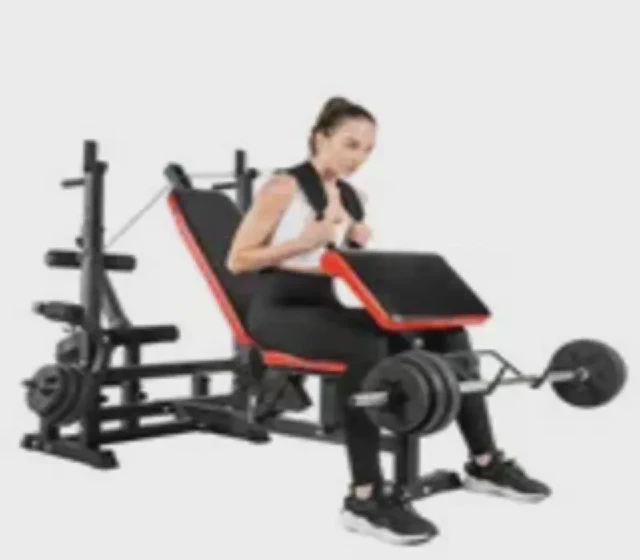
Adjustable Multifunctional Weight Bench for Home Gym Home Workout Foldable Weightlifting Bench Fitness Equipment
- Displayed price
- US$ 80-84 / Piece
- MIC category
- Treadmill
This item appears in the supplied treadmill-category inventory, but its supplier-listing name identifies it as an adjustable, foldable weight bench rather than a treadmill. It should not be used to compare walking, jogging, belt size, motor performance or treadmill storage. For a small home, it may be relevant only if you are planning a broader compact strength-training setup alongside cardio equipment.
Best for People building a compact home workout corner who need a foldable bench, not a treadmill.
- Supplier listing describes an adjustable multifunctional foldable weight bench
- Displayed price: US$ 80-84 / Piece
- Listed supplier: DEQING SISTER SPORTS CO., LTD.
Confirm before inquiry: Treat this as a separate strength-training product. Confirm all bench specifications and suitability directly with the supplier before purchase.
A practical decision guide
Choose a folding treadmill if you want one machine for regular walks, occasional beginner jogging and more secure handrail support. It is the strongest all-purpose choice, provided you can manage its folding and rolling routine.
Choose an under-desk treadmill or walking pad if you mainly want easy walking, workday movement and flat storage under furniture. It is the storage winner, but usually the least suitable option for confident jogging.
Choose a compact fixed-frame treadmill if you have a dedicated nook and want the least setup friction. It can feel stable and ready to use, but it asks you to permanently give up floor space.
Before committing, confirm the manufacturer’s current measurements, speed limits, maintenance instructions, electrical requirements and suitability for your body size and planned use. If you have a condition affecting balance, joints, heart health or exercise tolerance, speak with a qualified healthcare professional before beginning a new treadmill routine. Start slowly, wear secure footwear and use the safety key or emergency-stop feature where provided.
This article offers general information, not medical advice. Adjust activity to your experience and seek qualified guidance when needed.
FAQ
What is the best treadmill for a small apartment?
For most beginners, a folding treadmill with a proper handrail is the most versatile small-apartment choice because it supports comfortable walking and modest jogging while storing more easily than a fixed-frame machine. Choose an under-desk walking pad if your priority is gentle walking and sliding the machine under furniture. Choose a compact fixed-frame treadmill only if you can leave it out and value a more stable feel.
Can I jog on an under-desk treadmill?
Some hybrid under-desk models allow jogging when their handrail is raised, but many walking pads are designed chiefly for low-speed walking. Check the manufacturer’s stated maximum speed, whether jogging is permitted, the belt dimensions and whether a handrail is required at higher speeds. A traditional folding treadmill is generally the more confidence-inspiring choice for a beginner jogger.
Are compact treadmills quiet enough for apartments?
They can be relatively quiet at walking speeds, but no motorised treadmill is silent. Foot strikes, belt movement and vibration through the floor may be more noticeable to neighbours than the motor itself. Put the treadmill on a dense equipment mat, keep it away from shared walls where possible, maintain the belt as directed and avoid late-night runs.
How much room should I leave around a treadmill?
Use the manufacturer’s clearance guidance first. In practical terms, avoid placing a treadmill in a doorway, narrow passage or directly against furniture. You need safe access at the sides and a clear space behind the deck in case you need to step off. Measure the working layout with tape on the floor before ordering.
Is a folding treadmill easy to move every day?
Not always. Folding reduces the storage footprint, but the deck may still be heavy and awkward to lift, roll or turn around tight corners. Look at the machine’s total weight, wheel position, folded orientation and the route from its workout spot to storage. A lighter walking pad may be easier to move daily, while a heavier folding treadmill may be better left partly accessible.