Which Compact Treadmill Fits a Small Flat? Folding vs Slim vs Under-Desk Walkers
Compare folding treadmills, walking pads, and slim manual treadmills for small apartments. Use this simple decision path to find a compact treadmill for walking or jogging at home.

The short answer: choose a folding electric treadmill if you need jogging or running speed; choose a walking pad/under-desk walker if your routine is walking only; and consider a manual self-generating treadmill if you want a slim, unplugged machine that lets you set the pace with your own effort. Most compact-treadmill buying mistakes happen when people choose a walking pad for running or a full-size folding treadmill for walking. Start with the speed you actually need, then compare footprint, storage, cushioning, price, and effort.
Folding treadmills: the jogger’s small-space compromise
A folding electric treadmill is the closest thing to a real running machine that can still be cleared away after a workout. It gives up some floor space while in use, but it should not give up running speed. The Home Use Electric Treadmills 0.8-12km/H Folding Multi-Function Treadmill with Auto Incline Electric Treadmill, listed by Xiamen Kstar Sports Co., Ltd., is an example of this category. Its product name includes a 0.8–12 km/h speed range, auto incline, and a folding frame. For most recreational adults, 12 km/h is enough for steady jogging, and auto incline adds difficulty without needing more floor space.
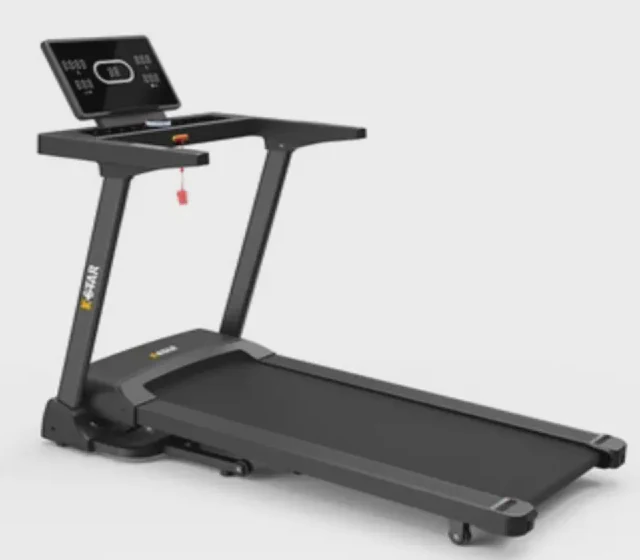
Home Use Electric Treadmills 0.8-12km/H Folding Multi-Function Treadmill with Auto Incline Electric Treadmill
- MIC category
- Treadmill
The Home Use Electric Treadmills 0.8-12km/H Folding Multi-Function Treadmill with Auto Incline Electric Treadmill from Xiamen Kstar Sports is a strong example of the folding electric category. The product name includes a folding frame, a 0.8–12 km/h speed range, and auto incline. That is a useful combination for a small apartment: when the deck is folded up, the floor is free; when it is down, you have enough speed for jogging and enough incline to keep walking sessions challenging. The trade-off is that a folding electric treadmill is still a substantial object, so check the unfolded footprint, ceiling height, and storage location before buying.
Best for Small-space adults who want real jogging and running speeds with foldaway storage.
- Folding frame highlighted in the product name
- Speed range listed as 0.8–12 km/h
- Auto incline included in the supplier's product name
Confirm before inquiry: Supplier: Xiamen Kstar Sports Co., Ltd. The speed range and auto incline come from the supplier listing, not from Adore Sport testing.
The trade-offs are footprint and mechanical bulk. While you run, the treadmill needs a clear, level area, and the unfolded machine is much longer than a walking pad. If you are tall, the ceiling height matters more than you might expect. Cushioning also matters for running; a treadmill that supports running should have a deck designed to absorb impact, not just a thin belt. The folding frame only helps after the workout. Before ordering, check the unfolded length, the folded height, the belt dimensions, and the user weight limit.
Walking pads: when walking is the whole workout
For walking only, an under-desk walker or walking pad is usually the better fit. These machines are slimmer and easier to store, and they remove the temptation to run on something not built for running. The Running Machine Mini Walking Treadmill Walking Pad Home Folding Treadmill, listed by Yongkang Shurui Fitness Equipment Co., Ltd., matches this format exactly: the product name says mini, walking pad, and folding.
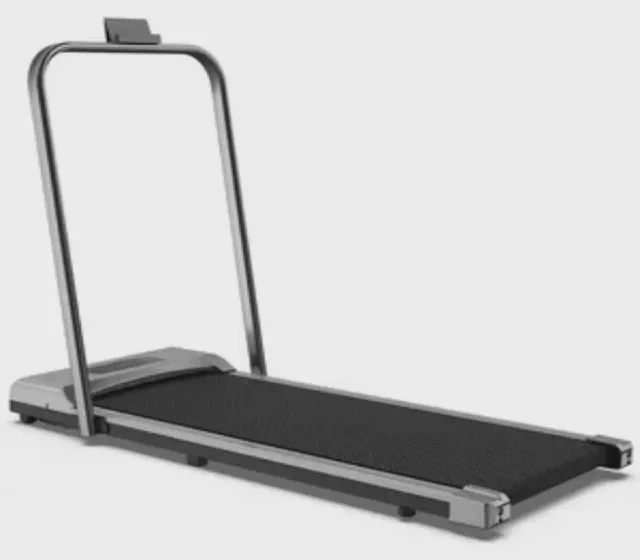
Running Machine Mini Walking Treadmill Walking Pad Home Folding Treadmill
- MIC category
- Treadmill
The Running Machine Mini Walking Treadmill Walking Pad Home Folding Treadmill from Yongkang Shurui Fitness Equipment is a walking pad, not a running treadmill. The name uses mini, walking pad, and folding, so the intent is clear: a slim machine for walking and easy storage. This format works well for step-counting sessions, light movement while watching television, and standing-desk work if the deck height fits. Because walking pads are not built for running, you should respect the supplier's speed and load guidance.
Best for Walkers who want a slim machine that can slide under a bed, sofa, or standing desk.
- Mini walking treadmill and walking pad wording in the listing
- Folding design noted in the product name
- Aimed at walking speed rather than running speed
Confirm before inquiry: Supplier: Yongkang Shurui Fitness Equipment Co., Ltd. Walking pads are for walking speeds unless the supplier states otherwise.
A walking pad can be placed in front of a standing desk, pulled out for a walking session, and then slid under a bed or sofa, depending on the deck height. That low-friction storage is the main advantage in a small apartment. The limitation is speed. Walking pads are built for walking speeds, not running speeds. Running on a walking pad can overload the motor or belt and increase the risk of a fall. If you want to get your heart rate up with brisk walking, this format is enough. If you want to break into a jog, it is not.
Slim and manual treadmills: the unplugged alternative
The third category is slim and low-profile treadmills, and it often overlaps with manual or self-generating models. These machines do not lean on a motorized console to drive the workout, which is why they can feel less intrusive in a small room. The Home Gym Fitness Equipment Cardio Exercise Manual Self-Generating Treadmill, listed by All Universe Fitness Technology (Qingdao) Co., Ltd., is the product example here.
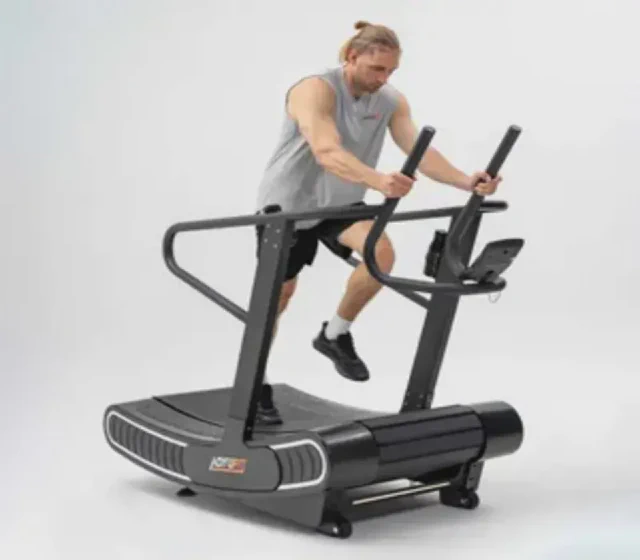
Home Gym Fitness Equipment Cardio Exercise Manual Self-Generating Treadmill
- MIC category
- Treadmill
Listed as a manual, self-generating cardio treadmill, this machine from All Universe Fitness Technology represents the unplugged end of the small-space treadmill spectrum. A manual format is powered by your own stride, so there is no motor housing to plan around. That can make it feel more like a piece of home fitness equipment that lives in a corner rather than a full cardio console. The trade-off is effort: you set the pace with your legs, which makes the workout more demanding. The supplier positions it as home gym equipment, so it is best treated as a practical option for walking and controlled effort sessions, not as a substitute for a motorized jogging treadmill.
Best for People who want a self-powered, low-tech treadmill and do not need motorized speed.
- Manual self-generating format from the supplier listing
- No motorized console to squeeze into a small room
- Positioned as a home gym and cardio exercise machine
Confirm before inquiry: Supplier: All Universe Fitness Technology (Qingdao) Co., Ltd. The manual and self-generating description comes from the supplier listing.
The manual self-generating label in the listing points to a treadmill that relies on your movement rather than a continuously powered motor, though the exact electrical setup should be confirmed with the supplier. Because the motor housing is not the centerpiece, this type of machine can be easier to position against a wall or in a corner. The effort trade-off is real: a manual belt moves with your own stride, so the workout can feel harder than a motorized treadmill at the same perceived speed. That makes it a good match for walkers who want a simple, active machine and for people who prefer a low-tech setup, but it is not the best choice if you want steady, motor-controlled running speeds.
How to decide: a simple path
Use these three questions to bypass the marketing photos.
If you need to jog or run, choose a folding electric treadmill with a speed range that reaches about 12 km/h. The folding electric treadmill above is the right category.
If you are walking only, choose a walking pad/under-desk walker. It stores more easily, takes less visual space, and matches the demands of walking.
If you want the smallest possible mechanical footprint and do not mind supplying the power, choose a manual self-generating treadmill.
Price should be part of the same conversation. Folding electric treadmills usually have more mechanical parts, which can push the price higher. Walking pads are often the entry-level option, but final prices depend on the supplier, belt size, build quality, and shipping terms. Manual treadmills can be simpler and therefore less expensive, but a well-built manual machine can still cost more than a basic walking pad. Compare the listed specifications, not just the images, and ask the supplier for details like folded dimensions and maximum user weight if they are not shown.
Small-space safety note
Check that the treadmill is rated for the speed and body weight you plan to use. Set it up on a flat, stable floor, keep the area clear, and never fold or move it while someone is standing on it. If you are new to exercise, recovering from injury, or unsure about intensity, talk to a healthcare provider before starting a walking or running routine. A compact treadmill should make daily movement easier without turning your living space into a hazard zone.
This article offers general information, not medical advice. Adjust activity to your experience and seek qualified guidance when needed.
FAQ
What is the main difference between a folding treadmill and a walking pad?
A folding treadmill is built to support walking and jogging or running speeds and folds up between workouts. A walking pad is a slim, low-speed treadmill meant for walking. Walking pads are usually easier to store but are not built for running.
Can I run on an under-desk walker?
No, not usually. Under-desk walkers and walking pads are designed for walking speeds. Running on one can overload the motor or belt and raises the risk of injury. If you want to run, choose a treadmill with a speed range and belt design rated for running, such as a folding electric treadmill.
Do I need a manual treadmill or an electric treadmill?
Choose electric if you want steady, motor-controlled speeds for jogging or intervals. Choose manual if you prefer a simpler, self-powered machine and do not mind working harder with every step. Manual treadmills can be easier to store and do not rely on a plug-in motor, but check the supplier's setup and weight limits.
What should I measure before buying a compact treadmill?
Measure the room's clear floor area, ceiling height, and the storage spot. Then check the treadmill's unfolded length, folded dimensions, belt length, and user weight limit. Product photos can make a treadmill look smaller than it really is.