Foldable vs Upright Exercise Bikes for Small Apartments: Which Is Easier to Live With?
A practical foldable exercise bike vs upright exercise bike guide for apartment dwellers, covering storage, stability, noise, fit and beginner comfort.

If you need an exercise bike to fit around everyday apartment life, choose a foldable model when storage is the deciding factor; choose a compact upright when a steadier, more bike-like ride matters more than reclaiming the floor. For most beginners, either can work well for gentle to moderate sessions. The practical difference is what happens before, during and after the ride.
A foldable exercise bike can be stable enough for seated cycling, provided it is properly assembled, used on a level surface and kept within its stated limits. But it will not usually feel as solid as a fixed-frame upright when you pedal forcefully, reach for high resistance or move around in the saddle. That is not necessarily a deal-breaker. It simply means that the best choice is the format you will set up safely and use consistently.
Start with your apartment, not the workout fantasy
The foldable exercise bike vs upright exercise bike decision is often described as a simple space-versus-stability trade-off. It is more useful to think in terms of your room’s daily job.
If your bike will live beside a sofa, dining table, desk or bed, folding it away can remove a major barrier to using your home comfortably. A folding bike can often be stored against a wall or in a corner after a session. Check whether it rolls when folded: a compact folded shape is helpful, but less so if you must lift an awkward machine across a room.
A compact upright exercise bike needs a permanent footprint, but that can be an advantage. You do not need to unfold it, lock a frame joint or move furniture before every session. For someone aiming to ride three or four times a week, a bike that is always ready may be used more often than one stored out of sight.
Do not measure only the machine’s published footprint. Make a simple taped outline on the floor, then allow room to mount the bike, move your knees freely, reach the water bottle or controls, and dismount without stepping into furniture. Include the space needed when the bike is unfolded, even if its stored dimensions look impressively small.
Stability: what beginners are likely to notice
A fixed upright usually has the structural advantage. Its continuous frame, wider stabilisers and often heavier build can make it feel more secure under changing pedal pressure. That matters if you want harder intervals, a higher resistance setting or a cycling posture that leans slightly forward.
Folding bikes use hinges and locking points to earn their storage convenience. A good design can be perfectly satisfactory for steady riding, but any folding mechanism introduces another part to inspect. Before buying, look for clear locking instructions and check reviews and specifications for comments on frame movement, seat-post play and stability. Set the bike on a firm, level surface and re-check bolts after assembly as the manual directs.
For a cautious beginner, stability is also about confidence getting on and off. A low step-through or semi-recumbent folding design may feel less intimidating than swinging a leg over a conventional upright saddle. Make sure the pedals have secure straps or cages, and practise mounting with the pedals level rather than rushed.
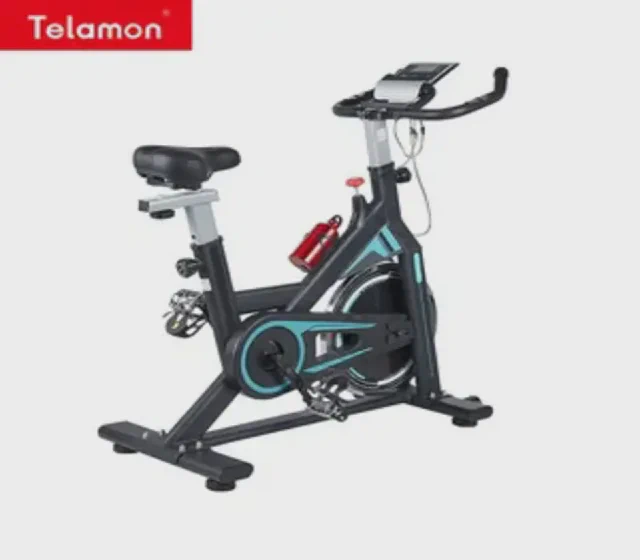
China Indoor Professional Commercial Smart Stationary Foldable Quiet Spinning Bike
- MIC category
- Exercise Bike
This Telamon Sports Goods (Shanghai) Co., Ltd. listing is labelled as a foldable, quiet stationary spinning bike. It is relevant to apartment shoppers because folding storage can make a bike easier to keep in a multi-use room. Before treating any foldable model as an interval bike, check its unfolded dimensions, user-weight limit, hinge design, stabiliser width and whether the intended riding style is seated only.
Best for Apartment dwellers who need to reclaim floor space after low- to moderate-intensity indoor rides.
- Supplier listing describes it as foldable
- Supplier listing describes it as quiet
- Stationary spinning-bike format
Confirm before inquiry: The supplier listing provided does not state dimensions, resistance type, price or capacity. Confirm those details directly before purchase.
Upright, foldable semi-recumbent or compact recumbent?
A conventional upright exercise bike places you above the pedals in a posture closer to a city bicycle. It is a versatile middle ground: more compact than a full recumbent bike and generally more relaxed than a dedicated indoor cycling bike. The limitation is saddle comfort. A narrow bike-style seat may become uncomfortable during longer rides, particularly while you are still getting used to it.
Many foldable bikes offer an upright or semi-recumbent position. In semi-recumbent use, you sit farther back, sometimes against a backrest, with the pedals forward of you. This can feel comfortable for easy cardio and may be appealing if a traditional saddle bothers you. It is not the same as a full recumbent bike, which normally has a longer, more extended frame and therefore consumes more floor space.
A full compact recumbent can be a sensible comfort-first choice for people who value a supported seat and predictable seated riding. However, it is usually the least apartment-friendly format in use because of its length. It also is not intended for standing pedal efforts. If you have ongoing joint pain, recent surgery, balance concerns or a health condition that affects exercise tolerance, seek individual advice from an appropriate clinician before starting a new routine.
Noise: resistance matters more than the word “compact”
For shared walls and downstairs neighbours, look closely at the resistance system. Magnetic resistance is typically quiet because magnets create load without rubbing directly against the flywheel. A belt-driven magnetic bike can be a particularly practical apartment combination, though pedals, bearings and an uneven floor can still create noise.
Friction resistance can make more mechanical sound and may involve parts that wear with use. Air-resistance bikes use a fan: they offer responsive resistance that increases as you pedal harder, but the moving air creates an audible whoosh. This is often useful for vigorous training, yet it may be a poor match for early-morning sessions in a quiet flat.
A thick equipment mat helps protect flooring and can reduce vibration transfer, but it will not silence a loose bike or compensate for an unstable surface. Keep the bike level, tighten components according to its instructions and avoid placing it directly against a shared wall if vibration is a concern.
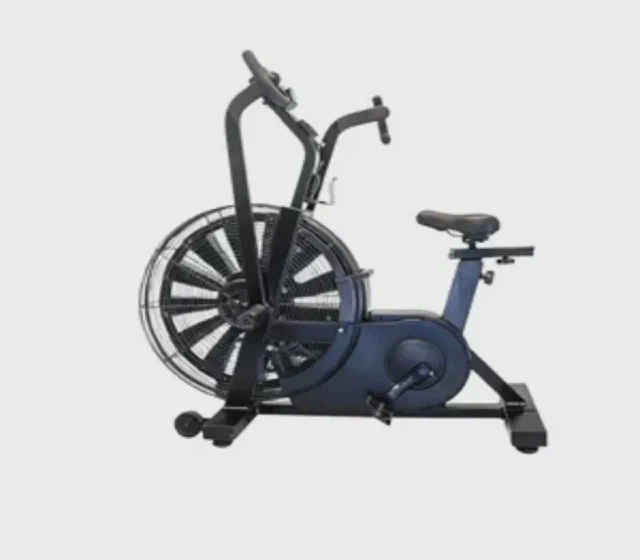
Home Gym Equipment Air Resistance Upright Indoor Exercise Bike Fan Bike
- MIC category
- Exercise Bike
Ningjin Baoxuan Fitness Technology Co., Ltd. lists this as an air-resistance upright indoor exercise bike, also called a fan bike. It illustrates why resistance type matters as much as frame shape: air resistance rises as you pedal harder, which can suit demanding efforts, but the fan is likely to create more sound than a magnetic system. Its fixed upright format is more relevant to riders prioritising a planted workout position over fold-away storage.
Best for People with a dedicated exercise corner who prefer self-scaling resistance and more vigorous cardio sessions.
- Supplier listing identifies an upright indoor exercise bike
- Air-resistance fan-bike format
- Fixed-frame alternative to folding designs
Confirm before inquiry: No noise rating, dimensions, resistance settings or price were supplied in the listing facts. Air bikes are not automatically unsuitable for apartments, but noise should be considered carefully.
Fit and adjustment are worth more than extra programmes
A bike can be compact and still be wrong for your body. The minimum useful adjustment is saddle height. At the bottom of each pedal stroke, your knee should retain a gentle bend rather than locking straight or staying sharply bent. If you share the bike, note whether the seat adjustment is quick and clearly marked.
A fixed upright often offers more scope for a conventional cycling fit, especially when it has adjustable handlebars and a longer seat-post range. Folding bikes vary widely: some work well for a broad range of riders, while others have limited reach or handlebar adjustment. Check the stated height range, inseam guidance and maximum user weight before ordering instead of assuming that “compact” means universally accommodating.
For the first few weeks, prioritise a comfortable position over an aggressive one. You should be able to sit with relaxed shoulders, reach the handlebars without straining, and pedal smoothly. A supportive saddle cover may help some riders, but it cannot fix a frame that is too small or too large.
Which format suits your routine?
Choose a foldable magnetic bike if you need to store the machine after every ride, expect mostly seated workouts, and want a quiet option for television-time or low-key morning cardio. It is especially sensible for a beginner whose main goal is building a repeatable habit rather than replicating a studio cycling class.
Choose a compact fixed upright if you have a reliable corner for it and want a more planted feel. It is the stronger all-round option for people who may progress from easy rides to tempo work and intervals. A small permanent footprint can be more liveable than repeatedly folding, lifting and unfolding equipment.
Choose a semi-recumbent folding bike if back support and an easy seated entry are higher priorities than intense training. Choose a full recumbent only after confirming you have room for its longer layout. Choose an air bike when hard, responsive efforts appeal and your household can accommodate the extra fan noise.
The supplied product inventory also includes a treadmill rather than an exercise bike. It is not relevant to this choice, but the distinction matters when comparing equipment formats and supplier categories.
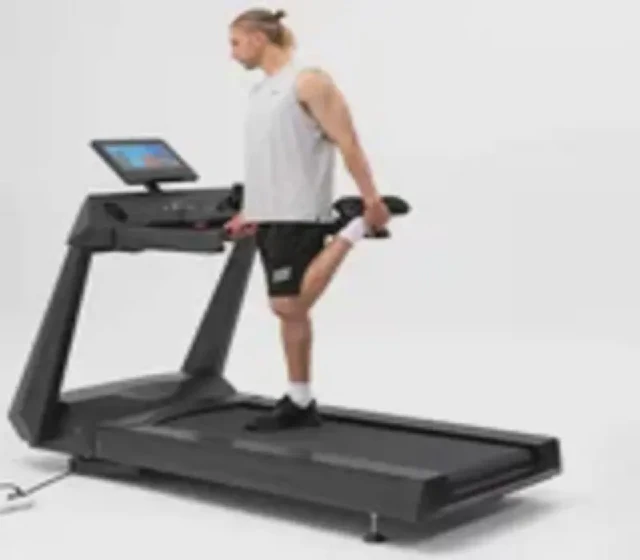
AC Motor Exercise Incline Motorized Sport Running Fitness Gym Treadmill Machine
- Displayed price
- US$ 930-950 / Piece
- MIC category
- Exercise Bike
This All Universe Fitness Technology (Qingdao) Co., Ltd. product appears in the supplied Exercise Bike category inventory, but its product name identifies it as a motorised incline treadmill rather than an exercise bike. It should not be used as a foldable-versus-upright bike comparison choice. The listing displays a price of US$ 930-950 per piece; that is a supplier-listing figure, not a bike price comparison.
Best for Shoppers specifically comparing motorised treadmill equipment rather than stationary bikes.
- Product name identifies a motorised incline treadmill
- Displayed supplier-listing price: US$ 930-950 per piece
- Not comparable with an exercise-bike riding format
Confirm before inquiry: Verify product category, electrical requirements, dimensions and suitability for your building before considering any treadmill.
A sensible first-month plan
Whichever bike you choose, begin with 10 to 20 minutes at a pace where you can speak in short sentences. Ride two or three times a week, then add a few minutes only when that feels manageable. Resistance should feel purposeful, not like grinding through each pedal stroke.
Stop if you experience chest pain, faintness, severe shortness of breath or unusual symptoms, and seek prompt medical guidance. For ordinary muscle fatigue or saddle adjustment issues, reduce the session length, check your setup and build gradually. In a small apartment, the easiest bike to live with is ultimately the one that feels safe, fits your body and does not make every workout require a furniture-moving project.
This article offers general information, not medical advice. Adjust activity to your experience and seek qualified guidance when needed.
FAQ
Are foldable exercise bikes stable enough for beginners?
Usually, yes. A well-assembled foldable bike on a level surface can be stable for seated, moderate beginner rides. However, its lighter, hinged frame may flex or feel less secure than a fixed upright bike when pedalling hard, sprinting or shifting your weight.
Do upright exercise bikes take up much more room than folding bikes?
They often take up more room over time because their full footprint remains in place. A compact upright may still be manageable in a small apartment, but it needs a dedicated parking spot. A folding model is more practical when the same floor area is used for living, working or sleeping.
What type of exercise bike is quietest for an apartment?
Magnetic-resistance bikes are generally among the quieter options because the resistance system does not rely on direct friction against the flywheel. Pedal, chain or belt noise, floor vibration and loose parts can still be audible, so use a level floor and a protective mat.
Is a recumbent-style folding bike better for sore backs?
A semi-recumbent model with a backrest may feel more supportive and less demanding on some riders' backs than a conventional upright saddle. Comfort is individual, however. Persistent back, knee or hip pain warrants advice from a qualified health professional before starting or changing exercise.
Can I do intense workouts on a folding exercise bike?
Some folding bikes have enough resistance for progressively harder seated sessions, but they are generally better matched to steady cardio than all-out intervals. If vigorous riding, frequent standing and a rigid feel are priorities, a fixed-frame upright or indoor cycling bike is usually the better fit.