Pilates Rings vs Resistance Bands vs Small Balls: Which Home Pilates Tool Should Beginners Choose?
A practical guide to choosing the best Pilates equipment for beginners at home, comparing Pilates rings, resistance bands and small exercise balls for space, comfort, versatility a
If you are choosing one compact tool for Pilates at home, buy a resistance band first. It takes up the least space, gives you the broadest exercise range and can be used to either assist a movement or add resistance as your control improves. Choose a small Pilates ball instead if your main priority is learning pelvic, spinal and core awareness. Choose a Pilates ring if you specifically like the idea of gentle squeeze-based feedback for the inner thighs, chest and arms.
That is the short answer. The more useful answer is that there is no universally superior prop: each changes how an exercise feels, what it teaches and how much adjustment it asks of a beginner. The best Pilates equipment for beginners at home is usually the tool that fits under the sofa, feels comfortable in the hands and makes it easier to practise two or three times a week.
Start with the space you actually have
All three tools are small compared with gym machines, but their storage and use are not identical.
A resistance band wins on storage. A flat loop band or long band can live in a drawer, travel in a bag and be used on a mat-sized patch of floor. You may need a little extra room when stretching a long band outward, but there is no rigid frame to manoeuvre around furniture.
A Pilates ring is still easy to store, although its circular shape cannot be folded down. It is often easiest to slide behind a door, beside a bookcase or under a bed. During exercise, the ring needs clearance around the arms or legs, particularly for presses held in front of the chest or above the head.
A small Pilates ball also stores easily, but it needs to stay inflated and out of the way of sharp objects. It can roll across a hard floor and may need occasional reinflation. For a very small flat, that is still a minor inconvenience, not a deal-breaker.
The practical verdict: choose a band for the smallest possible storage footprint; choose a ring or ball if you have a reliable place where one small, round item will not become clutter.
Resistance bands: the most versatile first tool
Bands are not just for strength workouts. In Pilates, they can provide gentle tension in seated rows, leg presses, arm work, side-lying leg exercises and mobility drills. They can also make some movements more accessible. For example, a band held around the feet may help a person sit tall in a hamstring stretch without forcing the spine into a rounded position.
That adaptability is their biggest advantage. A beginner can use less tension by holding nearer the middle of a long band, or more tension by shortening the working length. This allows a band to grow with your practice more readily than a ball or ring.
The drawback is adjustment. Band tension changes quickly, and beginners can tug too hard, let the band snap back or twist the shoulders while trying to keep it taut. Avoid wrapping a band around unstable furniture, door handles or objects not designed as anchors. For simple home Pilates, body-held exercises are enough.
Look for a comfortable resistance level rather than assuming harder is better. If you cannot move slowly, breathe normally and keep your shoulders relaxed, reduce tension. A light band that helps you learn control is more useful than a heavy band that turns every repetition into a struggle.
Pilates rings: simple feedback, narrower range
A Pilates ring, sometimes called a magic circle, is a flexible ring with padded grips. You can place it between the thighs, press it between the hands or use it in selected leg and arm variations. Its appeal is immediate: the object gives you something clear to press into, which can make it easier to notice whether you are holding tension through the torso.
For beginners, that feedback can be helpful in bridge variations, seated arm presses and controlled inner-thigh work. The ring is also simple to pick up: there are fewer ways to change its resistance than with a band.
But simple does not mean effortless. Many people respond to a ring by squeezing as hard as possible, clenching the jaw, lifting the shoulders and holding their breath. That misses the point. The useful work is often a modest, steady press while the ribs, pelvis and neck stay as relaxed as possible.
A ring is therefore a good first tool for someone who enjoys deliberate, contained exercises and wants a physical cue for alignment. It is less useful as the only piece of equipment if you want extensive upper-body pulling work, mobility options or progressive resistance.
Small Pilates balls: best for body awareness and support
The small, lightly inflated Pilates ball is the least like a traditional strength tool. Its value lies in instability, support and sensory feedback. Put it between the knees during a bridge, behind the low back in certain seated positions or under the head when an exercise calls for a little elevation, and it can make your body position easier to feel.
For beginners, this can be particularly useful when learning how the pelvis moves, how the ribs stack over the hips or how to keep the neck from overworking. A ball may also make some mat positions more comfortable, depending on the exercise and the person.
Its limitation is that it is not a major source of resistance. Squeezing it can add a small challenge, but it will not provide the changing load of a band. It is also more technique-dependent than it looks. A ball placed in the wrong spot may encourage awkward posture rather than better alignment.
Use it lightly inflated unless an instructor or the ball’s guidance says otherwise. The aim is usually responsive feedback, not a hard object to brace against. If it rolls, slips or makes you tense up, remove it and practise the movement without it.
Which one should you buy first?
Use this quick decision guide:
- Buy a resistance band if you want one tool for legs, arms, posture work and stretching, or if storage is your main concern.
- Buy a small Pilates ball if you are drawn to slow mat Pilates, want help noticing alignment and prefer subtle challenge over stronger resistance.
- Buy a Pilates ring if inner-thigh, arm and core squeeze exercises appeal to you and you value a firm object that gives immediate tactile feedback.
If you are unsure, start with a band. Learn five foundational movements: a seated row, chest press, leg press, side-lying leg work and a gentle mobility drill. That is enough to discover what kind of training you enjoy. Add a small ball later if you want more positional feedback, or a ring if you want focused squeeze work.
Keep your first setup modest
A mat, clear floor space and one prop are enough to begin. Bigger equipment can be appealing, especially if you have enjoyed reformer classes, but it creates a different set of decisions around room layout, storage and safe handling.
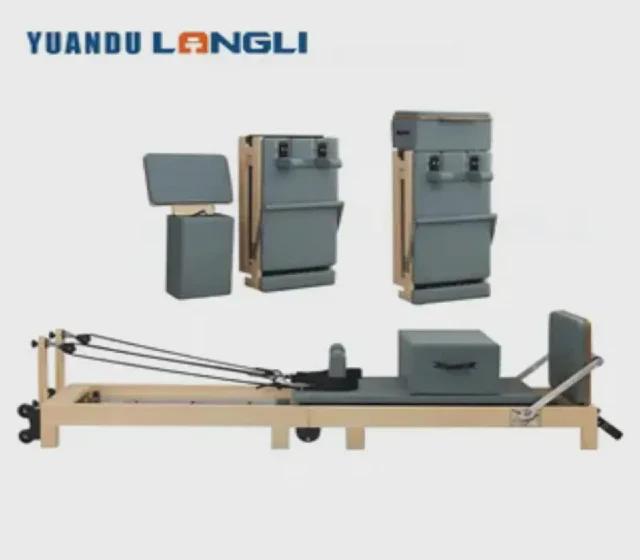
Compact Foldable Pilates Reformer Bed Portable Folding Pilates Machine Home Gym Fitness Yoga Equipment
- MIC category
- Pilates Equipment
This listing from Shandong Langli Fitness Equipment Co., Ltd. is a considerably larger category of equipment than the compact props compared in this guide. Its supplier-listing title identifies it as a compact foldable Pilates reformer bed for home-gym fitness and yoga use. A reformer may appeal later to someone who has established a regular practice and can dedicate room to setup, movement around the machine and storage. It is not the natural first answer for a beginner deciding between a ring, band and small ball.
Best for Experienced or committed home users planning a dedicated Pilates equipment setup.
- Listed in the Made-in-China Pilates Equipment category
- Supplier-listing title describes a compact foldable reformer format
- A larger equipment option than portable Pilates props
Confirm before inquiry: Review the supplier listing directly for current specifications, space requirements, assembly information and commercial terms before considering a purchase.
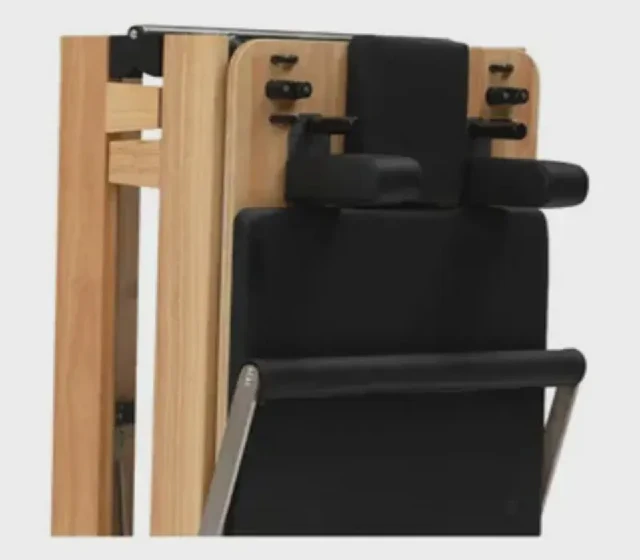
Foldable Maple Wood Home Pilates Reformer Machine for Core Training
- MIC category
- Pilates Equipment
Dezhou Like Fitness Equipment Co., Ltd. lists this foldable maple wood home Pilates reformer machine for core training. It belongs in a different buying decision from small accessories: even a foldable reformer needs a safe clear area when in use and should be chosen with attention to handling, storage and instruction. For a newcomer who is still learning whether Pilates will become a habit, a simple band, ring or ball is a lower-commitment way to begin.
Best for A home exerciser who already knows they want reformer-style training and has suitable space.
- Listed in the Made-in-China Pilates Equipment category
- Supplier-listing title identifies a foldable home reformer machine
- Positioned in the listing title for core training
Confirm before inquiry: The product name and category are supplier-listing information, not an independent assessment of quality, suitability or safety.
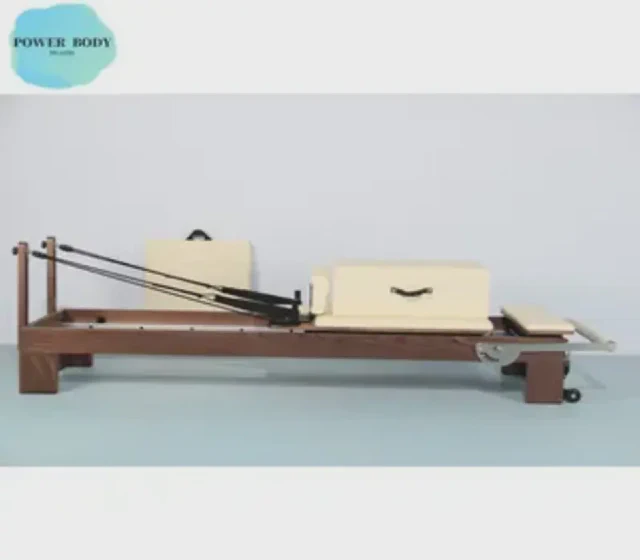
High-End Pilates Studio Walnut Wood Reformer Equipment with a Complete Set of Pilates Accessories
- MIC category
- Pilates Equipment
This Shandong Powerbody Machinery Technology Co., ... listing is described as a high-end Pilates studio walnut wood reformer with a complete set of Pilates accessories. That makes it relevant as an example of how far a home Pilates setup can expand, but not as a substitute for a first compact prop. Beginners with limited space are generally better served by learning mat fundamentals first, then deciding whether a larger machine fits their budget, home layout and long-term routine.
Best for A planned studio-style setup rather than a small-space beginner kit.
- Listed in the Made-in-China Pilates Equipment category
- Supplier-listing title describes a studio reformer format
- Listing title refers to a complete set of Pilates accessories
Confirm before inquiry: Confirm all current details with the supplier. A large reformer should be assessed for floor space, access, setup and safe use rather than chosen solely from a listing title.
The supplier listings above are examples from the wider Pilates equipment category, not recommendations to skip straight to a machine. Their titles describe reformer products rather than compact beginner props, so review supplier information carefully if you are considering that route.
Finally, treat discomfort as information. Muscle effort and mild fatigue can be normal; sharp pain, numbness, dizziness, joint pain or symptoms that persist are reasons to stop. If you are pregnant, returning after injury, managing pain or living with a health condition, ask a qualified healthcare professional or Pilates instructor which movements and equipment choices are appropriate for you.
This article offers general information, not medical advice. Adjust activity to your experience and seek qualified guidance when needed.
FAQ
What is the best Pilates equipment for beginners at home?
For most beginners, a light-to-medium resistance band is the most useful first item. It is compact, works for upper and lower body exercises, and can make basic Pilates movements easier or harder. A small ball is an excellent alternative if your main goal is posture and core awareness, while a ring suits people who enjoy gentle squeezing exercises.
Is a Pilates ring worth buying for beginners?
A Pilates ring can be worthwhile if you want simple tactile feedback for inner thighs, chest, arms and core engagement. It is less versatile than a band, however, and beginners can accidentally grip or squeeze too hard. Think of it as a focused accessory rather than an all-purpose training tool.
Should beginners use a small Pilates ball?
Yes, provided the ball is used as a support and awareness tool rather than something to forcefully crush. Placed between the knees, behind the low back or under the head in selected exercises, it can help a beginner notice alignment and stability. It provides little progressive resistance on its own.
Do I need a reformer to start Pilates at home?
No. A mat and enough clear floor space are sufficient to begin. Compact accessories can add variety, but they are optional. Reformers are much larger, more expensive pieces of equipment and require a different level of space, setup and movement familiarity.
Can resistance bands replace Pilates equipment?
A resistance band can cover many beginner strength and mobility needs, but it does not replace every kind of Pilates prop. It cannot provide the same squeeze-feedback as a ring or the positional support of a small ball. For a first purchase, though, its range of uses makes it the most practical option for many homes.