Resistance Bands vs Ab Wheel vs Push-Up Bars: Which Small-Space Fitness Accessory Should Beginners Choose?
Resistance bands are the best small-space fitness accessory for most beginners. Compare bands, ab wheels, push-up bars and grip trainers for storage, learning curve, exercise varie
Resistance bands are the best small-space fitness accessories for beginners in most homes. They cost relatively little, fit in a drawer or bag, and can train far more movement patterns than an ab wheel, push-up bars or a grip strength trainer. If your main goal is to build a simple, sustainable home strength routine, start with bands.
That does not mean the other tools are useless. An ab wheel is a compact specialist for challenging core work. Push-up bars can be a worthwhile comfort aid if floor push-ups bother your wrists. Grip trainers are convenient for forearm work between meetings or while travelling. The key is to buy for the routine you can actually perform safely in the space you have—not for the smallest item with the most dramatic-looking exercise.
The quick choice
Choose resistance bands if you want one accessory for full-body training, have limited storage and are still learning basic strength movements.
Choose an ab wheel only if you specifically want to progress your core training and can already hold a solid plank without lower-back discomfort or loss of position.
Choose push-up bars if pressing is a priority and a neutral wrist position makes push-ups more comfortable. They work best as an addition to a broader bodyweight or band routine.
Choose a grip strength trainer if you want a tiny, quiet tool for hands and forearms—but do not expect it to cover a full workout.
Resistance bands: the strongest first purchase
For a beginner in a small apartment, bands solve more problems than any of the other options. A set can live in a drawer, wardrobe or backpack. Loop bands add resistance to squats, glute bridges and lateral walks; longer bands can assist with rows, presses, curls, hinges and pull-aparts. With handles or a carefully used door anchor, the exercise menu grows further.
They are also forgiving in a useful way. You can reduce the challenge by choosing a lighter band, standing closer to an anchor, shortening the range of motion, or using fewer repetitions. As your control improves, you can increase tension, slow the lowering phase or move to a stronger band. That makes bands especially useful when your strength differs between movements: a resistance that suits rows may not suit overhead pressing.
There is a learning curve, though. Band resistance rises as the band stretches, so the hardest part of an exercise can feel different from a dumbbell version. A beginner also needs to prevent the band from snapping back or sliding out of place. Inspect bands for nicks, tears and worn handles. If using a door anchor, use a solid closed door, place the anchor on the side that closes away from you, and test it gently before putting meaningful tension on it. Never anchor a band to light furniture that could move or tip.
A clear floor area about the size of a mat is enough for many banded floor exercises. Standing work often needs little more than room to extend your arms. This makes bands the most flexible choice for bedrooms, living rooms and shared homes.
Ab wheel: tiny storage, demanding technique
An ab wheel is hard to beat for storage. It can slip under a bed or into a cupboard, and it needs only a strip of clear floor when in use. But its compact footprint can hide the difficulty of the exercise. A rollout asks you to resist arching through the lower back while your arms travel away from your body. That requires shoulder control, trunk stiffness and a sensible range of motion.
For beginners, the common mistake is rolling too far forward, then using the lower back or shoulders to pull back. More distance is not automatically better. Start from the knees on a mat, roll out only as far as you can maintain a gently tucked pelvis and controlled ribs, then return without a jerk. A wall in front of the wheel can provide a simple range limiter. If kneeling is uncomfortable, add cushioning rather than forcing the position.
The ab wheel has limited exercise variety compared with bands. It is primarily a core-training tool, rather than a full-body starter kit. That can make it a good second purchase for someone already doing squats, hinges, rows and presses elsewhere. It is less suitable as the only item a beginner owns.
Flooring also matters. A wheel can skid or feel noisy on some smooth surfaces, while a thick, soft carpet may make tracking less predictable. Use a stable surface and keep pets, furniture and loose rugs out of the wheel’s path.
Push-up bars: useful comfort tool, narrow job description
Push-up bars raise the hands from the floor and provide handles to hold. For people who find palms-flat push-ups uncomfortable, that can make pressing feel more manageable because the wrists can remain closer to neutral. The raised handles may also allow a deeper range of motion, which can be useful—but it also makes the movement more demanding.
They are compact enough to store in a cupboard, but not as flat or adaptable as bands. During use, you still need roughly a mat-sized area and a non-slip surface. The bars must stay planted; a sliding handle is an avoidable risk. Check that both bars sit evenly and that your hands are centred on the grips before starting a set.
Push-up bars do not teach push-up technique by themselves. Beginners should start with an incline variation using a stable countertop, bench or wall if a floor push-up is too difficult. Keep the body long, lower under control and stop if shoulder or wrist pain appears. Bars are valuable when they make an existing movement more comfortable, not when they encourage a range or volume you cannot control.
They are also mostly limited to pushing and plank-based work. Without another tool, you may miss pulling exercises such as rows, which are important for a balanced beginner routine. Pairing push-up bars with bands is more useful than choosing bars alone.
Grip strength trainers: convenient, but supplementary
Grip trainers take almost no space and are among the quietest accessories available. They can be useful for people who enjoy climbing, racquet sports, manual work or simply want to train hand-closing strength. They are easy to pick up for a short set without moving furniture or changing into workout clothes.
Their limitation is equally clear: squeezing a handle mainly trains the hands and forearms. It does not replace lower-body work, pushing, pulling or whole-body coordination. Beginners can also overdo grip work, particularly if they type, use tools or play sport frequently. Start with a resistance that allows smooth, pain-free repetitions rather than forcing the handles shut.
Think of a grip trainer as a compact add-on after you have selected a main training method. It earns its place when its specific purpose matters to you, not because it is the easiest thing to store.
A practical small-home setup
For most people, start with a small set of loop bands and one longer band. Add a mat if you train on hard flooring. Build sessions around a squat, hip hinge, push, pull and simple core exercise: for example, banded squat, band Romanian deadlift, standing chest press or incline push-up, band row, and a dead bug or short plank.
This approach gives you repeatable practice with major movement patterns before you add specialist equipment. Keep a little clear space around you, use a controlled pace and leave a few repetitions in reserve rather than training to sloppy failure.
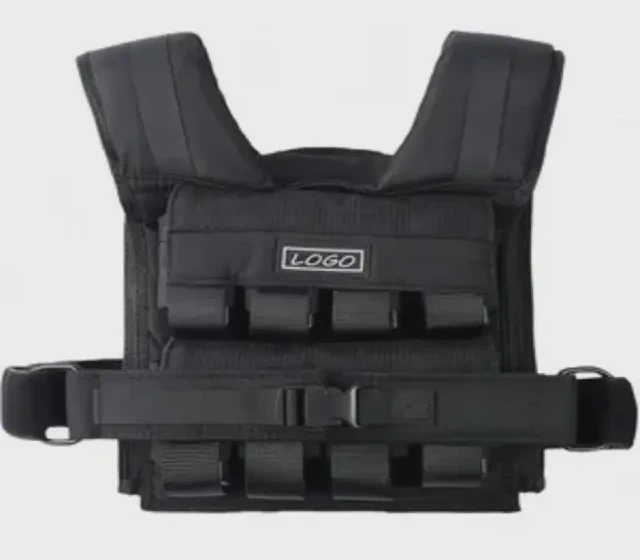
Adjustable Weighted Vest for Running and Strength Body Weight Training
- MIC category
- Fitness Accessories
This supplier-listed adjustable weighted vest is a compact way to increase the challenge of walks, step-ups, squats and bodyweight sessions once basic movement patterns feel controlled. It is not the easiest first purchase for a total beginner: added load can amplify poor technique and may be uncomfortable if the fit shifts during exercise.
Best for People who already perform bodyweight basics confidently and want a storage-friendly way to make them harder.
- Adds load without needing a rack or large weights
- Can suit walking and selected bodyweight exercises
- Listed in the Made-in-China Fitness Accessories category
Confirm before inquiry: The product information comes from a supplier listing. Check fit, load security and comfort before training, and begin with a conservative load.
A weighted vest is one possible later progression for bodyweight training, but it is not needed to start. First make squats, step-ups, walking and incline push-ups feel stable and predictable without extra load.
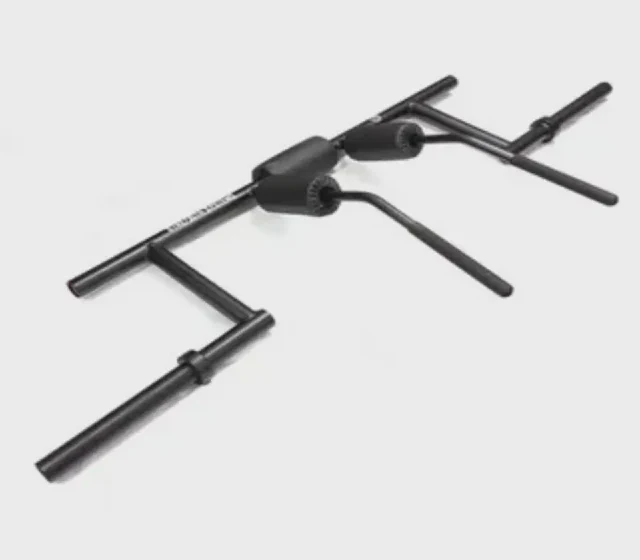
Commercial Fitness Equipment Training Strength Shoulder Barbell Squat Bar Gym Equipment Safety Squat Bar
- MIC category
- Fitness Accessories
A safety squat bar can be useful in a properly equipped strength space, but it does not match the needs of most apartment beginners. It requires compatible plates, a rack or secure supports, sufficient ceiling and floor clearance, and confident lifting technique. Compared with bands or bodyweight accessories, its setup demands are substantial.
Best for Experienced home lifters who already own compatible equipment and have a dedicated training area.
- Supplier listing identifies it as a safety squat bar
- Built around loaded barbell squat training
- Better suited to an established home-gym setup than a compact first kit
Confirm before inquiry: This is a supplier-listed product, not an editorial recommendation for a small-space beginner. Do not attempt unsupported barbell squats at home.
A safety squat bar belongs in a different category of home setup. It may suit a dedicated strength area, but it asks for more storage, compatible supports and technical confidence than a beginner accessory.
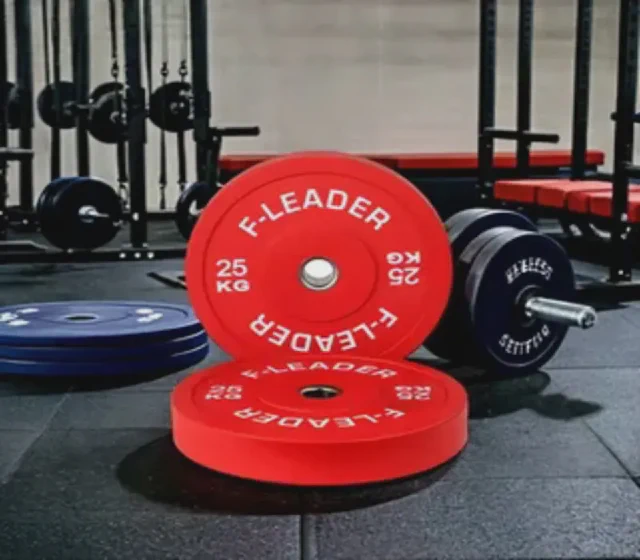
Factory Wholesale Fitness Gym Equipment Weightlifting Solid Barbell Plates Lbs Rubber Calibrated Weight Bumper Plate with Stainless Steel Ring
- MIC category
- Fitness Accessories
Bumper plates are a practical component of barbell training, but they are a poor substitute for a compact beginner accessory. Even when stored neatly, plates are heavy, require compatible equipment and can create handling, floor-protection and noise considerations in a flat. Start with a simpler movement toolkit before investing in loaded barbell hardware.
Best for Home lifters building a compatible barbell setup with adequate space and appropriate flooring.
- Supplier listing describes rubber calibrated bumper plates with a stainless steel ring
- Designed for barbell-based loading
- A longer-term home-gym purchase rather than a minimal-space solution
Confirm before inquiry: Product details are supplier-listing claims. Confirm compatibility, safe storage and your floor's suitability before purchasing or using weight plates.
Likewise, bumper plates make sense only as part of a planned barbell system. Their weight and storage requirements are difficult to justify when a set of bands can cover a beginner’s immediate needs.
The bottom line
If you can buy only one item, buy resistance bands. They offer the most exercise variety, the lowest storage burden and the clearest route to adapting a workout as you gain confidence. Add push-up bars if wrist comfort is holding back your pressing practice. Add an ab wheel when your basic trunk control is already reliable. Treat grip trainers as a useful extra, not the foundation of a programme.
If you have joint pain, a recent injury, balance concerns or a medical condition that could affect exercise, seek personalised guidance from a qualified health professional before starting or progressing a strength routine. Stop any movement that causes sharp, worsening or unusual pain.
This article offers general information, not medical advice. Adjust activity to your experience and seek qualified guidance when needed.
FAQ
What is the best small-space fitness accessory for a complete beginner?
A basic set of resistance bands is usually the best first choice. Bands take up very little storage room, let you adjust resistance, and support more full-body exercises than an ab wheel, push-up bars or a grip trainer alone.
Are ab wheels suitable for beginners?
They can be, but they are not the easiest starting tool. Begin with short roll-outs from the knees, keep your ribs from flaring and stop before your lower back takes over. A band or bodyweight core routine is often a gentler first step.
Do push-up bars make push-ups easier?
They do not reduce the amount of bodyweight you press, but their handles can allow a more neutral wrist position and a slightly deeper range of motion. Beginners can still make the exercise easier by doing incline push-ups with hands on a stable raised surface.
How much room do I need for a resistance-band workout?
Many standing exercises need only enough room to stand with your arms extended. Floor movements need roughly the space of a mat. Door-anchor exercises need a closed, sturdy door and enough distance to step back safely.
Can grip strength trainers replace dumbbells or resistance bands?
No. They mainly train hand and forearm closing strength. They can complement a routine, but they do not provide balanced pushing, pulling, squatting or hip-hinge training.