Resistance Bands or Ankle Weights: Which Home Workout Upgrade Is Better for Beginners?
Resistance bands are usually the more versatile first upgrade for beginners, while ankle weights suit controlled lower-body exercises. Compare loop bands, tube bands, fabric bands

If you are choosing between resistance bands and ankle weights for a first home-workout upgrade, start with resistance bands in most cases. They take up little space, can train more areas of the body and let you vary the challenge by changing the band, your grip or your position. Ankle weights are simpler, but their usefulness is narrower: they add a wearable load to movements that already involve the legs.
That does not make ankle weights a poor choice. They can suit someone who already enjoys controlled leg raises, side-leg lifts, standing marches or gentle floor exercises. The better option depends on whether you want an all-purpose training tool or a small load for specific lower-body movements.
Resistance bands vs ankle weights at a glance
Resistance bands create tension as you stretch them. That makes them useful for exercises such as rows, presses, pull-aparts, curls, squats, glute bridges and lateral walks. You can often make an exercise easier by shortening the range or choosing a lighter band, or harder by increasing the stretch and maintaining control.
Ankle weights attach around the lower leg and add load throughout a movement. They are convenient for exercises such as straight-leg raises, bent-knee lifts and controlled hip work. However, the extra weight also changes the feel of walking, swinging and lifting the leg, so rushed repetitions can put unnecessary stress on joints.
For a beginner who wants variety, bands usually win. For someone with a very specific lower-body routine, ankle weights may be enough.
The main resistance-band formats
Loop bands
Small loop bands are particularly useful for glute and leg exercises. Place one above the knees or around the thighs for lateral steps, squats and bridge variations. They are quick to put on and easy to store in a drawer.
Their limitation is that they are not as convenient for every upper-body exercise. You can still use them creatively, but a short loop does not offer the same hand placement or anchoring options as a longer tube band.
Tube bands with handles
Tube bands with handles feel more familiar if you want to recreate gym-style movements at home. They can work for rows, chest presses, shoulder exercises and curls, provided they are anchored safely or held in a stable position.
They may take slightly more setup than a loop band. You also need to pay attention to where the band is anchored. A door, furniture item or other anchor must be secure, and the band should not rub against sharp edges.
Fabric bands
Fabric bands are commonly chosen for lower-body work because they can feel stable around the thighs and less prone to rolling than some smooth bands. They are a sensible option for glute bridges, hip abductions and side steps.
The trade-off is versatility. Fabric bands are usually less useful for pulling, pressing and upper-body exercises, so they make more sense as a targeted lower-body accessory than as your only piece of equipment.
What ankle weights do well
Ankle weights are simple: fasten them, choose a controlled movement and work against the added load. They do not need an anchor, handles or much floor space. That makes them appealing for short sessions and small homes.
They can add challenge to leg lifts, standing hip exercises and some rehabilitation-style movements. They may also make a familiar bodyweight routine feel more demanding without requiring a large piece of equipment.
The drawback is that the load sits at the end of the leg. This increases the leverage around the hip and knee, particularly when the leg is extended. Beginners should avoid swinging the legs, locking the knees aggressively or using ankle weights to force through a painful range of motion. They are less suitable for fast, bouncy movements than for slow, deliberate repetitions.
The supplier listing for the Adjustable Ankle Wrist Weights Weighted Sandbags Fitness Training Wrist Ankle Weights for Running Yoga Workout describes a product intended for ankle and wrist use and identifies Hebei Dili Sports Commerce Co., Ltd. as the supplier.
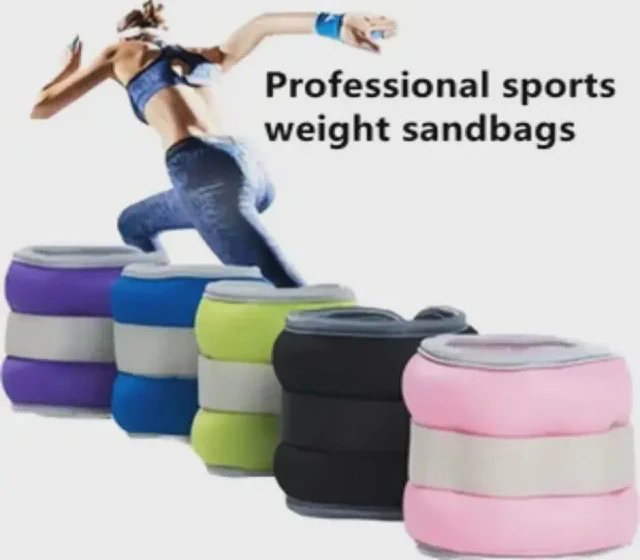
Adjustable Ankle Wrist Weights Weighted Sandbags Fitness Training Wrist Ankle Weights for Running Yoga Workout
- MIC category
- Fitness Accessories
The supplier listing describes these as adjustable weighted sandbags for ankle and wrist use, making this the most directly relevant approved product for the ankle-weight side of the comparison. Adjustable sections may be convenient when you want to change the load gradually, but check the fastening, balance and comfort before using them for repeated leg movements.
Best for Beginners who want a wearable load for controlled lower-body exercises and prefer the possibility of adjusting resistance.
- Listed for both ankle and wrist use
- Described by the supplier as adjustable
- Compact compared with larger home-gym equipment
Confirm before inquiry: The product details supplied for this article verify its Fitness Accessories category and listing description, but do not provide independent testing, measurements or performance results.
Because the listing describes the weights as adjustable, they may appeal to beginners who want to alter the load rather than commit to one fixed level. Still, the practical details that matter most are the fit, fastening and balance on your own body. Those details should be checked before a longer session.
Storage, comfort and adjustability
Both options are compact, but they store differently. A pair of bands can usually fit in a drawer or small bag. Ankle weights also take little room, although their shape and fastening straps may make them less tidy to stack.
Comfort depends on contact and movement. Bands can pinch, roll or pull hair if placed poorly, while ankle weights can rub against the skin or feel bulky around the ankle. Wearable weights should sit securely without cutting into the joint. Bands should remain flat and should be inspected for cracks, tears or signs of weakening.
Adjustability is another important difference. Bands offer several ways to change difficulty: choose a different resistance, alter the stretch, change your stance or use one or both sides. Ankle weights are adjustable only if the design allows it; otherwise, you change the challenge mainly by altering repetitions, tempo or range of motion.
Which is better for low-impact beginner training?
Resistance bands are usually easier to programme into a full low-impact routine. You can perform seated rows, supported presses, glute bridges, slow squats and standing pulls without jumping or running. They also allow you to train the upper body and lower body with one compact kit.
Ankle weights can fit into low-impact training too, but the exercise selection matters more. Keep movements slow and avoid using them as a shortcut to make walking, kicking or leg swings dramatically harder. If a movement feels unstable, remove the weights and practise the bodyweight version first.
The approved Fitness Accessories listings also include equipment that is not part of this decision. A wrist support brace may be relevant if wrist comfort is a separate concern, but it does not provide resistance.

Best Wrist Support Brace Gym for Yoga Lifting Carpal Tunnel CE Approved
- MIC category
- Fitness Accessories
This listing is for a wrist support brace rather than a resistance band or ankle weight. It may be relevant to readers managing wrist comfort during exercise, but it does not add resistance and should not be treated as an alternative to either equipment type in this comparison.
Best for Readers looking for a separate wrist-support accessory, not for progressive loading.
- Listed for gym, yoga and lifting use
- A support accessory rather than resistance equipment
- Supplier listing identifies it as CE approved
Confirm before inquiry: The CE approval wording is a supplier-listing claim and has not been independently verified here. It does not establish that the brace is suitable for a particular injury or medical condition.
Similarly, inversion boots are specialised hanging equipment rather than a beginner-friendly replacement for bands or ankle weights.
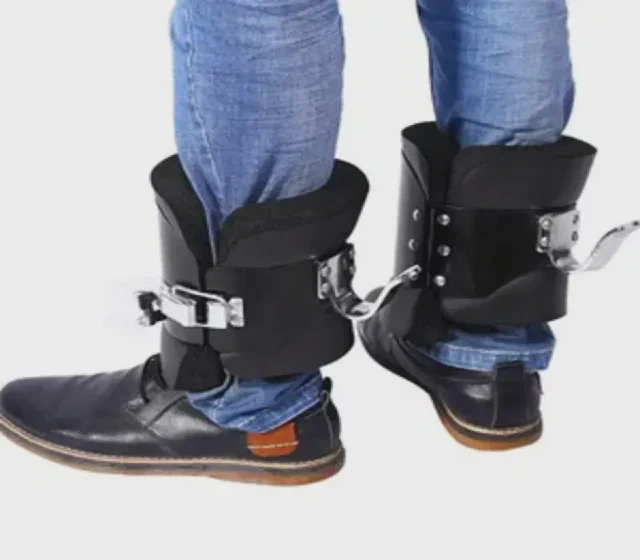
Fitness Exercise Hanging Pull up Boot Compression Relief Anti Gravity Inversion Boots
- MIC category
- Fitness Accessories
These are described in the supplier listing as hanging pull-up and inversion boots. They are not a substitute for resistance bands or ankle weights and require a very different setup, so they are outside the needs of a typical beginner seeking a compact, low-impact home-workout upgrade.
Best for People specifically researching inversion or hanging equipment with an appropriate setup and experience.
- Listed for hanging pull-up and inversion use
- A specialised accessory rather than general resistance equipment
- Not needed for ordinary band or ankle-weight workouts
Confirm before inquiry: Inversion equipment can involve additional setup and safety considerations. Follow the product instructions and seek professional guidance if you have a health condition or are unsure whether inversion is appropriate.
A practical beginner choice
Choose resistance bands if you want one purchase that can cover more exercises, including upper-body pulling and pressing. A light loop band is a sensible starting point for lower-body work; tube bands with handles are more suitable if you want gym-style upper-body movements.
Choose ankle weights if your routine already centres on controlled leg exercises and you prefer equipment that simply fastens around the body. Start light, keep the repetitions smooth and do not use added weight to compensate for poor control.
Whichever option you choose, progress gradually. Two or three short sessions per week can be enough to learn technique and judge how your joints respond. This article is general fitness information, not medical advice. If you have an injury, persistent pain, balance problems or a diagnosed health condition, ask a qualified clinician or exercise professional whether these tools are appropriate before training.
This article offers general information, not medical advice. Adjust activity to your experience and seek qualified guidance when needed.
FAQ
Are resistance bands or ankle weights better for beginners?
Resistance bands are usually the better first purchase because they can be used for upper-body, lower-body, core and mobility exercises. Ankle weights are useful when you specifically want gentle added load for controlled leg raises, marches or similar movements.
Can ankle weights be used for walking?
They can be worn during some forms of walking, but that does not make them ideal for every beginner. Added weight can alter your stride and place more stress on the hips, knees or ankles. Controlled exercises are generally easier to monitor than long walks with weights attached.
Which resistance band style should a beginner choose?
A light loop band is a practical starting point for lower-body and mobility work. If you want to copy more traditional gym exercises such as rows, chest presses or curls, tube bands with handles may be more useful.
Are fabric resistance bands better than latex bands?
Neither is universally better. Fabric bands often feel secure around the thighs and may be comfortable for glute exercises, while latex or rubber-style bands usually offer more flexibility and exercise options. The best choice depends on the movements you plan to do.
How heavy should beginner ankle weights be?
Choose a light, manageable load and prioritise smooth movement rather than fatigue. The correct weight depends on your strength, the exercise and any joint or injury history. If you cannot control the full range of motion, the load is too high.