Upright vs Recumbent vs Folding Exercise Bikes: Which Is Easiest to Live With at Home?
A practical guide to choosing the best exercise bike for beginners at home, comparing upright, recumbent, folding and compact magnetic-resistance formats for comfort, space and reg

For most people, the best exercise bike for beginners at home is a stable upright magnetic-resistance bike if you can leave it set up. Choose a recumbent bike if getting on and off easily and having a supportive seat are your priorities. Choose a folding bike only when floor space is genuinely limited and you are happy to trade some adjustability and solidity for storage convenience. Compact bikes work in tight rooms, but their small footprint is useful only if the fit is still comfortable enough to ride regularly.
The right format is less about chasing the most intense workout and more about removing the reasons a bike goes unused: an awkward seat, a difficult mount, nowhere to put it, too much noise, or a setup that takes longer than the ride itself.
Start with the room, not the resistance levels
Before comparing displays, programmes or maximum resistance, mark out the bike’s likely position with tape or a few boxes. Measure the area you can use while riding, not just the empty space where the machine will sit. You need room to approach it, mount safely, move the seat, and step away without catching a pedal or handlebar.
Also consider the route into the room. A full-size upright bike may be manageable in a permanent corner but inconvenient to carry upstairs or manoeuvre through a narrow doorway. A folding model can be easier to store after use, although folded dimensions do not tell the whole story: it still needs somewhere accessible to live, and moving it repeatedly can become a barrier to a 15-minute session.
If you share walls or live above someone, a mat can help protect flooring and reduce transmitted vibration. It will not turn a poorly built or badly adjusted machine into a silent one, so prioritise a level surface, tight assembly and a format suited to steady seated riding.
Upright bikes: the strongest all-round choice
An upright exercise bike places you above the pedals in a posture that broadly resembles relaxed outdoor cycling. For a beginner, that familiarity can make setup and pacing straightforward. It generally offers a smaller front-to-back footprint than a recumbent bike while giving more room for meaningful seat and handlebar adjustment than many folding models.
This format works well when the bike can remain assembled in a spare room, bedroom corner or living area. Leaving it visible may be an advantage rather than a drawback: a ready-to-ride bike makes a short session more likely.
The main caution is fit. A seat that is too low can make the knees feel cramped; one that is too high can cause rocking at the hips. As a broad starting point, with the pedal at its lowest point, your knee should retain a gentle bend rather than locking straight. Handlebar reach should allow relaxed shoulders rather than a long stretch through the arms.
Magnetic resistance is a useful feature to seek in this category because it is commonly associated with smooth, quiet resistance adjustment. It is especially practical for building a beginner routine: start light, hold an easy cadence, then make small changes rather than forcing hard sessions.
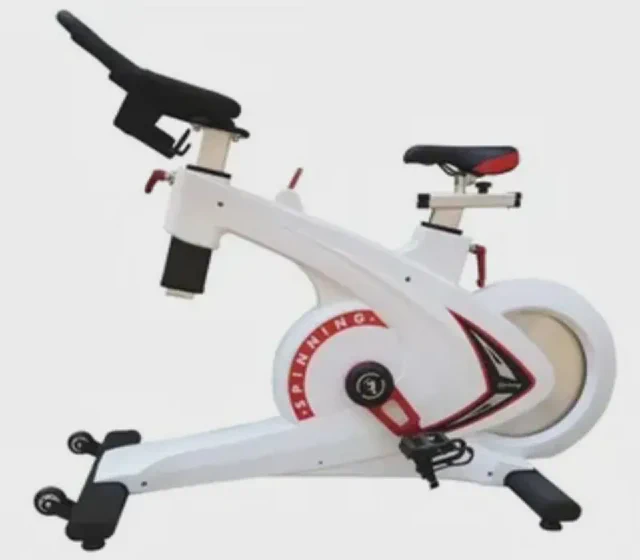
White Indoor Exercise Magnetic Resistance Fitness Gym Equipment Spinning Bike
- MIC category
- Exercise Bike
This supplier listing is the closest of the available products to the upright, magnetic-resistance format discussed in this guide. It may suit shoppers who want a conventional indoor-cycling layout and prefer to compare magnetic-resistance models. The listing does not provide enough verified detail here to judge fit range, flywheel weight, noise, dimensions or stability, so those specifications should be confirmed directly before purchase.
Best for Beginners who have a dedicated workout corner and want an upright cycling position.
- Listed as a magnetic-resistance indoor spinning bike
- Upright format is generally more familiar to many new riders
- Potentially suitable for gradual resistance-based progression
Confirm before inquiry: Made-in-China category placement and supplier-listing wording are not a substitute for checking the current product specification, dimensions, adjustment range and stated user limits.
The available supplier listing for the White Indoor Exercise Magnetic Resistance Fitness Gym Equipment Spinning Bike is the closest match to this format. It is identified as a magnetic-resistance spinning bike, but key ownership details such as dimensions, rider fit range and stated weight capacity need checking on the current listing before it can be judged for a particular home.
Recumbent bikes: comfort and access first
A recumbent bike has a chair-like seat with back support and pedals positioned forward of the body. It is often the easiest format to mount because the rider steps through or around the frame and sits down, rather than climbing over a central bike frame. That can be appealing to beginners who dislike narrow saddles, feel unsteady when mounting, or simply want to read or watch television while pedalling.
The trade-off is space. Recumbents are usually longer than uprights, and their seat assembly can make them harder to tuck into a corner. They may also feel less like traditional cycling, which is neither good nor bad; it simply matters if your goal is to prepare for outdoor riding.
Comfort should not be confused with automatic fit. Check whether the seat position adjusts sufficiently for your leg length, whether the backrest angle is fixed or adjustable, and whether the handlebars feel natural. A supportive seat can make it easier to accumulate gentle weekly activity, but poorly positioned pedals can still irritate knees or hips.
Recumbent bikes are often the least disruptive choice for a person who wants low-pressure, seated exercise. They are less suitable for someone who needs a machine that disappears after every workout.
Folding bikes: practical only when storage is part of the habit
A folding exercise bike typically uses a hinged frame that closes into a narrower stored shape. This can be the answer in a studio flat, shared home or multipurpose room. Many models also aim for a more relaxed, semi-upright position than a performance-oriented spinning bike.
The compromise is usually in the frame and adjustment range. Lighter folding structures can feel less planted when you increase cadence. The seat may have fewer positions, handlebars may be simpler, and frequent unfolding means an extra decision before every ride. None of that rules the format out. It means a folding bike is best for calm, consistent seated workouts rather than aggressive intervals or standing efforts.
Ask yourself one honest question: will you fold it away after every use, or will it remain open most of the time? If it will stay open, compare its in-use footprint against an upright bike. A permanent upright may give you a better riding position without taking dramatically more usable room.
When testing a folding bike in person, or checking images and specifications remotely, look for a secure locking mechanism, a broad base, transport wheels if moving it is expected, and enough seat-height range. Never use the machine until all locks and fasteners are correctly secured according to its instructions.
Compact alternatives: smaller is not always simpler
“Compact” can mean a narrow upright bike, a folding model, a pedal exerciser, or another small cardio machine entirely. It is a description of space use, not a guarantee of comfort. A compact bike that puts your knees too high, wobbles on your floor or cannot accommodate your height is not easier to live with than a larger model.
The supplied product inventory also contains equipment that is not an exercise bike. That distinction is worth making when searching broad retail categories. A mini stepper may occupy less space, but it changes the movement, balance demands and comfort profile.
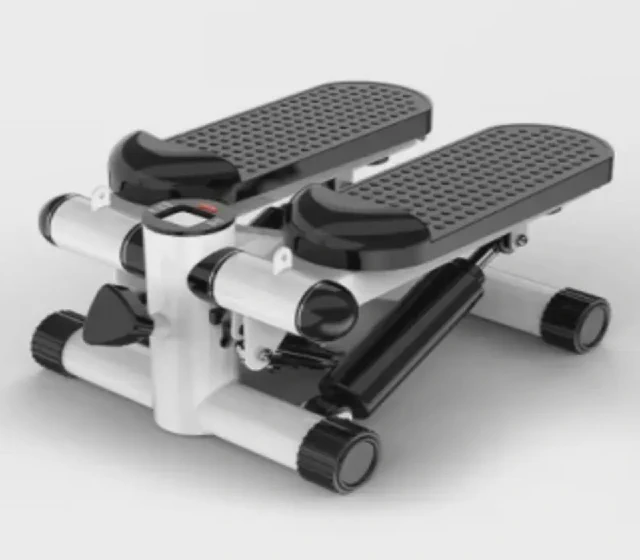
Niceday Steppers for Exercise Stair Stepper with Resistance Bands Mini Stepper
- MIC category
- Exercise Bike
Despite appearing in the supplied Exercise Bike category inventory, this is a mini stepper rather than a bicycle. It is relevant only as a compact cardio alternative for someone whose main priority is minimal storage space. Stepping does not offer the seated, low-impact pedalling position of an exercise bike, and it is not a like-for-like replacement for a recumbent, upright or folding cycle.
Best for People comparing very compact cardio equipment rather than specifically shopping for a bike.
- Supplier listing identifies it as a mini stepper with resistance bands
- Smaller equipment may suit homes with limited open floor area
- Offers a different movement pattern from cycling
Confirm before inquiry: Consider balance, knee comfort and the need for a clear, level area before choosing a stepper. Confirm all current specifications with the supplier.
The Niceday Steppers for Exercise Stair Stepper with Resistance Bands Mini Stepper is listed by its supplier as a mini stepper, not a bike. It may suit someone seeking a very small cardio option, but it cannot provide the seated pedalling experience that makes a bike appealing to many beginners.
Similarly, a treadmill is a separate decision, with different floor-space, noise and impact considerations.
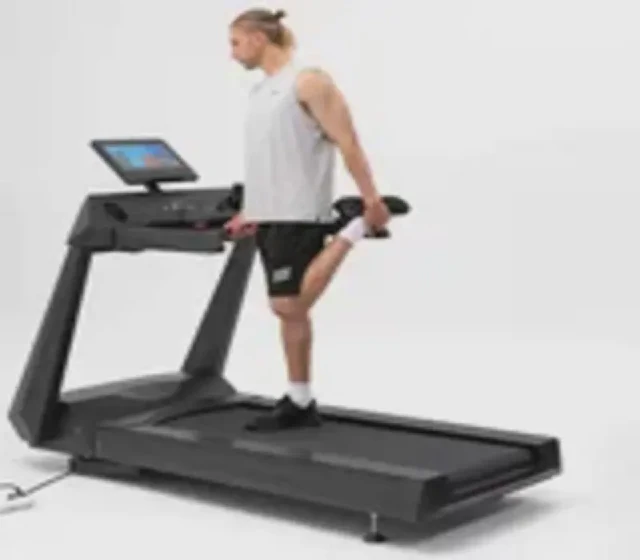
AC Motor Exercise Incline Motorized Sport Running Fitness Gym Treadmill Machine
- Displayed price
- US$ 930-950 / Piece
- MIC category
- Exercise Bike
This product is a treadmill, not an exercise bike, even though it was included in the supplied category inventory. The supplier listing displays a price of US$ 930-950 per piece. It may be relevant to a shopper deciding between indoor walking and cycling, but it should not be used to compare bike comfort, mounting ease or pedalling resistance.
Best for Shoppers who prefer walking or running-based indoor exercise and have room for larger equipment.
- Supplier listing describes an AC-motor incline treadmill
- Displayed supplier-listing price: US$ 930-950 per piece
- Walking and running create a different impact and space profile from cycling
Confirm before inquiry: A treadmill requires clear space around the deck and should be assessed separately for dimensions, power requirements, noise and safety features. Verify current details with the supplier.
The AC Motor Exercise Incline Motorized Sport Running Fitness Gym Treadmill Machine is described in the supplier listing as a motorized incline treadmill, with a displayed price of US$ 930-950 per piece. It should be evaluated as walking or running equipment, rather than as an alternative version of an exercise bike.
A beginner routine that makes any suitable bike easier to keep
The most useful first month is deliberately unremarkable. Ride two or three times a week for 10 to 20 minutes at a pace where you can speak in short sentences. Spend the first few minutes very easy, settle into a comfortable rhythm, then finish gently. If the saddle causes discomfort, adjust the position before assuming you need tougher training or a new routine.
After one or two weeks, add five minutes to one ride or include a few brief, slightly firmer resistance sections while staying seated. Consistency matters more than high resistance. A bike that supports three calm sessions every week is more valuable than one designed for workouts you dread.
If you have cardiovascular, joint, balance or other health concerns, or develop persistent pain, stop and seek guidance from an appropriately qualified clinician or exercise professional. Home fitness equipment is not a substitute for individual medical advice.
The practical verdict
Choose an upright magnetic-resistance bike when you have a permanent spot and want the broadest everyday option. Choose recumbent when support, a low-stress mount and relaxed pedalling outweigh storage concerns. Choose folding when space must be reclaimed after use and your workouts will be primarily easy to moderate seated rides. Choose compact equipment only after confirming that its smaller size does not compromise your comfort, stability or willingness to use it.
The easiest bike to live with is not necessarily the smallest or most feature-rich. It is the one that fits your body, your room and the modest routine you can repeat next week.
This article offers general information, not medical advice. Adjust activity to your experience and seek qualified guidance when needed.
FAQ
What is the best exercise bike for beginners at home?
For many beginners, a quiet upright bike with magnetic resistance, a comfortably adjustable seat and a stable base is the most versatile choice. A recumbent bike can be the better choice if a supportive seat and easy mounting matter more than a conventional cycling feel.
Are folding exercise bikes stable enough?
They can be stable for gentle to moderate home riding when correctly assembled, used on a level surface and kept within their stated limits. However, their lighter, more compact construction can feel less planted than a full-size upright bike, especially during faster efforts or standing pedalling.
Do recumbent bikes take up more room than upright bikes?
Usually, yes. A recumbent bike often has a longer front-to-back footprint because the seat sits behind the pedals. It may be easier to get on and off, but it is rarely the best choice for a very narrow room.
Is magnetic resistance worth choosing for a beginner?
Magnetic resistance is commonly preferred for home use because it can provide smooth, quiet resistance changes without the contact feel of a friction pad. The exact range, controls and maintenance needs vary by model, so check the individual listing rather than assuming all magnetic bikes perform alike.
How long should a beginner use an exercise bike?
A realistic starting point is 10 to 20 minutes at an easy, conversational effort, two or three times weekly. Increase time or resistance gradually as comfort and confidence improve. If you have pain, dizziness, a health condition or are returning after injury, seek advice from an appropriately qualified health professional.