Upright vs Recumbent vs Folding Exercise Bikes: Which Is Best for a Small Home?
Compare folding, upright and recumbent exercise bikes for a small home, with practical advice on footprint, storage, comfort, mounting and beginner-friendly features.
If your priority is the best exercise bike for small spaces, choose a folding bike when you must put it away after each session; choose a compact upright bike when you can leave it out and want the most versatile riding position; choose a recumbent bike when easy access and seated support matter more than floor space. For many beginners in a small home, a compact upright is the best balance. But the right answer changes if a bike has to share a bedroom, living room or narrow spare room.
Start with the space you can actually use
A bike’s advertised footprint is only the starting point. You also need room to approach it, step over or through it, adjust the saddle, pedal without hitting a wall, and dismount without grabbing nearby furniture for balance. If the bike will live in a multipurpose room, consider its parked position as well as its workout position.
Before shopping, mark out a possible bike area with masking tape or sheets of paper. Then stand where you would mount it and imagine the pedal path, the handlebar reach and the route to the door. This simple test often reveals whether a seemingly compact machine will make a room awkward to use.
Also think about handling. A bike that technically folds but is difficult to lift, roll or manoeuvre is unlikely to be stored every day. Conversely, a non-folding upright with transport wheels may be easy enough to shift a short distance after a workout. Your routine matters as much as the folded shape.
Folding exercise bikes: best when storage is non-negotiable
A folding exercise bike is the obvious answer for a studio flat, shared living room or bedroom where exercise equipment cannot stay on display. Most use a central hinge so the frame can close between rides. They often have a simpler design, an upright or semi-recumbent posture, and lighter overall construction than full-sized indoor cycles.
The main advantage is psychological as well as practical: you can reclaim the room after a session. That can make home exercise possible where a permanently assembled bike would not be.
The compromises are worth taking seriously. Folding designs can feel less planted during hard pedalling than heavier fixed-frame bikes. Their adjustment ranges may be more limited, and the seat, handlebars or console position may not suit every height. A compact folded bike can still be awkward to move upstairs or across thick carpet.
When comparing folding models, prioritise a positive, easy-to-check locking mechanism; a stable stance when open; comfortable seat adjustment; and resistance that can begin gently. Open and close the frame exactly as the instructions specify. Never ride if the hinge, lock or fasteners appear loose or damaged.
A folding bike is best for short-to-moderate, low-impact sessions and people who value convenience over a highly athletic riding feel. It is less convincing for someone who expects frequent, high-intensity standing efforts.
Compact upright bikes: best all-round choice for regular riding
An upright exercise bike is closest in feel to a standard bicycle: you sit above the pedals, hold handlebars in front of you, and maintain some trunk control while you ride. Compact versions can fit neatly into a corner, particularly when their handlebars and frame are designed for home rather than studio use.
For a beginner who intends to ride several times a week, an upright is often the strongest all-round choice. The position allows an easy transition from gentle spinning to steadier aerobic sessions, and it generally takes less floor length than a recumbent. It can also be easier to keep in one place, which removes the daily task of unfolding and packing away equipment.
The trade-off is mounting comfort. Riders with limited balance, knee stiffness, hip discomfort or difficulty swinging a leg over a frame may find a traditional upright less welcoming. A narrow, firm saddle can also be a barrier in the first weeks. Do not assume discomfort is something you simply have to endure: check saddle height, handlebar reach, clothing and gradual session length first.
Look for enough adjustment to create a comfortable bend in the knee at the bottom of the pedal stroke. You should not have to reach or hunch to hold the bars. Resistance should be easy to dial down, because a beginner-friendly bike makes easy rides genuinely easy.
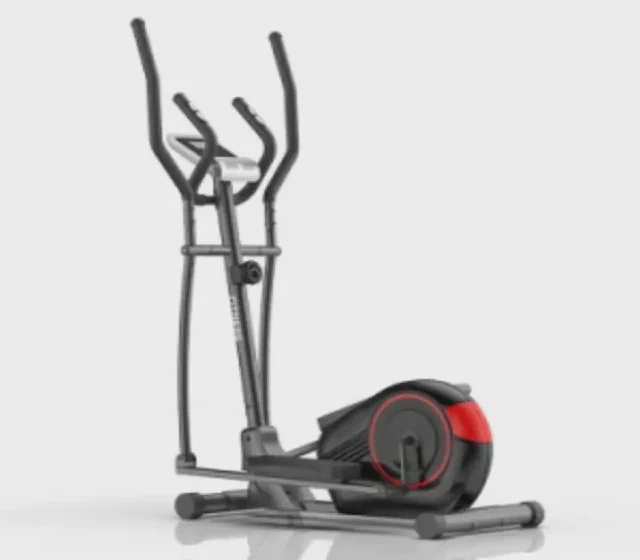
China Wholesale Professional Indoor Home Gym Magnetic Fitness Exercise Spinning Bike
- MIC category
- Exercise Bike
This listing is the closest format match for readers drawn to a compact upright bike. Its title describes a magnetic fitness exercise spinning bike for indoor home-gym use, which suggests a more forward, active riding style than a recumbent model. The listing information supplied here does not state its assembled dimensions, adjustment range, resistance levels or rider capacity, so those points are essential to confirm before deciding whether it suits a small room or a beginner.
Best for People who want to investigate a more conventional upright indoor-cycling format and can verify fit and space requirements.
- Listed by Dingzhou Baiyun Trading Co., Ltd.
- Product title identifies a magnetic fitness exercise spinning bike
- Listed in the Exercise Bike marketplace category
Confirm before inquiry: Ask the supplier for the full footprint, transport-wheel details, seat and handlebar adjustment range, minimum inseam guidance, maximum user weight and resistance specifications. These are not stated in the provided listing facts.
The indoor spinning-bike listing above is an upright-style format to investigate, rather than a confirmed small-space recommendation. The available supplier facts do not include measurements or fit details, so ask for those before assuming it will work in your room.
Recumbent bikes: best for access and supported comfort
A recumbent bike places the pedals in front of you and uses a larger chair-like seat, usually with a backrest. The lower, more supported position can feel less intimidating for people who are new to exercise, prefer a stable seat, or find a conventional saddle uncomfortable. Many models have a step-through design that reduces the need to swing a leg over a central frame.
For low-impact exercise, recumbents can be excellent. The backrest can make relaxed, steady pedalling feel more manageable, and the broader seat may suit longer easy sessions. They are often a sensible format for someone whose biggest obstacle is simply feeling secure enough to begin.
Their drawback is space. A recumbent is commonly longer and visually bulkier than an upright bike. It is also less likely to tuck behind a door or slide into a compact corner. While some models have wheels, they are still designed more as dedicated equipment than as something to fold away after every use.
Choose a recumbent when comfort and straightforward mounting are decisive, and you have a permanent clear area for it. If you are working around a knee, back, heart or balance condition, seek individual advice from an appropriately qualified health professional before beginning or changing an exercise programme.
Resistance, noise and setup: features that affect whether you keep riding
For a small home, quiet operation is often a practical requirement. Magnetic resistance is commonly associated with a smoother, quieter ride than friction-based systems, which can matter in flats or when someone else is working nearby. But no resistance type guarantees silence: pedals, crank parts, seat rails and an uneven floor can all create noise.
A floor mat can help protect flooring, reduce vibration and make cleanup easier. It may also improve stability on smooth surfaces. Place the bike on a level surface and re-check stability after moving it. Avoid placing it where a pet, child or household member may walk into moving pedals.
Do not be distracted by elaborate displays if the fundamentals are weak. For most beginners, a useful console merely needs to be readable, while the important physical features are stable contact points, accessible resistance control and adjustments that are simple enough to use correctly. Start with a resistance level that lets you pedal smoothly and speak in short sentences. Increase duration or resistance gradually, rather than both at once.
Three small-home decisions to make before you buy
First, decide whether the bike must disappear. If yes, folding is likely your lead format. If it can remain assembled, an upright usually offers more riding versatility for the same type of home setting.
Second, be honest about mounting. If getting on and off a standard saddle feels inconvenient or insecure, a recumbent’s supported seat and lower-access design may be worth the extra space.
Third, plan for the least motivated day. The best bike is not the one with the most aggressive specification; it is the one you can enter, adjust and ride safely when you have only 15 minutes and limited enthusiasm.
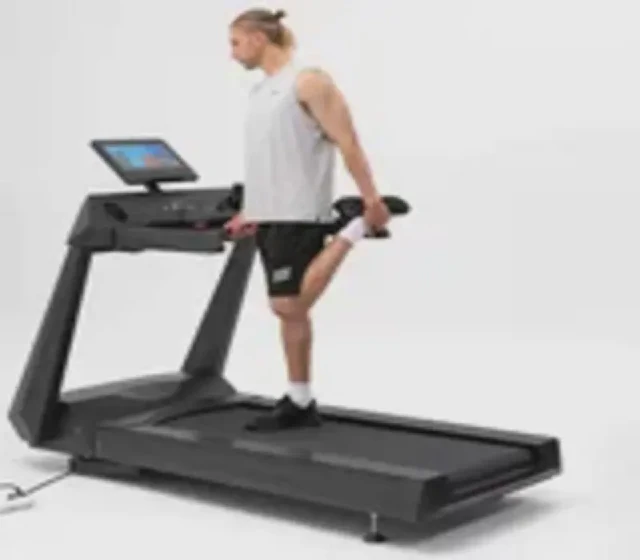
AC Motor Exercise Incline Motorized Sport Running Fitness Gym Treadmill Machine
- Displayed price
- US$ 930-950 / Piece
- MIC category
- Exercise Bike
This supplier listing is categorised under Exercise Bike on the marketplace page, but its product name identifies it as an incline motorized treadmill rather than an exercise bike. It is therefore not a like-for-like option for a reader deciding between folding, upright and recumbent bikes. A treadmill also calls for different clearance planning, particularly behind the belt and around the walking or running area.
Best for Readers comparing motorized treadmill options separately from indoor bikes.
- Listed by All Universe Fitness Technology (Qingdao) Co., Ltd.
- Supplier listing displays a price of US$ 930-950 / Piece
- Product title describes an AC motor, incline motorized treadmill
Confirm before inquiry: Listing details are supplier-provided and should be checked directly before making a purchase decision. Confirm dimensions, electrical requirements, user limits, noise considerations and delivery arrangements with the supplier.
This motorized treadmill listing appears in the same marketplace category but is not an exercise bike. It should not be used to compare bike comfort or storage needs; treadmill clearance and power requirements are separate considerations.
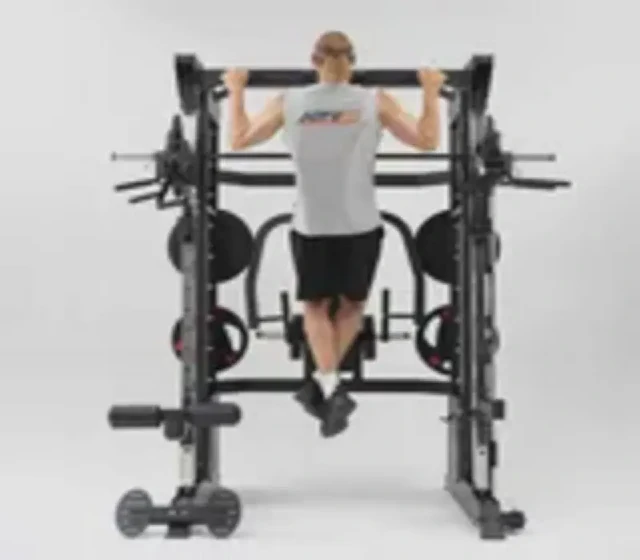
All-in-One Multi-Functional Smith Gym Machine for Home Gym Fitness
- Displayed price
- US$ 1150-1200 / Piece
- MIC category
- Exercise Bike
Although this item appears in the marketplace Exercise Bike category, its title describes an all-in-one Smith gym machine, not a stationary bike. It is not relevant to the folding-versus-upright-versus-recumbent decision and would normally require a far more permanent home-gym setup. For a small home, treat it as a separate strength-training purchase that needs careful room, ceiling-height and safe-use planning.
Best for Readers building a dedicated strength-training area rather than choosing a compact cycling machine.
- Listed by All Universe Fitness Technology (Qingdao) Co., Ltd.
- Supplier listing displays a price of US$ 1150-1200 / Piece
- Product title describes an all-in-one multi-functional Smith gym machine
Confirm before inquiry: Supplier-listing information should be independently verified. Confirm full dimensions, installed weight, assembly needs, ceiling clearance, anchoring guidance and safety requirements before purchase.
Likewise, this Smith gym machine is not a bike option. It belongs in a separate conversation about dedicated strength-training space, assembly and safe clearance.
The practical verdict
Choose a folding exercise bike if your home only has temporary workout space and you are willing to trade some solidity for storage. Choose a compact upright bike if you have a reliable corner for it and want the most flexible option for building a consistent indoor-cycling habit. Choose a recumbent bike if a supportive seat and easy mounting will make you more likely to ride, and you can give it a permanent footprint.
Whichever format you choose, confirm assembled and stored dimensions, adjustment range, maximum user weight, resistance operation, noise expectations and return terms directly with the seller. Those details determine whether a bike fits not just your room, but your body and routine.
This article offers general information, not medical advice. Adjust activity to your experience and seek qualified guidance when needed.
FAQ
Which exercise bike takes up the least space?
A folding exercise bike usually takes up the least space when stored. A compact upright bike may have a similarly modest in-use footprint but normally remains assembled, while a recumbent bike generally requires the most permanent floor area.
Is a recumbent bike better than an upright bike for beginners?
Neither is automatically better. A recumbent bike can feel more approachable because of its backrest, wider seat and easier step-through access. An upright bike may suit a beginner who wants a more conventional cycling posture and has enough balance and comfort to mount it confidently.
Can I use a folding exercise bike every day?
Yes, if the bike is stable, fits you properly and is intended for the frequency and rider weight involved. Folding frames can be convenient, but check that the locking mechanism is secure before every ride and avoid treating storage convenience as a substitute for a solid fit.
How much room should I leave around an exercise bike?
Leave enough clear space to mount and dismount without twisting, to move the seat or handlebars, and to avoid striking furniture while pedalling. The exact amount depends on the bike and your room, so use the manufacturer's assembled dimensions and plan for a clear access route rather than measuring the frame alone.
What resistance system is easiest for a beginner?
The simplest system is one with clearly marked, easy-to-reach adjustments that lets you make small changes while riding. Magnetic resistance is commonly chosen for its smooth, quiet feel, but the crucial point is that the bike offers a manageable starting level and predictable progression.