Walking Pad vs Folding Treadmill vs Compact Treadmill: What Fits a Small Apartment?
Choosing between a walking pad, folding treadmill and compact upright treadmill? Compare floor space, storage, handrails, speed, noise and beginner-jogging suitability for a small

If your apartment is genuinely short on floor space, choose a walking pad for walking and work-from-home movement; choose a folding treadmill if you want handrails and a realistic path into beginner jogging; choose a compact upright treadmill only if it can stay out most of the time. The right answer is less about which machine is “best” and more about which one you will be able to set up, use and put away without turning daily movement into a furniture-moving task.
The short version: match the format to your real routine
A walking pad is the low-profile option. It is usually a slim motorised deck with little or no upright structure, designed for easy walking and, in many cases, use beneath a standing desk. It has the smallest visual and storage impact, but it is not automatically a running treadmill.
A folding treadmill is the compromise option. It generally has an upright frame, handrails and a console or control area, but its frame or deck folds for storage. This design tends to offer a better blend of stability and speed range than a basic walking pad, while remaining more manageable than a full-size treadmill.
A compact upright treadmill is a smaller conventional treadmill that normally remains upright when stored. “Compact” does not necessarily mean easy to hide: it may take less floor space than a gym-style machine, yet still need a permanent corner. In return, it can offer a more familiar setup for walking, jogging and regular workouts.
Walking pad: best when storage is the deciding factor
For a studio, shared flat or multipurpose living room, a walking pad is often the most practical answer. Typical walking pads are shorter and narrower than standard treadmills, sit low to the floor and may roll beneath a bed, sofa or standing desk. Some versions fold in half, making the storage footprint smaller still.
The chief advantage is friction-free use. If you can pull it out, plug it in and begin a 15-minute walk without rearranging the room, you are more likely to use it. This format is especially useful for low-intensity walking during calls, television time or a break from sitting.
Its limitations deserve equal attention. Many walking pads have no handrails, no incline and lower top speeds. Their decks can also be narrower or shorter than those on conventional treadmills. That does not make them inferior; it makes them specialised. They are a good match for steady walking, but less reassuring for someone who is still finding their balance, wants to walk briskly while tired, or expects to jog regularly.
Do not rely on the term “walking pad” alone. It has become broad marketing language, and some models add a folding handrail or a higher speed mode. Read the individual manual and specifications rather than assuming every slim deck is suitable for the same activity.
Folding treadmill: the most versatile small-apartment choice
For many beginners, a folding treadmill is the sensible middle ground in the walking pad vs folding treadmill decision. When open, it usually feels more like the treadmill you recognise from a gym: an elevated control area, handrails and a larger sense of enclosure. Those features can make mounting, stopping and changing pace feel more secure.
When folded, the machine may stand vertically or lower its deck and console into a smaller shape. This saves room, but storage is not effortless by default. A folded treadmill can still be heavy, tall and awkward to wheel around a narrow room. Before ordering, measure the exact parking spot, not just the room. Check whether a folded machine will block a radiator, cupboard, exit, wardrobe door or natural walking route.
The training upside is meaningful. Folding treadmills commonly offer a wider useful speed range than walking pads and are more likely to suit both gentle walking and light jogging. They can therefore make sense for someone who does not run now but would like to try short jog-walk intervals later.
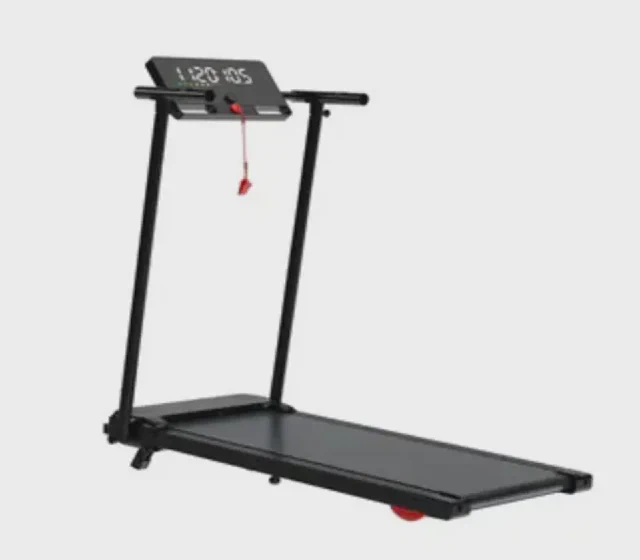
Home Gym Electric Treadmill with Foldable Design and Speed Control
- MIC category
- Treadmill
This listing is the closest of the three to the middle ground many apartment dwellers need: a conventional electric treadmill format with a foldable design and speed control named by the supplier. A folding frame can reduce the machine’s parked footprint, but it does not make the unit weightless or guarantee that it will slide under a bed. Ask for open and folded dimensions, transport-wheel details, deck measurements, speed range and user-weight guidance before deciding whether it can serve both daily walks and beginner jogging.
Best for Someone who wants more training flexibility than a basic walking pad may offer and can store a folded upright machine.
- Electric treadmill format
- Foldable design stated in the supplier listing
- Speed control stated in the supplier listing
Confirm before inquiry: Supplier-listing claims should be checked against the current specification sheet. Make sure you can safely fold, move and store the machine yourself.
A foldable product is only a space-saving choice if its folding process works for you. Ask whether it has transport wheels, how much it weighs, whether one person can lower it safely, and whether it needs to be unplugged or moved away from a wall first. A treadmill that stays folded because it is difficult to deploy is not a practical apartment solution.
Compact upright treadmill: best for a fixed exercise corner
A compact upright treadmill is worth considering when you have a consistent workout zone: perhaps a spare-room wall, a wide bedroom corner or a section of a living room that does not need to transform each evening. It occupies more visual space than a walking pad, and usually more than a fully folded treadmill, but it may feel more stable and complete for regular exercise.
This format tends to make most sense for people who value a conventional deck, console and handrails over portability. A larger, more substantial machine can also feel more appropriate for a taller walker or a beginner jogger who wants extra room to settle into a rhythm. However, compact does not mean it will fit every apartment. The machine’s operating footprint, ceiling clearance, power-cord placement and safe exit area all matter.
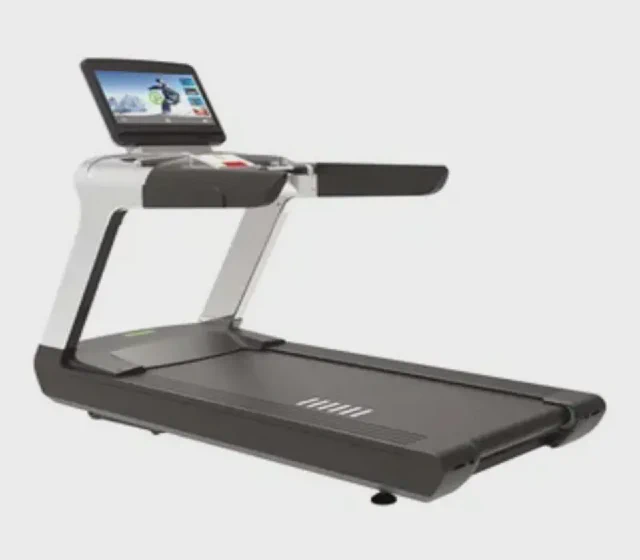
This is the least apartment-friendly format in this comparison, but it illustrates why a conventional upright treadmill can appeal to people prioritising a familiar, console-led training setup. The supplier listing identifies it as a commercial treadmill with a 21.5-inch touch screen. Treat that description as a supplier claim and confirm dimensions, electrical requirements, machine weight and building access directly before considering it.
Best for A buyer with a dedicated home-gym area rather than a living-room storage problem.
- Upright commercial treadmill format
- Supplier listing names a 21.5-inch touch screen
- Potentially better aligned with a permanent training space than under-bed storage
Confirm before inquiry: Not a natural substitute for a walking pad in a tight apartment. Verify all specifications and installation needs with the supplier.
Commercial-style equipment is particularly important to assess in context. A large screen or robust-looking frame may be appealing, but a permanent upright treadmill can dominate a small room and may be challenging to bring upstairs or through tight doors. It is usually a purchase for a dedicated exercise area, not a solution to an under-bed-storage problem.
Footprint is more than length and width
When comparing listings, separate three measurements:
- Operating footprint: the space taken up when the belt is in use.
- Storage footprint: the floor area needed when folded, stood up or slid away.
- Handling clearance: the extra room needed to step on, step off, fold, roll and clean around the machine.
Measure your available floor space with tape, then mark the proposed area with paper or masking tape. Walk around it. Open the nearest door. Pull out a chair. That simple test often reveals whether a supposedly compact treadmill will make a room feel unworkable.
Also consider vertical space. A walking pad has a very low deck, while upright treadmill frames and consoles rise much higher. If storage means standing a folding treadmill against a wall, confirm that the ceiling height and wall space allow it.
Handrails, speed and confidence
Handrails are not merely a feature for older adults. For a complete beginner, they can provide a useful point of contact while learning the controls or stepping onto a moving belt. They should not become something you grip tightly throughout every session, as that can distort posture, but their presence can make the first weeks feel less intimidating.
A low-profile walking pad without rails is best approached at an easy, controllable pace. If you want to increase speed, practise brisk walking or add jogging intervals, a folding or compact upright treadmill is generally the more appropriate format. It is also more likely to provide controls that are easier to reach during movement.
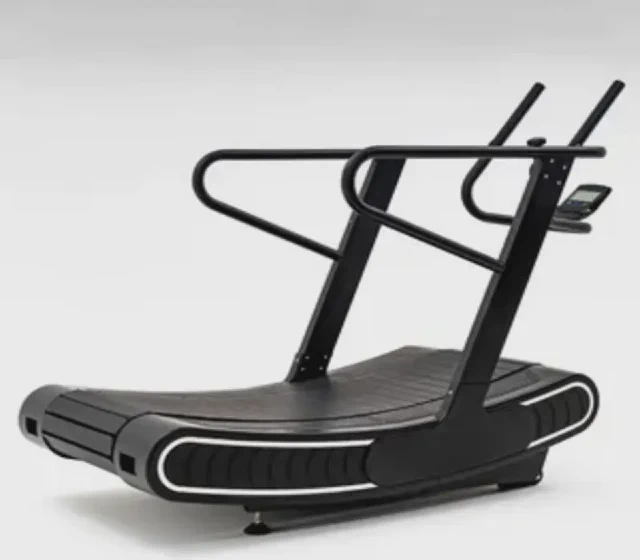
Commercial Customized Logo Non-Motorised Running Machine Sports Equipment Curve Treadmill
- MIC category
- Treadmill
A curved, non-motorised treadmill is a distinct category rather than a compact answer to desk walking. The supplier listing describes this model as a commercial customised-logo curved treadmill. Because the belt is driven by the user, the feel and pacing differ from a motorised walking pad or treadmill. It may suit purposeful training, but its commercial positioning and likely space demands make it a poor default choice for a beginner seeking a discreet apartment walking machine.
Best for Experienced users considering a dedicated, self-powered running format.
- Non-motorised curved design
- Commercial-oriented supplier listing
- User-driven belt rather than a powered walking deck
Confirm before inquiry: Confirm deck size, total weight, noise characteristics and safe floor placement before purchase; none should be assumed from the listing title.
A non-motorised curved treadmill is another option, but it is not a direct replacement for either. Its user-powered belt changes the effort and feel of each step. That can be attractive for experienced training, yet it is a specialist proposition rather than the obvious choice for quiet, low-intensity apartment walking.
Noise: think vibration, not just motor volume
Walking pads often seem quieter because they are used at walking speeds and usually have smaller motors. Folding and upright treadmills may create more noise as pace rises. But the sound your neighbours notice can come less from the motor than from repeated foot strikes and vibration transmitted into the floor.
To be considerate in an apartment, place the machine on a stable, level surface and use an appropriate dense equipment mat if the manufacturer permits it. Keep the belt maintained according to the manual, wear clean shoes and avoid late-night jogging if your building has thin floors. A mat may reduce vibration, but it cannot erase the sound of running.
A final buying checklist
Before choosing, confirm the stated maximum user weight, deck dimensions, speed range, power requirements, folded dimensions and warranty terms directly with the seller or manufacturer. Check the manual for intended use: walking-only equipment should not be treated as a running machine.
Then answer one question honestly: will you mostly walk while working, walk for fitness, or jog? If the answer is desk walking and storage is scarce, buy the walking pad. If the answer includes future jogging, choose a folding treadmill with a setup you can manage. If exercise has a permanent home in your apartment, a compact upright treadmill can be the more comfortable long-term tool.
Health note
Indoor walking is often a practical way to build daily activity, but it is still exercise. Start at a comfortable pace, use supportive footwear and stop if you feel chest pain, dizziness, unusual shortness of breath or pain that does not settle. If you have a medical condition, balance concerns, recent injury or are returning to exercise after a long break, seek personalised advice from a qualified health professional before beginning a new routine.
This article offers general information, not medical advice. Adjust activity to your experience and seek qualified guidance when needed.
FAQ
Is a walking pad safe to use without handrails?
It can be suitable for steady, comfortable walking if you feel balanced and use it on a level surface, but the lack of handrails gives you less support when mounting, turning your attention away or changing speed. Beginners, anyone unsteady on their feet and people planning to jog may prefer a model with a handrail.
Can I jog on a walking pad?
Only if the specific model is explicitly designed and rated for running or jogging. Many low-profile walking pads have lower speed ceilings, shorter belts and no handrails, so they are better treated as walking equipment. Check the manual, maximum user weight, belt dimensions and stated use before attempting to jog.
How much space do I need around a treadmill in an apartment?
Use the manufacturer’s clearance guidance first. In practical terms, plan for unobstructed space around the machine, especially behind the deck, so you can step off safely if needed. Also measure doorways, hallways, lifts and storage gaps before delivery; a machine that fits the room may still be awkward to get into it.
Are folding treadmills quieter than regular treadmills?
Not necessarily. Folding describes storage design, not sound output. Noise depends on motor quality, speed, belt and deck construction, maintenance, the runner’s foot strike and how much vibration transfers to the floor. A dense equipment mat can help reduce vibration, but it will not make running silent.
What is the best choice for a beginner who wants to start jogging?
A folding treadmill or compact upright treadmill is usually the more sensible starting point because it commonly provides handrails, a larger deck and a broader speed range. A walking pad can still be an excellent first purchase when walking is the real goal and storage is the limiting factor.