Which Adjustable Dumbbell Format Fits a Small Home Gym?
A practical comparison of selector, plate-loaded and fixed dumbbell formats for a compact home gym, with storage, adjustment speed, progression and daily handling in mind.
If your workout area is also a bedroom, living room or shared office, choose an adjustable pair before building a rack of fixed dumbbells. It gives you the broadest useful weight range in the least visible storage space. The exception is practical rather than ideological: choose fixed dumbbells if rapid changes between exercises are central to your training and you genuinely have safe room for several pairs.
The best adjustable dumbbells for a small home gym are not automatically the heaviest or the most compact-looking. They need to start light enough for your smallest exercises, change quickly enough for your routine, feel manageable in the hand and store without turning a walkway into a hazard. Here is how the main formats compare.
Selector adjustables: best for most shared rooms
Selector-style dumbbells sit in cradles. You change the load with a dial, handle turn, pin or similar mechanism, then lift only the selected plates. This is the format most people picture when they want a whole rack’s worth of weights in one small station.
Its biggest advantage is containment. Rather than putting individual plates, collars and multiple pairs around the room, you return each dumbbell to its tray after use. That matters in a home where the exercise area needs to disappear visually after a session. It also makes ordinary strength work more fluid: adjust the pair between sets, then move on to presses, rows, lunges, curls and floor work.
The compromise is that the dumbbell’s shape can be longer or bulkier than a fixed equivalent at lighter settings. Some models also require you to set the dumbbell down in the cradle before changing weight. That is usually fine for standard sets, but less convenient for fast drop sets and circuits. The mechanism is another consideration: follow the manufacturer’s instructions, make sure the selected setting is fully engaged and inspect it periodically. Do not drop a selector dumbbell unless its maker specifically says it is designed for that use.
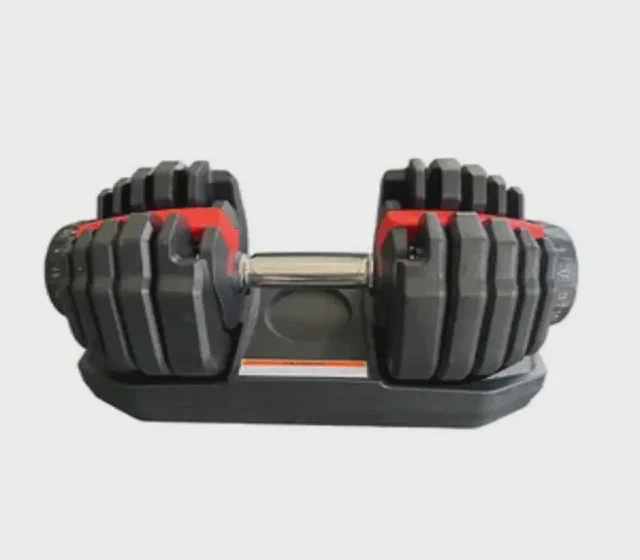
Adjustable Dumbbell Set 24kg 40kg 52.5lb 90lb for Fitness Equipment Gym Equipment
- MIC category
- Dumbbell
This supplier listing is the closest fit here for shoppers specifically comparing adjustable dumbbells for a small home gym. Its product title references several weight figures, including 24 kg, 40 kg, 52.5 lb and 90 lb, but the listing information supplied does not clarify whether these describe a per-dumbbell capacity, pair weight, configuration options or adjustment increments. Treat it as a prompt to verify the complete working range, starting setting, locking system and footprint before making a decision.
Best for People prioritising a compact adjustable setup who will confirm the exact configuration and range with the supplier.
- Listed in the Dumbbell category
- Product title identifies it as an adjustable dumbbell set
- Potentially relevant to buyers seeking broad resistance without a full rack
Confirm before inquiry: Weight figures and configuration details should be confirmed directly from the supplier listing before purchase.
The Adjustable Dumbbell Set 24kg 40kg 52.5lb 90lb for Fitness Equipment Gym Equipment from Hefei Bodyup Sports Co., Ltd. is presented by its supplier as an adjustable dumbbell set. The title contains multiple weight references, so they need clarification before comparison shopping. Ask whether each figure refers to one dumbbell or the pair, what the lowest selectable load is, how large each jump is and how the locking mechanism works. Those answers matter more than an impressive maximum printed in a title.
Plate-loaded adjustables: best when you value simple hardware
Plate-loaded adjustable dumbbells use removable plates secured by collars, threaded ends or another physical fastener. They can be an appealing middle ground for people who want flexibility but prefer a less enclosed mechanism. Depending on the system, you may be able to make smaller changes than on a selector model, which can help with gradual progression on presses, rows and isolation exercises.
But their storage advantage is only as good as your plate storage. The handles, plates and collars all need a designated place. If they live loose under a sofa or on a shelf, the format stops solving the shared-room problem. Loading and unloading also takes longer, especially if both dumbbells need changing between exercises.
This format works best when your sessions are structured: complete your sets at one load, change deliberately, then start the next movement. It is less appealing for an interval workout with frequent changes. Check that collars are correctly secured before each set, and do not assume all plate-loaded systems are suitable for being dropped.
Fixed dumbbells: best for immediate changes and a traditional feel
Fixed dumbbells need no setup. Pick up the required pair and start. That makes them easy to share, straightforward for circuits and helpful when one person is pressing while another is rowing at a different load. A fixed hex shape can also reduce rolling compared with a round profile, while the overall feel is familiar and consistent.
The limitation is simple: useful progression requires several pairs. One or two pairs may work for a beginner’s short routine, but they soon become restrictive because curls, lateral raises, rows and goblet squats rarely call for the same weight. A rack keeps fixed weights organised, but a rack is still furniture. Before choosing this route, measure the rack or floor-storage footprint, not just the diameter of a single dumbbell.
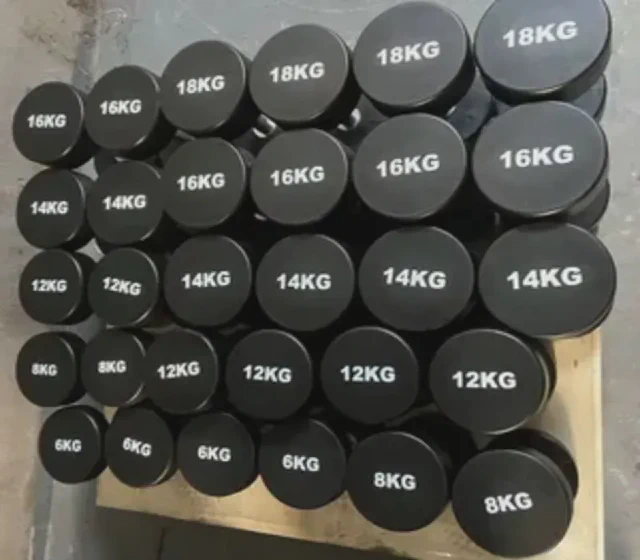
Free Weights Custom Wholesale Weightlifting Round Dumbbell Gym Fitness Equipiment PU Dumbbell
- MIC category
- Dumbbell
This listing is for a round PU dumbbell format rather than an adjustable system. Fixed weights are useful as a comparison point: they are ready immediately, avoid selector mechanisms and can be convenient when fast changes matter. The space trade-off is substantial, because a worthwhile training range means owning and storing several pairs. In a shared room, one or two carefully chosen fixed pairs can be simpler than a full set, but they offer less progression than an adjustable pair.
Best for People who want a familiar fixed dumbbell feel for a limited number of staple weights.
- Round PU dumbbell format named in the supplier listing
- No adjustment process between sets
- Useful benchmark against compact adjustable systems
Confirm before inquiry: The supplied listing details do not specify available weights, dimensions, coating performance or whether a pair is included.
The Free Weights Custom Wholesale Weightlifting Round Dumbbell Gym Fitness Equipiment PU Dumbbell from Rizhao F-Leader International Trade Co., Ltd. illustrates the fixed-weight alternative. Its supplier listing identifies a round PU dumbbell, not an adjustable mechanism. A round fixed design can be useful for people who want a permanent, ready-to-grab pair, but round heads may roll if placed on an uneven surface. Store them in a stable cradle, rack or other purpose-built position rather than leaving them loose beside a mat.
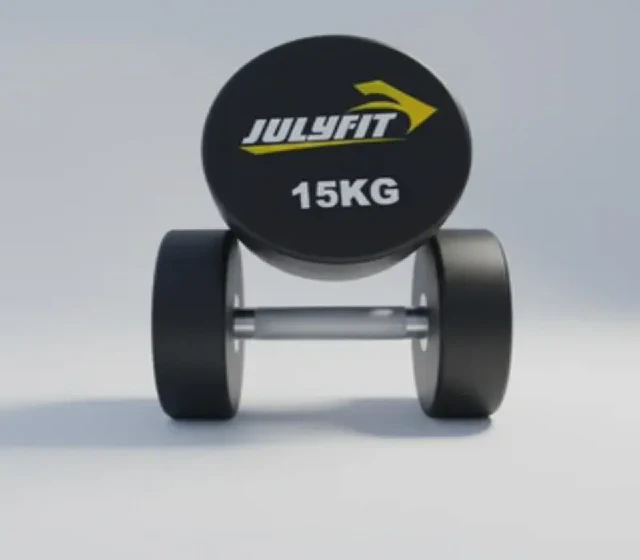
Home Gym Equipment Luxury Dumbbell Set Custom Logo CPU Dumbbells
- MIC category
- Dumbbell
A fixed CPU dumbbell set represents the tidy, dedicated-home-gym route rather than the minimum-footprint route. It may suit a training corner that can accommodate organised storage and users who value having several loads ready at the same time. For a living room, bedroom or multipurpose space, the decision depends less on appearance and more on whether the complete set, including any storage solution, can stay safely out of the way.
Best for Established home gyms where quick access to multiple fixed weights matters more than the smallest possible footprint.
- CPU dumbbells identified in the supplier listing title
- Fixed-weight format supports immediate weight changes
- Relevant for comparing a full-set approach with an adjustable pair
Confirm before inquiry: Confirm the included weights, storage arrangement and total floor footprint with the supplier; these details are not provided in the supplied listing facts.
The Home Gym Equipment Luxury Dumbbell Set Custom Logo CPU Dumbbells from Nantong July Fitness & Sports Co., Ltd. is another fixed-format comparison. The supplier title identifies CPU dumbbells and a set, but it does not provide the individual weights or storage details in the supplied facts. That makes it sensible only to evaluate after confirming what the set contains and how much room its complete arrangement needs. A set can be excellent for fast workouts; it is rarely the smallest-space solution.
Choose the range before the maximum
A common buying mistake is choosing by the largest number alone. A high ceiling is helpful only if your training will reach it. First, consider the lowest useful setting. Light loads are valuable for lateral raises, rear-delt work, warm-ups, rehabilitation exercises prescribed by a qualified clinician and controlled technique practice. If the first setting is too heavy, the system can feel limiting from day one.
Then think through your regular movements. You may need lighter weights for overhead and shoulder work, moderate weights for pressing and rows, and more load for Romanian deadlifts, split squats and goblet squats. If one adjustable pair will be your main strength tool, favour a range that supports most of those movements rather than one optimised only for curls.
Increments matter, too. Smaller jumps make progression gentler, especially for upper-body work. Larger jumps can be perfectly workable for lower-body exercises, but may feel abrupt on presses or isolation lifts. If a system allows only wide changes, use repetitions, tempo, pauses and additional sets to progress within a safe, controlled plan.
Measure access, not just the footprint
A pair may technically fit inside a cupboard but be awkward to use there. Measure the storage width and depth, then leave room to stand over the trays, operate the selector and lift the dumbbells without hitting furniture. If you use a stand, check its stability and whether it creates a trip risk in a traffic route.
For floor protection and quieter handling, place equipment on a suitably stable exercise mat or protective surface where appropriate. Put dumbbells down with control. This protects both the equipment and the shared space, and it reduces the chance of a hand, foot or pet being near a moving weight.
The practical verdict
Choose selector adjustables if you want the strongest all-round answer for a compact, multipurpose home. Choose plate-loaded adjustables if you accept slower changes in return for simpler, more modular hardware. Choose fixed dumbbells if speed, familiar handling and multiple ready-to-use loads outweigh the cost and space of a collection.
Whichever format you choose, build around the reality of your room: a pair you can store safely and use regularly is more valuable than an ambitious set that remains in boxes or blocks the doorway.
Health and safety note
Strength training should feel controlled, not painful. If you are new to resistance exercise, returning after injury, pregnant, managing a medical condition or unsure which loads are appropriate, seek advice from a qualified health professional or fitness coach. Start with a load you can move with good technique, secure all adjustable components before lifting and keep the training area clear.
This article offers general information, not medical advice. Adjust activity to your experience and seek qualified guidance when needed.
FAQ
Are adjustable dumbbells suitable for beginners?
Yes. They can be especially practical for beginners because one pair can cover lighter movements such as raises and curls as well as rows, presses, squats and lunges. Look for a low starting weight and manageable increments rather than buying purely for the highest maximum weight.
What is the best adjustable dumbbell range for a small home gym?
There is no universal range. A pair beginning around 5 lb with regular increments can suit general beginner and intermediate training, while stronger lifters may need a higher ceiling for rows, presses and lower-body work. Buy for the exercises you expect to do consistently, not for a maximum you may never use.
Do adjustable dumbbells take longer to use in workouts?
They can. Selector models are generally quick to change when returned correctly to their cradles. Plate-loaded models require removing and securing plates, which is slower. Fixed pairs remain the fastest option for circuits, supersets and households where two people train at different weights.
Can adjustable dumbbells replace a full dumbbell rack?
For many home routines, yes. They can cover a broad range of loads in a small footprint. They are less ideal if you regularly need several weights ready at once for fast circuits, drop sets or workouts shared by more than one person.
How should adjustable dumbbells be stored in a living room?
Keep them in their supplied trays or on a stable low stand, away from walkways and out of reach of children. A mat beneath the storage area can help protect the floor. Avoid storing a selector model where it is difficult to access the adjustment mechanism safely.